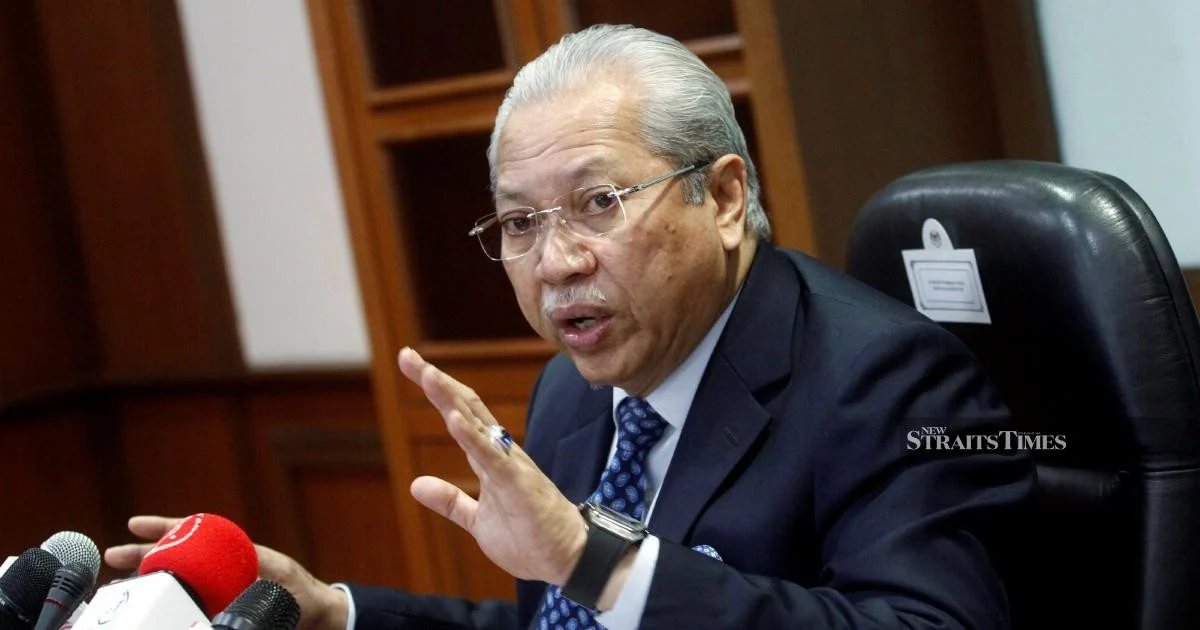
PAS president Annuar Musa addressed mounting speculation about internal fractures within the Perikatan Nasional coalition on Wednesday, firmly denying that his party had orchestrated or actively worked towards removing BERSATU from the political alliance. Speaking in Kota Baru, Musa sought to quell persistent rumours that the Islamic party had engineered the withdrawal of BERSATU—which includes former Prime Minister Muhyiddin Yassin—from the bloc that has served as Malaysia's primary opposition formation.
The clarification comes amid observable cooling between PAS and BERSATU, the two pillars of PN since its formation ahead of the 2020 general election. While Musa stopped short of detailing specific grievances or reconciliation efforts, his comments suggest leadership is acutely aware that public perception of inter-party conflict threatens the coalition's cohesion at a politically sensitive moment. For Malaysian political observers, such defensive statements typically emerge when alliance tensions have already become visible to rank-and-file members and media scrutiny.
Perikatan Nasional has positioned itself as the vehicle for opposition consolidation, particularly following the collapse of Pakatan Harapan's first federal government in 2020. The coalition's stability matters considerably to voters across the Malay-Muslim demographic, where both PAS and BERSATU command significant grassroots support. Any perception that dominant partners are sidelining junior members risks fragmenting the opposition's organisational capacity just as the coalition seeks to strengthen its electoral appeal ahead of anticipated general elections.
The subtext of Musa's statement reflects broader anxieties within PN leadership about maintaining the appearance of unity while managing profound policy differences. PAS, as an Islamist party with deep roots in Kelantan and Terengganu, brings theological credentials and religious authenticity to the coalition. BERSATU, conversely, draws strength from Muhyiddin's technocratic image and claims of administrative competence, positioning itself as a pragmatic, non-ideological force. These contrasting identities have historically created tension over coalition direction, platform development, and resource allocation.
The timing of Musa's remarks suggests efforts to contain damage before public disagreements metastasise into irreparable schisms. Recent months have witnessed increasingly pointed commentary from BERSATU figures regarding their party's influence within PN decision-making structures. By categorically denying PAS had attempted to marginalise or expel BERSATU, Musa adopts a proactive messaging strategy designed to reset narratives and reaffirm shared commitment to opposition politics. Such interventions rarely occur unless underlying tensions have become impossible to ignore.
For Malaysia's political landscape, PN's internal stability carries outsized significance. The coalition represents the most viable opposition structure currently available, and any dissolution would likely benefit the incumbent government by fragmenting anti-establishment voter blocs. If BERSATU were genuinely pushed out—or departed voluntarily—consequent realignment would reshape parliamentary mathematics and potentially alter the calculus for several state assemblies where PN commands representation. Kelantan and Terengganu, states where both parties exercise substantial influence, would face particular volatility from any formal split.
International observers have noted that Malaysia's political economy produces fierce competition for coalition leadership positions and ministerial roles, disputes that frequently masquerade as principled disagreements over party autonomy or policy direction. Within PN, such competitions intensify given that opposition parties cannot distribute government portfolios to reward faction leaders, forcing them instead to contest symbolic authority and decision-making influence. These dynamics explain why denials of internal sabotage become necessary public statements—they serve to preserve the coalition's credibility among supporters who understand that visible infighting signals weakness.
The relationship between PAS and BERSATU further complicates alignment because their electoral bases, while overlapping in rural Peninsular Malaysia, differ substantially in urban constituencies and among younger voters. BERSATU attracts urbanised professionals and business figures seeking an alternative to established parties, while PAS retains dominance among rural conservative constituencies prioritising Islamic governance. These demographic distinctions create perpetual tension over coalition positioning and campaign messaging, since appealing to one constituency sometimes alienates the other.
Musa's intervention also reflects awareness that every public statement about PN cohesion carries implications for party members evaluating their own loyalties. Grassroots activists and elected representatives observe leadership tone carefully, interpreting denials of expulsion attempts as either reassurance or, conversely, as evidence of deeper problems requiring public relations intervention. By addressing the matter directly, Musa signals that PN leadership treats the matter seriously, though his carefully calibrated language avoids detailed acknowledgment of specific flashpoints that might further inflame disagreements.
Looking forward, PAS and BERSATU face the challenge of translating leadership statements into sustained institutional cooperation. Coalition frameworks require regular calibration to ensure emerging tensions receive management before they threaten foundational partnerships. The visible strain Musa obliquely acknowledged will likely persist absent concrete mechanisms addressing root grievances over resource distribution, decision-making authority, and strategic direction. Whether PN leadership possesses the structural tools and political capital to implement such mechanisms remains an open question for Malaysian politics.