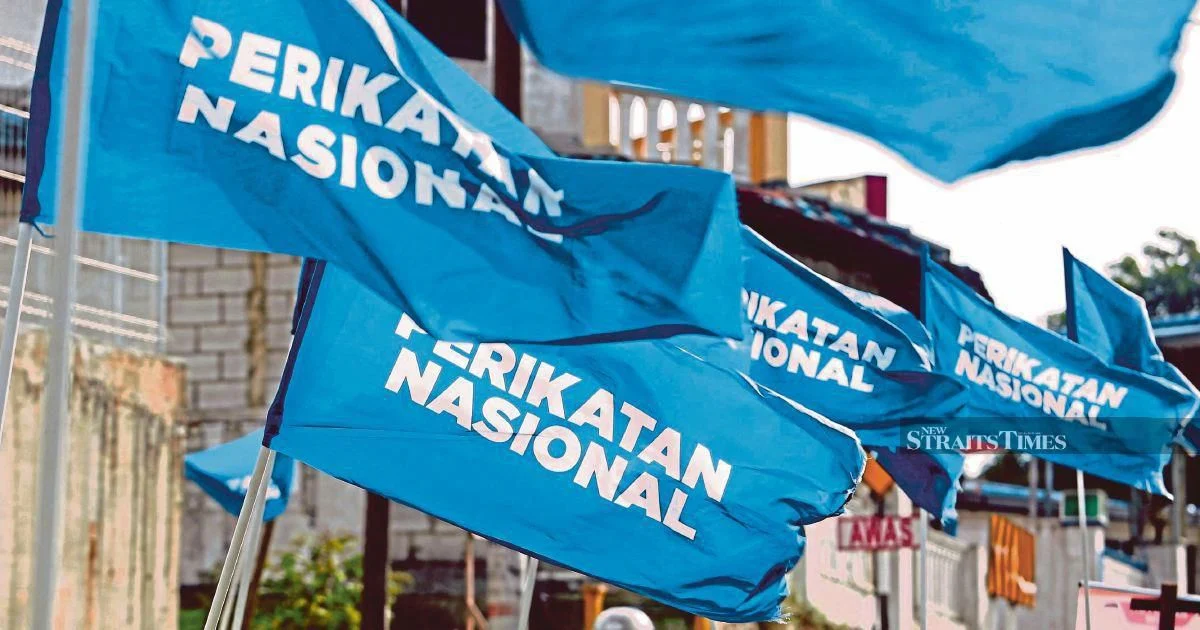
Fractures within Perikatan Nasional widened noticeably this week as Pas leadership mounted a public challenge to Bersatu's right to deploy the coalition's official logo in forthcoming state elections in Johor and Negri Sembilan. The dispute, emerging from Kota Baru, signals deepening disagreements over governance protocols and decision-making power within the three-year-old alliance that has served as the governing vehicle for Malaysia's federal administration.
At the heart of the disagreement lies a fundamental question of institutional authority. Pas representatives contended that only the coalition's designated chairman possesses the legitimate power to greenlight the use of Perikatan Nasional's visual identity by member parties. This assertion challenges what Bersatu appears to have proceeded with unilaterally, raising questions about whether the party had sought prior approval through established coalition procedures or simply acted independently based on assumed prerogatives.
The spat reflects broader structural vulnerabilities within Perikatan Nasional that have become increasingly apparent since the coalition's formation. Unlike more established alliances, PN lacks clearly codified internal governance mechanisms that might quickly resolve such disputes. The absence of crystalline protocols governing logo usage, campaign materials, and representational authority has created space for competing interpretations of what member parties can and cannot do independently versus what requires collective decision-making.
For Malaysian voters and observers, this episode carries significance beyond procedural squabbling. The Johor and Negri Sembilan elections represent crucial tests for Perikatan Nasional's continued relevance and cohesion. Should the coalition project disunity through public disagreements over something as basic as visual branding, it risks undermining messaging discipline and voter confidence precisely when competitive state contests demand unified presentation. Fragmentation at the symbolic level often presages deeper operational breakdowns during campaigning.
Pas's intervention also reflects underlying tensions about Bersatu's positioning within the alliance hierarchy. As the party that brought Muhyiddin Yassin to the prime ministership and that consistently frames itself as the coalition's anchor, Bersatu has occasionally acted with assumed primacy. Pas, however, commands substantial grassroots mobilisation capacity and religious legitimacy that make it indispensable to the coalition's electoral viability, particularly in rural constituencies across multiple states. When Pas pushes back against Bersatu's assertions, it is exercising leverage rooted in demonstrable political utility.
The timing of this public disagreement also merits attention. Coming as the coalition prepares to contest elections in two economically significant states, the logo row occurred precisely when unified positioning would maximize electoral advantage. Instead, both parties have aired institutional grievances openly, potentially signalling to voters that decision-making within Perikatan Nasional remains ad hoc and contestable rather than settled and institutional.
Regionally, Malaysia's experience with coalition management offers cautionary lessons. Unlike more established multiparty systems where informal norms and institutional memory guide inter-party relations, Perikatan Nasional emerged relatively recently and has faced recurrent crises requiring its leaders' constant attention. Each dispute requires resolution without fully settled precedent, making every conflict potentially precedent-setting. The logo question thus becomes not merely about a single election campaign but about what authority structures will ultimately govern the coalition's functioning.
The Southeast Asian context adds another dimension. Across the region, coalitions have proven fragile when lacking strong institutional foundations. Thailand's Democrat Party-led coalitions, for instance, have repeatedly fractured under pressure. Similarly, Indonesia's complex coalition politics regularly produce disagreements over resource allocation and decision-making authority. Malaysia's political leadership can observe these regional precedents and recognise that investing in robust, agreed institutional frameworks now prevents costlier breakdowns later.
For Bersatu specifically, the Pas challenge likely forced consideration of whether proceeding without explicit coalition authorisation was strategically prudent. Even if Bersatu leaders believed they possessed implied authority, Pas's public questioning created a political cost to acting unilaterally. Going forward, both parties may feel compelled to establish clearer protocols, however informal, governing campaign material usage and branding decisions to avoid similar public disputes.
The broader implication extends to Malaysia's governance stability. Perikatan Nasional currently holds federal power, making internal disputes potentially consequential for national administration. Should coalition tensions escalate beyond logo disagreements to substantive policy or resource-allocation conflicts, governing capacity could suffer. Both Bersatu and Pas presumably recognise this reality, suggesting that despite public disputes, pragmatic incentives exist to resolve disagreements before they metastasise into coalition-threatening crises that would invite intervention from other political actors.
Moving forward, how Perikatan Nasional leadership addresses the logo question and establishes clearer institutional governance may determine whether the coalition evolves into a more durable political vehicle or remains vulnerable to recurrent disputes that undermine its electoral effectiveness and governing capacity.