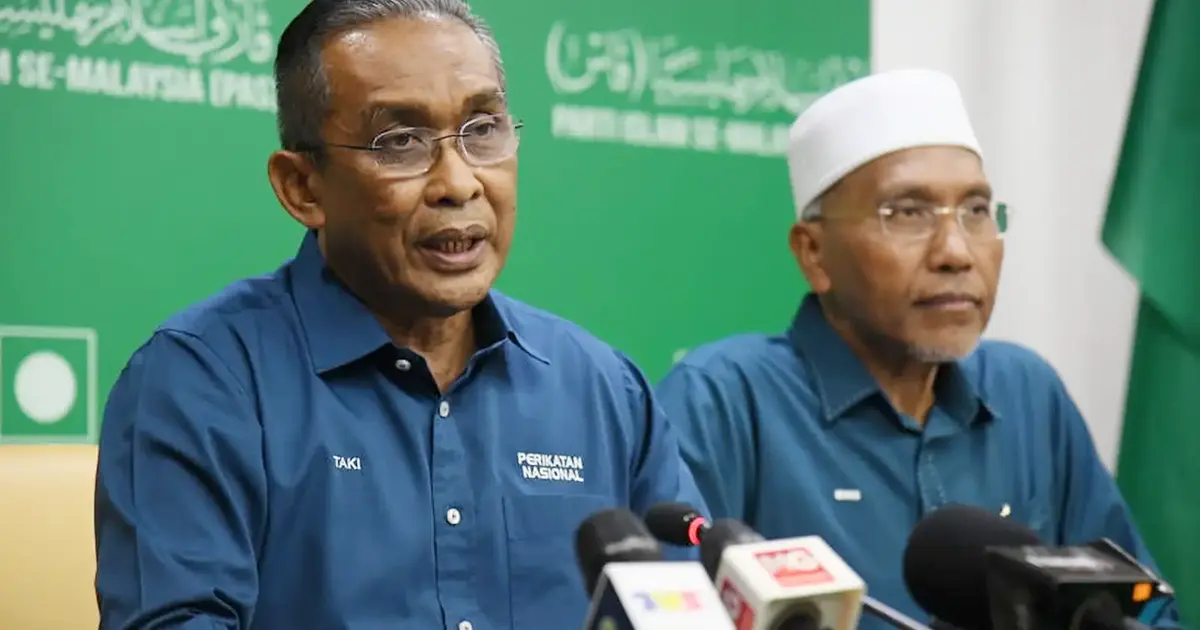
Perikatan Nasional has reinforced its hierarchical decision-making structure, with coalition secretary-general Takiyuddin Hassan declaring that all meetings and official events must secure prior clearance from the chairman's office. The statement arrives amid reports that Bersatu president Muhyiddin Yassin had sought to initiate a PN Supreme Council gathering, raising questions about the extent of discretionary power individual component party leaders hold within the broader coalition framework.
Takiyuddin's pronouncement underscores growing formality in governance protocols within Malaysia's most significant opposition coalition. The requirement for chairmanship authorization before convening any official session—whether plenary gatherings, committee meetings, or public events—effectively centralizes agenda-setting and temporal control. This procedural clarification suggests that component parties, including Bersatu, operate within defined parameters rather than as autonomous entities capable of independently scheduling major coalition activities.
The context matters considerably for understanding Malaysian opposition politics. Perikatan Nasional, comprising Bersatu, PAS, and formerly UMNO before the latter's departure, has positioned itself as a cohesive alternative to the ruling Pakatan Harapan coalition. Any perception of internal fragmentation or competing power centers could undermine its credibility as a unified political force capable of presenting a coherent policy platform to voters. Takiyuddin's clarification therefore serves a preventive function, establishing clear boundaries that discourage unilateral action by individual party leaders.
Muhyiddin Yassin's apparent attempt to convene the Supreme Council—potentially without going through standard approval channels—raises intriguing questions about intra-coalition dynamics. As Bersatu president and a former prime minister, Muhyiddin commands significant political stature and party machinery. His desire to trigger such a meeting presumably reflects concerns requiring urgent collective discussion, though the nature of those concerns remains unstated. The response from the secretariat suggests that regardless of seniority or stature, procedural compliance takes precedence.
This incident illuminates broader tensions within opposition coalitions globally. Component parties maintain independent identities, organizational structures, and leadership hierarchies, yet must coordinate effectively as unified entities to remain viable challengers to incumbents. The balance between preserving party autonomy and ensuring coalition coherence perpetually tests leadership across the political spectrum. By institutionalizing approval requirements, Takiyuddin signals that PN prioritizes unity and centralized coordination over individual initiative.
For Malaysian observers monitoring opposition politics, this development carries operational implications. If Supreme Council meetings require chairman authorization and cannot be spontaneously convened, decision-making velocity potentially decreases. Urgent crises or sudden political opportunities might require navigating additional bureaucratic steps before the coalition can formally respond. Conversely, this system prevents individual parties from forcing costly or divisive confrontations through surprise meetings, which might generate unwanted headlines or lock coalition partners into positions they had not adequately deliberated.
The timing of this clarification warrants consideration within the broader political calendar. Malaysia faces periodic electoral cycles at state and federal levels, and opposition coalitions must maintain sufficient discipline and public-facing unity to contest effectively. Internal disputes over procedural authority, especially those playing out through media reports, undermine the professional image that voters increasingly expect from alternative governments. Takiyuddin's statement essentially closes a potential avenue for such disputes to become public spectacles.
PAS and other PN component parties likely welcome this formalization, as it provides predictability about decision-making processes. Smaller coalition partners often fear that larger or more established parties might leverage superior organizational capacity to dominate coalition agenda-setting. Transparent, hierarchical procedures with clear authorization chains offer protection against such capture, ensuring that all constituent parties retain voice in major decisions.
Takiyuddin Hassan, as secretary-general, occupies the administrative nerve center of PN operations. His role encompasses coordinating between party leaders, maintaining coalition records, and implementing decisions reached by party councils. By articulating these requirements publicly, he signals that his office—and by extension, the chairman's authority—will enforce compliance. This represents more than bureaucratic procedure; it constitutes an assertion that coalition governance structures will be respected and that circumventing them invites institutional pushback.
Looking forward, this incident may influence how opposition coalitions handle internal disagreements or strategic differences. Rather than attempting to force Supreme Council sessions that generate media attention and internal friction, component party leaders might increasingly pursue consensus through private channels, bilateral discussions between party presidents, or scheduled working group meetings. These quieter approaches often prove more effective at building genuine agreement than dramatic institutional confrontations.
The broader significance for Malaysian politics involves how opposition forces organize themselves. Strong, disciplined coalitions with clear governance structures generally perform better electorally and in government than loose, perpetually quarreling alliances. Takiyuddin's statement, while administratively dry, reflects PN's apparent commitment to maintaining the organizational rigor necessary for credible governance alternatives. Whether this formalization ultimately strengthens or constrains the coalition's political effectiveness will depend on how skillfully leadership manages genuine disagreements while maintaining public unity.