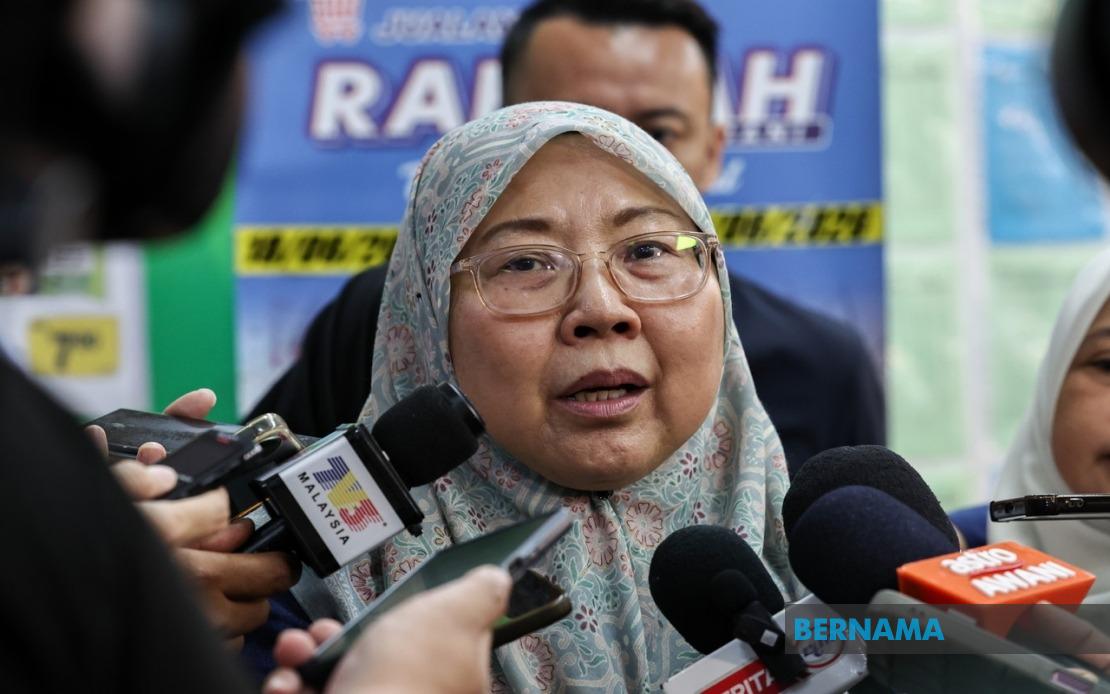
PKR's candidate selection process for the Johor and Negeri Sembilan state elections has reached the final stages, with party secretary-general Datuk Dr Fuziah Salleh confirming that the roster is approximately 99 per cent complete. The party intends to contest 20 seats across Johor and 16 seats in Negeri Sembilan, representing a strategic positioning ahead of both state contests scheduled for the coming months. While the formal announcement remains pending over the coming days, PKR's leadership is preparing to unveil what it describes as a refreshed and balanced slate of candidates.
The composition of PKR's candidate lists reflects an intentional strategy to broaden the party's appeal across demographic lines. Fuziah indicated during remarks made at a public event in Johor Bahru that the party would present a judicious mixture of seasoned political operatives and newcomers to electoral politics, with particular attention given to increasing representation among women and younger candidates. However, the precise proportion of fresh faces to returning candidates remains undisclosed, pending the formal unveiling. This approach aligns with broader coalition dynamics within Pakatan Harapan, where member parties have increasingly sought to demonstrate responsiveness to calls for generational renewal and greater inclusion.
The Johor state election follows a dissolution of the State Legislative Assembly on June 1, with the Election Commission establishing June 27 as nomination day and July 11 as polling day. The assembly comprises 56 seats total, and prior to dissolution, the political landscape heavily favoured Barisan Nasional, which held 40 seats against Pakatan Harapan's 12, Perikatan Nasional's three, and MUDA's single seat. PKR's decision to contest 20 of these seats places it as the primary coalition standard-bearer in the state, though the party faces formidable competition from an entrenched BN machinery.
Negeri Sembilan presents a distinctly different electoral equation, with the August 1 polling date allowing additional preparation time. The nomination process for the Negeri Sembilan contest is scheduled for July 18, with early voting on July 28. The state assembly dissolved on June 5 and contains 36 seats, where Pakatan Harapan held a more competitive position with 17 seats before dissolution, alongside Barisan Nasional's 14 and Perikatan Nasional's five. PKR's allocation of 16 seats suggests a substantial responsibility within the coalition's attempt to maintain or expand its foothold in the state.
A significant complication continues to shadow PKR's campaign preparations: the dispute over the Puteri Wangsa constituency in Johor. Johor Amanah, the state branch of the Amanah party and another Pakatan Harapan component, has contested PKR's claim to the seat, asserting that it should belong to Amanah rather than PKR. The underlying dispute stems from the 2022 state election, when the seat was temporarily loaned to MUDA. PKR contends the seat rightfully reverts to the party, while Amanah leadership disputes this characterisation. Fuziah acknowledged the dispute but deferred resolution to the highest levels of both component parties, indicating that the matter remains unresolved at the technical level and requires intervention from party leadership.
The intra-coalition friction over Puteri Wangsa exemplifies broader challenges facing Pakatan Harapan as it attempts to present a unified electoral front across multiple state contests. Johor Amanah vice chairman Dr Zuhan Zain had previously raised objections to the seat allocation, signalling that the dispute reflects genuine disagreement rather than routine procedural negotiation. Such divisions, if unresolved before nomination day on June 27, could create public friction during the campaign and potentially complicate voter messaging around coalition unity and stability. The decision to escalate the matter to top-level party leaders suggests recognition that technical compromise is unlikely.
PKR faces an additional disciplinary matter that, while distinct from candidate selection, carries implications for party cohesion during the election campaign. Subang MP Wong Chen has been under investigation by the party disciplinary process following his public challenge to PKR to expel him. Fuziah indicated that the matter has been forwarded to PKR's Disciplinary Board for further consideration and action. Wong Chen's provocative stance suggests underlying tensions within the party that, depending on the board's decision, could either be resolved through formal action or continue to generate internal friction and media attention during the election period.
The timing of PKR's candidate announcements carries strategic significance given the compressed campaign schedules. In Johor, candidates will have approximately two weeks between the formal announcement and nomination day to establish ground presence and messaging. The Negeri Sembilan timeline provides a longer preparation window, affording candidates roughly three weeks before the nomination process begins on July 18. Both schedules contrast with the extended lead time that major parties typically prefer, potentially disadvantaging newer candidates who require additional time to build recognition and organisational infrastructure in their respective constituencies.
For Malaysian political observers, PKR's approach to candidate selection within Pakatan Harapan carries broader implications for the coalition's longer-term trajectory. The emphasis on balancing established figures with emerging politicians suggests an attempt to simultaneously maintain institutional knowledge and electoral competitiveness while signalling to younger party members and voters that advancement opportunities exist within the coalition framework. This strategy becomes particularly important given Perikatan Nasional's demonstrated appeal to younger voters in recent contests, a trend that poses risks to Pakatan Harapan's demographic sustainability if not addressed through visible generational inclusion at candidate level.
The scale of PKR's commitments across both Johor and Negeri Sembilan—36 seats combined—underscores the party's role as Pakatan Harapan's primary institutional vehicle in peninsular Malaysia. Success in these contests would substantially strengthen PKR's position within the coalition and potentially create momentum toward the eventual federal-level electoral contest. Conversely, disappointing results could trigger internal criticism regarding candidate selection decisions and strategy, placing additional pressure on party leadership and potentially complicating Pakatan Harapan's broader political positioning. The candidate announcements, once formally made, will provide the first concrete indication of whether PKR's leadership has successfully balanced competing demands for renewal and experience across the contested seats.