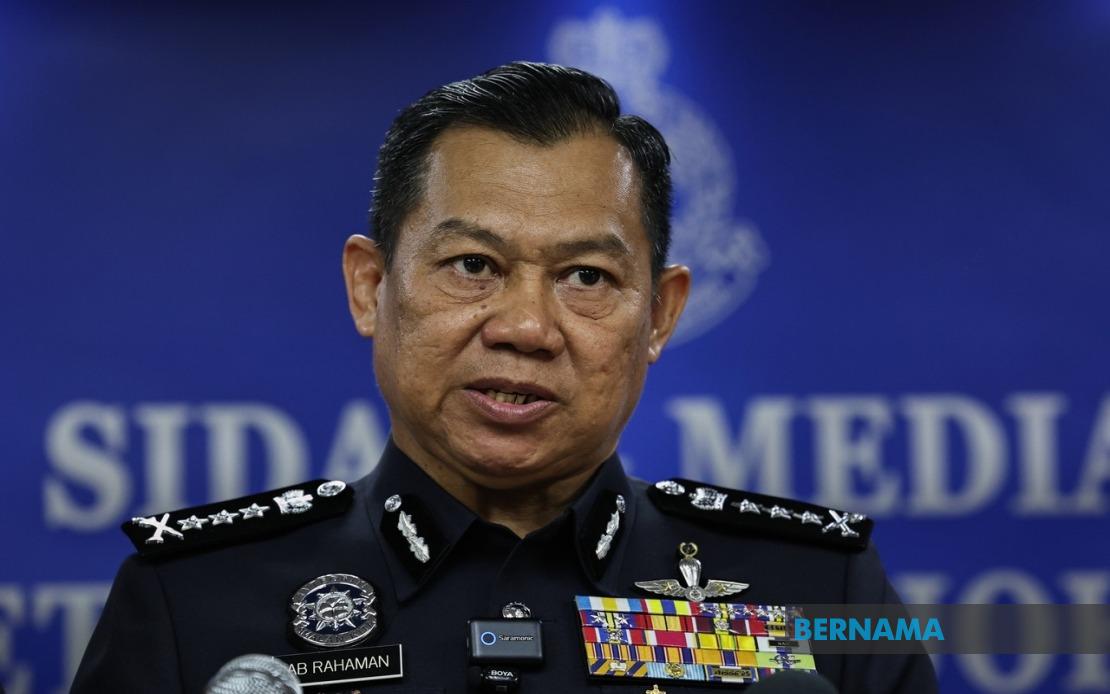
The Royal Malaysia Police has committed substantial manpower resources for the upcoming Johor State Election, deploying 11,926 officers and personnel to oversee security arrangements and facilitate the smooth running of the electoral process. The announcement came from Johor Police Chief Datuk Ab Rahaman Arsad during a press conference held at the Johor Police Contingent Headquarters, underscoring the force's recognition that state elections demand coordinated operational planning and sustained protective measures throughout multiple polling phases.
The deployment strategy has been structured into five distinct operational phases, reflecting the police's understanding that different stages of an election cycle present varying security challenges and requirements. By dividing the mobilisation into phases, the PDRM intends to optimise resource allocation, ensuring that personnel are concentrated where and when their presence is most critical. This phased approach allows the force to maintain flexibility in responding to emerging situations while avoiding unnecessary strain on a static, unmodulated presence across the entire electoral period.
Datuk Ab Rahaman emphasised that deployment numbers and positioning would remain fluid, subject to real-time assessment of operational needs. This adaptive posture is significant for Malaysian elections, which frequently encounter localised disruptions, crowd management requirements, and logistical challenges that cannot be fully anticipated during the planning phase. The willingness to adjust deployments dynamically suggests the police have learned from previous elections that rigid deployment patterns often prove inefficient and occasionally counterproductive.
Beyond the core PDRM contingent, Johor police have secured supplementary manpower from units operating under the Internal Security and Public Order Department, a move that substantially amplifies their operational capacity. The reinforcement consists of 54 officers and 701 personnel drawn from the General Operations Force, Federal Reserve Unit, PDRM Air Unit, and Marine Police Force. This multi-agency approach reflects contemporary policing doctrine, recognising that large-scale public events benefit from specialist units with distinct capabilities and training.
The inclusion of the General Operations Force brings paramilitary-trained personnel experienced in crowd control and rapid response scenarios. The Federal Reserve Unit similarly provides officers trained in handling more volatile situations that may exceed standard police capacity. The PDRM Air Unit's involvement suggests attention to aerial surveillance and monitoring capabilities, particularly relevant for covering Johor's expansive geography and detecting potential security threats across dispersed polling locations. The Marine Police Force participation is geographically logical for a state with significant coastlines and waterways, ensuring security extends to less easily monitored areas.
For Malaysian observers and voters, the deployment scale and multi-unit composition conveys a clear signal about state election significance within the broader electoral calendar. State elections have grown increasingly high-stakes politically, as reflected in resource commitments. The 11,926-strong deployment represents a substantial commitment that rivals or exceeds security operations for many international events, indicating how seriously Malaysia's security establishment treats electoral management.
The election security framework also carries implications for civil liberties discourse in Malaysia. While substantial police presence aims to prevent disruption and violence, such deployments inevitably generate scrutiny regarding the balance between security and freedom of movement. Opposition parties and civil society observers typically monitor whether police deployment is deployed even-handedly across all candidate camps or whether visible partiality undermines electoral credibility. The transparency of Datuk Ab Rahaman's announcement may partially address these concerns by making deployment intentions publicly visible rather than opaque.
Johor specifically presents particular security management challenges given its significance as Malaysia's largest state by population outside the federal territories, its position as a crucial political battleground between major party coalitions, and its geographic characteristics spanning urban, suburban, and rural constituencies. The state's electoral dynamics are further complicated by cross-border factors, given Johor's proximity to Singapore and its role as an economic hub attracting transient populations whose voting behaviour may differ from long-term residents.
The security planning also reflects lessons from previous Malaysian elections where polling day incidents—ranging from minor altercations between supporters to more serious disruptions—created negative headlines and voter intimidation perceptions. By maintaining substantial uniformed presence, police aim to deter both intentional disruption and spontaneous crowd-related incidents that could undermine public confidence in electoral integrity. The visible security apparatus itself becomes a form of conflict prevention, though critics note that particularly dense police presence in certain areas can equally discourage voter turnout.
Regional observers from other Southeast Asian democracies often scrutinise Malaysian election management, given the country's role as a relatively mature democracy attempting to balance electoral openness with security concerns. The Johor deployment decisions will likely inform assessments of whether Malaysia's security approach remains proportionate and professional. Countries like Indonesia and the Philippines facing their own election security challenges sometimes reference Malaysian practices as either positive examples of professionalised deployment or cautionary cases of excessive force.
The coordination between PDRM and the KDNKA-affiliated specialist units suggests institutional maturing within Malaysia's security apparatus, where intelligence sharing and unified command structures have reportedly improved compared to earlier elections. This institutional development, while less visible than uniformed deployment numbers, ultimately determines whether security operations enhance rather than complicate electoral administration.
For voters, the substantial police presence will be most visible at polling stations and major transport hubs, though community-level security arrangements will likely involve lower-profile coordination between police and local election officials. The success of the deployment will ultimately be measured not by personnel numbers deployed but by whether election day proceeds without significant incident, violence is prevented, and voters feel sufficiently secure to participate without intimidation. The five-phase operational structure suggests police are preparing for sustained engagement rather than single-day activity, acknowledging that election-related tensions may simmer across the nomination period, campaign phase, polling day, and result announcement stages.