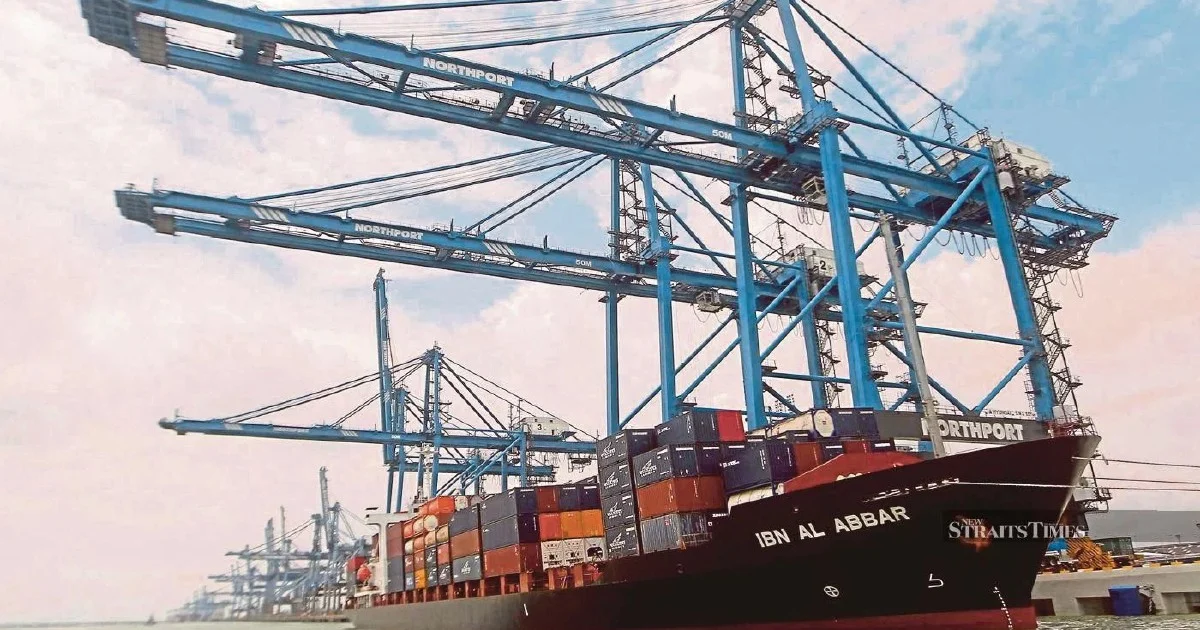
Malaysia's ambitious Port Klang 3 expansion initiative remains firmly aligned with its original timeline, with Transport Minister Anthony Loke confirming that groundbreaking work could materialise before the year concludes, contingent on finalising outstanding property and territorial disputes with the Selangor state administration.
Loke's statement signals continued momentum for the massive port development venture, which forms a critical component of Malaysia's broader infrastructure modernisation strategy. The Port Klang Authority and federal authorities have maintained their commitment to advancing the project despite ongoing negotiations with state-level stakeholders who hold jurisdiction over the parcels required for the undertaking.
The land-related impediments represent a typical friction point in Malaysia's federalised governance structure, where port development initiatives often require coordinated approval across multiple administrative tiers. Selangor's involvement reflects the geographic reality that Port Klang's expansion footprint necessarily extends into state-controlled territory, necessitating alignment between federal maritime authorities and the sultanate's land administration apparatus.
Port Klang 3 represents a substantial capital investment designed to augment Malaysia's containerised cargo handling capabilities and reinforce Kuala Lumpur's competitive standing within the regional maritime logistics sector. The modernisation effort addresses capacity constraints that have increasingly constrained throughput during peak seasonal periods and reflects Malaysia's strategic positioning to capture incremental trade flows emanating from Southeast Asian manufacturing and commerce.
The project's strategic significance extends beyond mere infrastructure expansion. Port Klang serves as the primary maritime gateway for Malaysia's broader economy, facilitating import-export transactions worth hundreds of billions of ringgit annually. Enhanced operational capacity translates directly into improved supply chain fluidity for Malaysian manufacturers, retailers, and logistics enterprises competing across international markets.
Regional competitors including Singapore's Port of Singapore Authority and Thailand's Laem Chabang have invested substantially in terminal modernisation and capacity enhancement during recent years. Port Klang 3 represents Malaysia's calculated response to competitive pressures within the regional shipping hierarchy, positioning the nation to retain and expand its container traffic share amid intensifying competition for transhipment volumes.
Loke's delineation of the timeline illustrates the delicate balance between federal infrastructure ambitions and state-level administrative prerogatives. While the Transport Minister's office retains responsibility for national maritime policy and strategic port development planning, Selangor's government holds veto-equivalent authority over land allocation within its jurisdiction. This structural reality necessitates negotiated consensus before physical development can commence.
The resolution pathway likely involves negotiations addressing compensation arrangements, environmental impact assessments, and tenure terms that satisfy both federal and state interests. Such negotiations typically consume considerable calendar time, explaining why Loke's cautious conditional framing acknowledges the genuine possibility that land matters could extend timelines beyond current expectations.
Port Klang's significance within Malaysian commerce cannot be overstated. The facility currently processes approximately 12 million twenty-foot equivalent units annually, establishing it as Southeast Asia's second-busiest container terminal after Singapore. Capacity expansion through Port Klang 3 directly enhances Malaysia's ability to accommodate future growth in containerised trade flowing through the strategic Strait of Malacca.
For regional observers, Port Klang 3's development trajectory carries implications extending beyond Malaysian maritime commerce. The project influences regional supply chain resilience and Singapore's competitive positioning as the primary transhipment hub for Asia-Pacific shipping flows. Enhanced Malaysian capacity creates alternative routing options for shipping lines and freight forwarders, potentially moderating tariff pressures and enhancing overall regional logistics efficiency.
Private shipping operators and logistics companies maintaining substantial Malaysian operations stand to benefit materially from expanded Port Klang capacity. Reduced container dwell times and improved berth availability translate into lower operational expenses and improved service reliability—competitive advantages increasingly central to corporate decision-making regarding supply chain architecture and regional hub locations.
The investment outlay required for Port Klang 3 positions the development as a major undertaking demanding careful financial structuring and commercial viability assessment. The undertaking likely attracts interest from regional and international infrastructure investors, introducing potential public-private partnership frameworks that could accelerate implementation timelines whilst distributing financial risk across multiple stakeholders.
Loke's public commitment to resolving land matters with Selangor signals federal determination to advance the project despite coordination challenges. The Transport Minister's transparent acknowledgment of outstanding issues simultaneously manages expectations while communicating that feasible pathways toward resolution remain viable. The coming months will prove instructive regarding the pace at which federal and state authorities can harmonise their respective interests surrounding this consequential maritime infrastructure initiative.