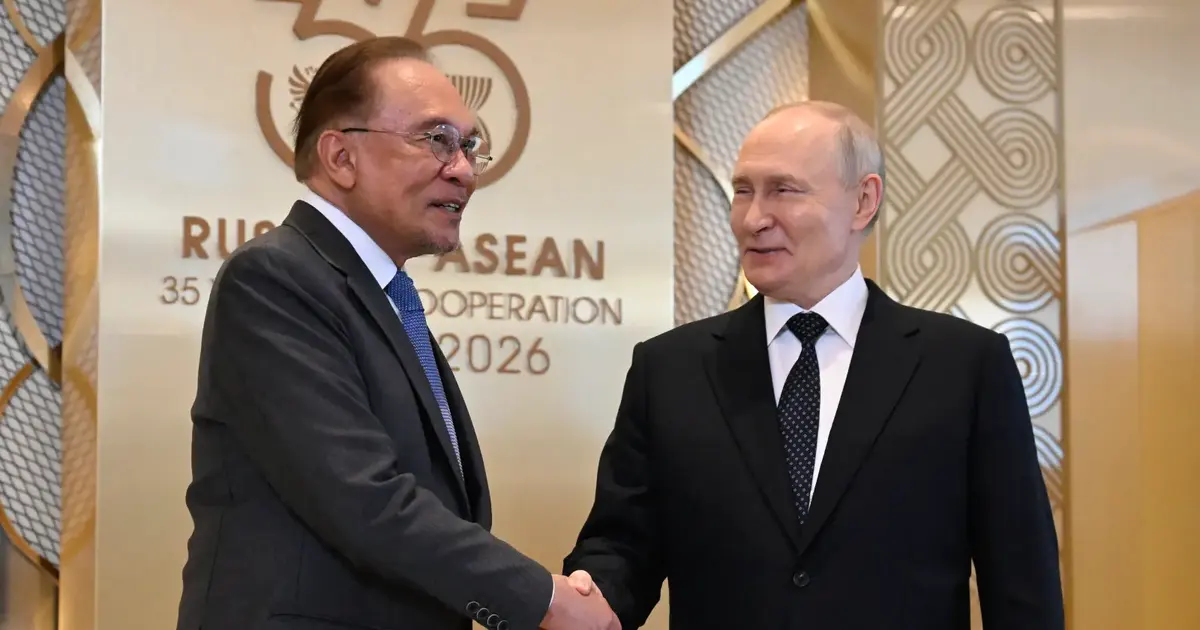
Russia has committed to supplying Malaysia with stable quantities of oil and natural gas over the next two decades, according to Prime Minister Anwar Ibrahim, signalling a significant deepening of energy cooperation between the two nations. The assurance from President Vladimir Putin addresses Malaysia's ongoing energy security concerns and reflects growing strategic ties between Kuala Lumpur and Moscow at a time when global energy markets remain volatile.
The pledge carries considerable importance for Malaysia's energy planning as the country balances its domestic production with increasingly diversified sourcing arrangements. Malaysia has historically relied on regional suppliers and its own reserves, but securing long-term commitments from major producers like Russia provides greater predictability for future demand. With energy prices subject to geopolitical pressures and supply chain disruptions, the guaranteed access to Russian hydrocarbons offers Malaysian industries and power generation facilities a more secure foundation for operations.
Prime Minister Anwar Ibrahim's engagement with regional energy partners extends beyond Russia. His planned visit to Turkmenistan underscores Malaysia's strategic initiative to tap into Central Asian energy resources and trading opportunities. Turkmenistan ranks among the world's significant natural gas producers, positioning it as another potential pillar in Malaysia's diversified energy security architecture. The timing of these diplomatic missions reflects Malaysia's proactive approach to securing both immediate and long-term supply commitments.
Beyond energy considerations, Anwar Ibrahim has emphasized that his regional tour aims to unlock export opportunities for Malaysian products and services. The vision encompasses developing stronger trade channels into major East Asian markets, particularly China, Japan, and South Korea. These three economies represent some of the world's largest and most dynamic consumer markets, offering substantial potential for Malaysian manufacturers, agricultural producers, and service providers seeking growth beyond traditional Southeast Asian outlets.
China's position as a manufacturing powerhouse and consumer market makes it especially attractive for Malaysian exporters. The country's enormous purchasing power and industrial demand create possibilities for everything from palm oil derivatives and semiconductors to higher-value manufactured goods. Similarly, Japan's sophisticated market requires quality products and specialized services, while South Korea's technology sector and consumer base present opportunities for Malaysian tech companies and suppliers to established South Korean manufacturers.
The diplomatic push to enhance Malaysian export access reflects broader economic challenges facing the country. As a middle-income nation seeking to advance up the value chain, Malaysia requires expanding markets for its products and services. Saturated Southeast Asian markets mean growth increasingly depends on penetrating larger external markets. The focus on China, Japan, and South Korea acknowledges where immediate demand and purchasing capacity exist.
These overtures also position Malaysia strategically within broader geopolitical shifts. By cultivating relationships with both traditional partners and non-traditional sources like Russia and Central Asia, Malaysia demonstrates pragmatic non-alignment. The approach contrasts with pressure from some quarters to choose sides in great power competition. Instead, Malaysia pursues a balanced path of engaging multiple partners simultaneously to advance national interests.
Energy security and export expansion are interconnected elements of Malaysia's economic strategy. Securing reliable hydrocarbon supplies at predictable costs enables industries to operate efficiently and competitively. Lower energy costs and supply certainty help Malaysian manufacturers maintain price competitiveness, particularly for energy-intensive sectors like petrochemicals, palm oil processing, and steel production. This foundation then allows Malaysian companies to invest more in exports and market development.
The Russian commitment also reflects shifts in global energy relationships following international sanctions and geopolitical realignment. While Western nations have sought to reduce dependence on Russian energy, countries like Malaysia maintain pragmatic commercial relationships. This positions Malaysia and other Southeast Asian nations as increasingly important trading partners for Russia, potentially strengthening Malaysia's negotiating position on pricing and terms.
For Malaysian policymakers, managing energy security while pursuing economic growth requires sophisticated navigation of international relationships. The engagement with Russia and Central Asia complements Malaysia's traditional reliance on regional suppliers and its own production. Diversification reduces vulnerability to disruptions from any single source while creating competitive pressure that benefits Malaysian consumers and businesses through better pricing and service.
The success of these diplomatic initiatives ultimately depends on translating commitments into concrete arrangements. Energy supply agreements require detailed negotiations covering volumes, pricing mechanisms, delivery schedules, and payment terms. Similarly, expanding exports to distant markets involves addressing logistics, regulatory compliance, product standards, and competition from established suppliers. The diplomatic groundwork Anwar Ibrahim is laying must be supported by practical follow-up through government agencies and private sector engagement.
Looking ahead, Malaysia's approach of simultaneously pursuing energy security and export expansion reflects mature economic statecraft. Rather than viewing energy relationships as purely transactional or ideological, Malaysia recognizes them as tools for advancing broader development objectives. The next phase involves converting political assurances into binding commercial agreements that deliver tangible benefits to Malaysian consumers, workers, and companies.