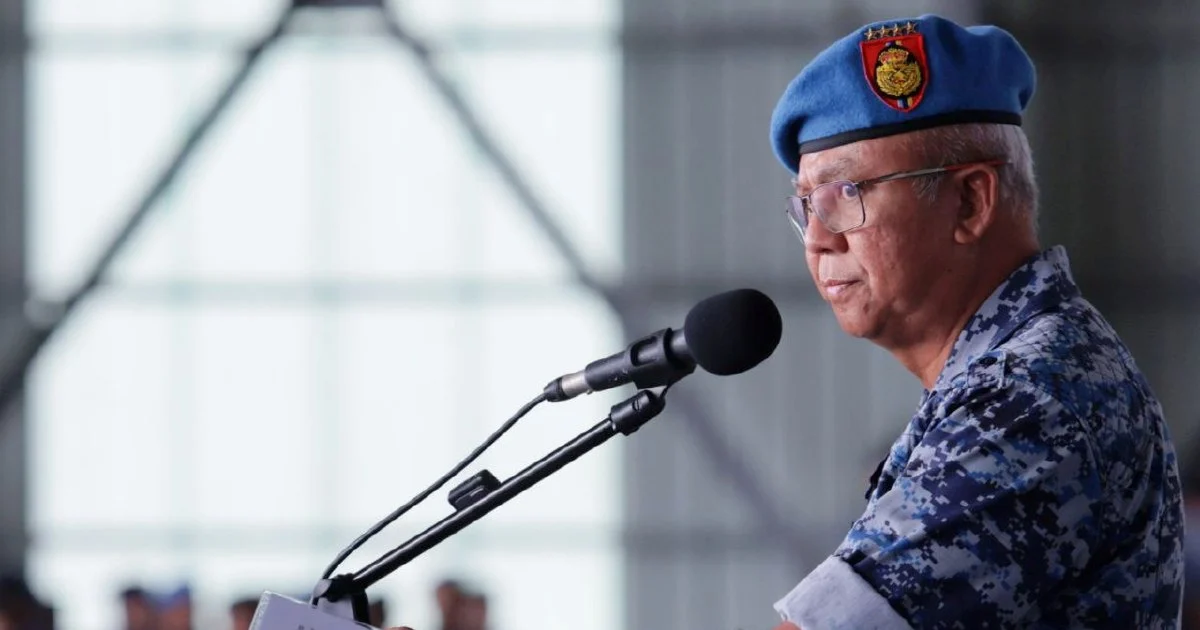
The Royal Malaysian Air Force finds itself operating with insufficient equipment to adequately monitor and protect Malaysia's Exclusive Economic Zone, according to the service's leadership. Speaking in Subang, the air force chief underscored a critical capability gap that has become increasingly apparent as regional tensions mount and neighbouring powers expand their maritime activities. The concern reflects a broader challenge facing Southeast Asian nations that lack the advanced surveillance infrastructure and patrol capacity of larger military powers with interests in the South China Sea.
Malaysia's maritime domain encompasses vast stretches of ocean where the country claims sovereign rights to resources and navigation authority. Yet the RMAF currently operates with platforms and sensors that limit real-time awareness across this expansive area. The chief's comments suggest that existing surveillance systems, while functional, cannot deliver the continuous monitoring required to detect and respond to unauthorised activities, whether commercial fishing incursions, military manoeuvres by rival claimants, or other maritime incidents that could threaten Malaysian interests.
The South China Sea has become a focal point of strategic competition between major powers and regional states. China's ongoing military build-up, coupled with its assertive maritime presence, has intensified concerns among nations bordering the sea. Vietnam, the Philippines, and other claimants have similarly upgraded their defence capabilities. In this context, Malaysia risks falling behind in technological sophistication and operational capacity if modernisation does not proceed urgently. The air force chief's statement appears designed to prompt serious consideration of equipment acquisition and force expansion within the defence establishment and among policymakers.
Currently, the RMAF deploys a mix of ageing and relatively modern aircraft for maritime patrol and reconnaissance. The Bombardier Dash 8 turboprops serve as the backbone of maritime surveillance operations, supplemented by helicopters and fixed-wing assets with limited endurance. However, these platforms cannot simultaneously cover the numerous maritime areas of concern, nor can they maintain persistent observation over extended periods. Gaps in coverage create vulnerabilities that adversaries might exploit, whether for intelligence gathering, resource smuggling, or military positioning.
The modernisation requirement extends beyond acquiring new patrol aircraft. Effective maritime domain awareness demands an integrated network of sensors, including coastal radar stations, satellite imagery capabilities, and unmanned systems. Malaysia has invested in some modern technologies, yet integration remains incomplete. The chief's remarks highlight that piecemeal upgrades are insufficient; a comprehensive strategy is needed to establish seamless coverage and enable rapid response to detected threats.
Financial constraints represent a significant obstacle to accelerating RMAF modernisation. Malaysia's defence budget, while respectable in regional terms, must be allocated across multiple service branches and operational priorities. Competing demands for healthcare, education, and infrastructure mean defence spending faces scrutiny. The air force chief's public plea signals that the service views maritime surveillance as sufficiently critical to justify elevated investment levels, particularly given the strategic importance of protecting Malaysia's maritime interests and demonstrating effective sovereignty over claimed waters.
Regional neighbours have taken different approaches to addressing similar challenges. Singapore maintains extensive surveillance capabilities through a combination of modern naval and air assets. Vietnam has aggressively upgraded its maritime patrol fleet. The Philippines, despite resource limitations, has sought international partnerships to enhance awareness. Malaysia's approach thus far has been measured, but the air force chief suggests this measured pace may no longer suffice given the accelerating security environment.
The geopolitical dimension adds urgency to the capability gap. As major powers compete for influence in the South China Sea, they increasingly assert their presence through military activities and civilian maritime assertions. RMAF readiness to detect and document these activities—and to rapidly alert Malaysian civilian authorities and international partners—has become important for maintaining Malaysian credibility in international forums discussing maritime conduct. A capability-limited air force undermines Malaysia's ability to enforce its legal claims and participate effectively in regional security discussions.
Beyond hardware, the air force chief's comments implicitly address the human dimension of maritime surveillance. Trained personnel to operate sophisticated equipment, analyse intelligence data, and coordinate responses require time to develop. Acquiring new assets without concurrent investment in training and doctrine risks underutilising expensive equipment. The service must therefore plan for comprehensive capability enhancement rather than isolated equipment purchases.
The chief's statement arrives at a moment when Malaysia is calibrating its approach to South China Sea issues. The nation maintains strategic ambiguity, avoiding explicit alignment with any major power while protecting its maritime claims and resources. Effective surveillance capabilities underpin this balancing act by providing Malaysian authorities with independent awareness of maritime activity rather than reliance on information from external powers. This autonomy in information gathering strengthens Malaysia's negotiating position.
Stakeholders will likely monitor whether the government responds to these warnings through increased defence budgets or prioritised acquisition programmes. The air force chief has essentially flagged that current policy, if continued unchanged, risks eroding Malaysia's capacity to effectively exercise sovereignty over its claimed maritime spaces. The coming budget cycles and defence planning documents will reveal whether policymakers share this assessment of urgency.