Sabah UMNO is preparing to deploy its organisational resources across Johor for the upcoming state election, signalling a coordinated effort by the coalition to secure votes from communities that have relocated from the East Malaysian state. The party's leadership has been assigned specific responsibility for campaigning in constituencies within the Pasir Gudang parliamentary area, where the concentration of Sabahan voters presents both an opportunity and a strategic priority for Barisan Nasional ahead of polling in mid-July.
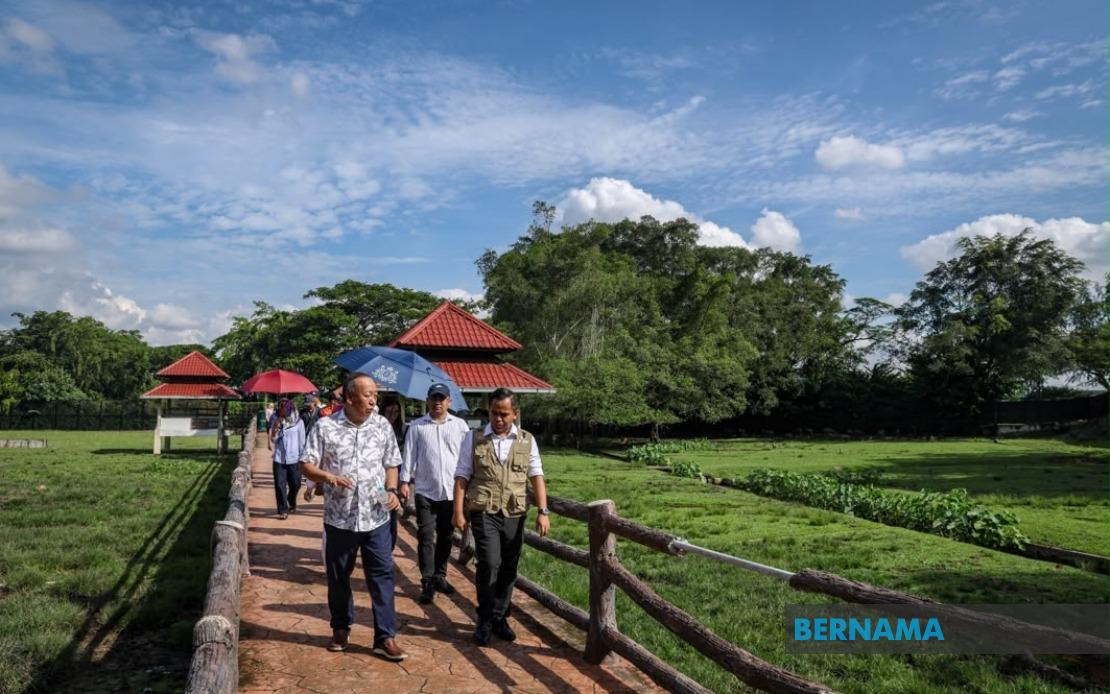
Datuk Jafry Ariffin, who chairs Sabah UMNO's liaison committee and serves as the state's Minister of Tourism, Culture and Environment, outlined the scale of this cross-state initiative during a recent visit to Johor Bahru. According to official voter records, approximately 3,000 registered voters from Sabah currently reside in the Permas state constituency, while another 2,000 are based in Johor Jaya. These figures underscore why the two seats have become focal points for the party's intervention, with Ariffin indicating that Sabah UMNO views its assignment here as a continuation of work undertaken during the 2022 state election campaign.
The deployment of Sabah UMNO's ground machinery reflects a broader strategic calculation within Barisan Nasional, which acknowledges that internal migration within Malaysia creates distinct voter blocs that respond to targeted mobilisation. The party recognises that voters who have relocated from Sabah to Johor often maintain cultural and political ties to their state of origin, making them receptive to messaging delivered by fellow Sabahans within their own party structures. This cross-regional approach has become a recognised feature of Malaysian electoral politics, where governing coalitions leverage inter-state party networks to consolidate support.
Ariffin disclosed that preliminary ground activities have already commenced on a limited scale, with more intensive campaigning to ramp up substantially following the nomination day scheduled for June 27. The Election Commission has set July 11 as polling day, providing a two-week window for the formal campaign period. By spacing out the introduction of resources and messaging, Sabah UMNO aims to maintain momentum while avoiding campaign fatigue among voters and preventing early saturation of the electorate with party propaganda.
The experience accumulated from the 2022 election provides Sabah UMNO with tactical insights into voter behaviour, ground-level organisational challenges, and effective messaging strategies specific to these constituencies. Ariffin emphasised that this institutional memory will be weaponised to ensure maximum effectiveness of the party's intervention, suggesting that lessons about timing, messaging channels, and volunteer coordination have been documented and refined since the previous election cycle.
The broader electoral context gives particular weight to Sabah UMNO's assignment. Before dissolution on June 1, Barisan Nasional held 40 of the 56 seats in the Johor State Legislative Assembly, a commanding position but one that requires defending against opposition parties and smaller coalitions. Pakatan Harapan controls 12 seats, Perikatan Nasional holds three, and MUDA retains one seat. The distribution of these seats reflects the competitive nature of Johor politics, where the coalition cannot take any constituency for granted.
Migration patterns within Malaysia have created electoral sub-populations whose behaviour does not necessarily align with broader state-level voting trends. Sabahan communities in Johor often remain engaged with home-state politics while simultaneously participating in their adopted state's electoral processes. This dual engagement means they may be influenced by developments in Sabah politics, by networks within their own migrant communities, and by the specific local issues affecting their residential constituencies. Sabah UMNO's involvement acknowledges all three dimensions of voter motivation.
The assignment to Pasir Gudang, a federal parliamentary constituency encompassing multiple state seats, illustrates how electoral strategy in Malaysia operates across different administrative tiers. Federal and state boundaries do not always align, requiring parties to develop coordinated approaches that respect both constituency borders and the administrative divisions within which they organise themselves. Sabah UMNO's liaison committee serves precisely this function, coordinating action across state lines within the larger Barisan Nasional framework.
For Malaysian readers, this development highlights several significant dynamics in contemporary electoral politics. First, it demonstrates how internal migration has created new constituencies that parties must strategically prioritise. Second, it reveals the sophisticated coordination required within large coalitions to deploy resources effectively across the country. Third, it underscores that electoral competition in Malaysia increasingly involves not just positioning within a single state but orchestrating support through complex cross-state networks and specialist party units designed to reach diaspora populations.
The mechanics of Sabah UMNO's campaign in Johor also reflect demographic realities that extend beyond these specific constituencies. Thousands of Malaysians from East Malaysia work and reside in peninsular states, creating electoral challenges and opportunities that parties must navigate with sensitivity to both home-state concerns and adopted-state priorities. The success of such coordinated approaches depends on maintaining credibility with voters who maintain emotional and cultural attachments to their places of origin while integrating into new communities.
Looking ahead to polling day on July 11, the contribution of Sabah UMNO's machinery in Permas and Johor Jaya will form part of a larger campaign tapestry involving state, federal, and party-specific resources. Whether the focus on Sabahan voters translates into tangible advantages for Barisan Nasional will depend not only on the intensity of campaigning but on whether the issues being raised resonate with these communities and whether the coalition's positioning on state and national matters aligns with their electoral preferences.