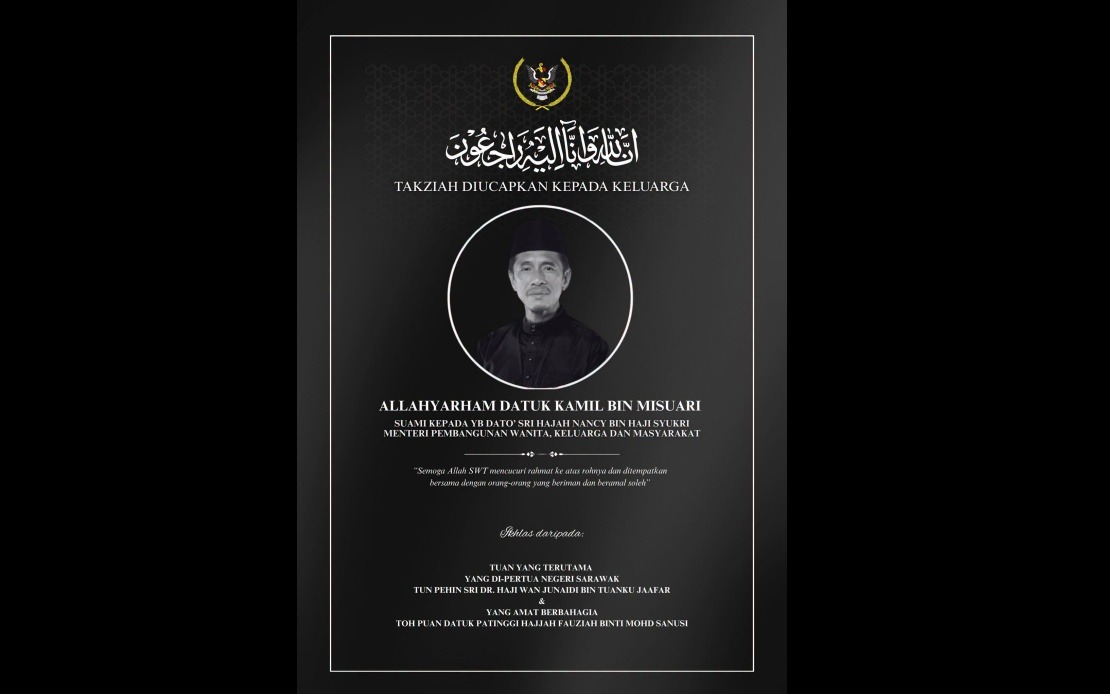
Tun Dr Wan Junaidi Tuanku Jaafar, the Yang Dipertua Negeri Sarawak, has conveyed his deepest sympathies to Women, Family and Community Development Minister Datuk Seri Nancy Shukri following the passing of her husband, Datuk Kamil Misuari. The death occurred in Kuala Lumpur on June 18, marking the conclusion of a marriage that had endured nearly four decades and produced three children. The formal message of condolence was issued through a statement released by Astana Sarawak, the official residence and administrative office of the state governor.
In his expression of grief, Tun Wan Junaidi was accompanied by his wife, Toh Puan Fauziah Mohd Sanusi, in offering prayers for the late Kamil. The statement conveyed hopes that Allah SWT would bestow divine blessings upon the deceased's spirit, accept his virtuous deeds throughout his lifetime, and grant him a place among the righteous in the hereafter. Such religious sentiments are customary in Malaysian society, where Islamic faith informs many aspects of public and private mourning rituals. The prayer for spiritual peace reflects both personal loss and the broader cultural values that bind the nation's leadership and citizenry.
Beyond prayers for the deceased, Tun Wan Junaidi and Toh Puan also invoked divine grace for the grieving family. They specifically requested strength and fortitude for Datuk Seri Nancy and her relatives as they navigate the immediate and prolonged phases of bereavement. The mention of patience in the official statement acknowledges that processing such loss requires time and emotional resilience. Government figures and their families occupy public positions where their personal tragedies often become matters of national awareness, and such formal expressions of support from state leadership serve to affirm that the burden is shared by the broader community.
The late Kamil, who was 65 years old at the time of his death, had been married to Nancy since 1985. The four-decade partnership represented a significant chapter in Nancy's personal life beyond her professional responsibilities. The couple's three children now face the loss of their father at a time when family structures often require parental guidance and support. The duration of their marriage suggests a life built together through Malaysia's periods of significant social and political transformation, making the loss particularly poignant for extended family members and close associates.
Official confirmation of Kamil's death came through the Office of the Minister of Women, Family and Community Development, which issued a statement detailing the circumstances of his passing. The announcement through ministerial channels rather than family representatives reflects the intertwining of personal tragedy with public service and government operations. Nancy's role as a federal minister means that her personal circumstances inevitably intersect with her public duties, and government offices must acknowledge such significant life events that may affect her immediate capacity to fulfill ministerial functions.
The practical arrangements following Kamil's death reflect Sarawak connections and Muslim burial traditions. His remains are scheduled to be transported to Kuching, where his family maintains roots and community ties. The final resting place will be the Samariang Muslim Cemetery, a burial ground that serves the Kuching area's Muslim population. This arrangement indicates that despite Nancy's prominent position in federal politics and her husband's death in Kuala Lumpur, the family chose to observe final rites and interment in their home state, maintaining ties to ancestral and community roots.
The death of Nancy's husband introduces a period of personal adjustment for the minister during what may be a demanding phase of her ministerial tenure. The Women, Family and Community Development portfolio addresses issues affecting Malaysian families, social cohesion, and community welfare across diverse populations. Nancy's leadership in this ministry carries particular resonance given that she now experiences firsthand the devastating impact of losing a family member. This personal tragedy may deepen her understanding of the grief support services and family assistance programs that fall within her ministerial purview.
For Malaysian society broadly, the passing of Kamil and the subsequent mourning period serve as reminder of the universal nature of loss and bereavement. Public figures, despite their prominence and professional achievements, navigate the same fundamental human experiences as ordinary citizens. Nancy's grief is not diminished by her ministerial status, nor is her loss made easier by the support and sympathy that government networks can provide. The formal acknowledgment of such losses by state leadership reinforces communal bonds and affirms that professional responsibilities do not insulate individuals from personal sorrow.
The expression of condolences from Sarawak's governor carries particular significance given the state's cultural context and the respect accorded to leadership figures. Tun Wan Junaidi's statement represents not only personal sympathy but also the formal acknowledgment by state government institutions that they recognize and share in the family's loss. Such gestures, whether expressed through official channels or direct communication, constitute an important part of how Malaysian society processes collective grief while maintaining the dignity and privacy of bereaved families.