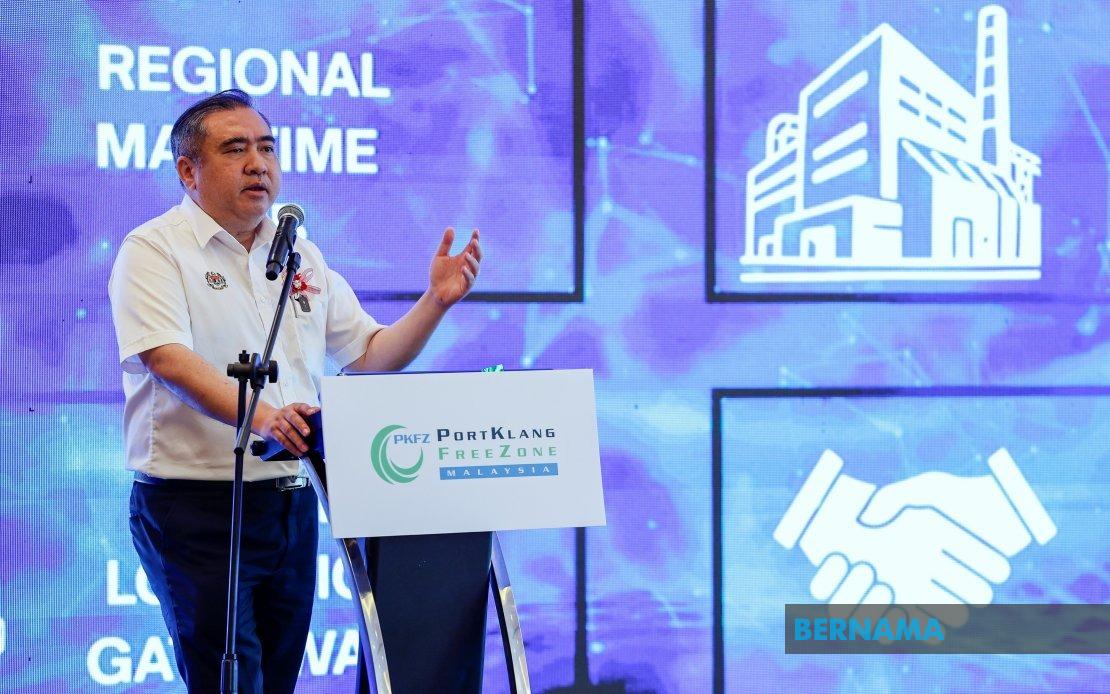
The Selangor State Government has begun resolving critical land ownership disputes that stand between the region and the long-awaited Port Klang Third Terminal, a development that officials regard as vital for Malaysia's standing in global maritime and logistics markets. Transport Minister Anthony Loke outlined the current stage of negotiations during recent ceremonies at Port Klang Free Zone, emphasising that settling the land question represents the essential groundwork before any construction can commence on Carey Island.
The proposed terminal sits within a broader geographical footprint that spans 1,699.68 hectares across Kuala Langat district. The land ownership structure reflects the complexity often encountered in major Malaysian infrastructure projects: seabed portions totalling 1,011.71 hectares fall under the Selangor State Development Corporation, while coastal land comprising 687.96 hectares is managed by Yayasan Selangor. This fragmented ownership pattern, acknowledged by Selangor Menteri Besar Datuk Seri Amirudin Shari in earlier statements, necessitates coordinated dialogue between multiple stakeholders before development can advance.
Officials are exploring a Build-Operate-Transfer model to deliver the terminal, with the transport ministry and Selangor authorities engaging the private sector through concession arrangements. This approach allows private developers to assume operational responsibility while eventually transferring assets to the government, a structure increasingly common for major Asian port developments. Loke expressed optimism about launching construction within the current year, though he acknowledged that the land settlement process must precede any groundbreaking.
The Third Terminal project carries strategic weight that extends beyond Port Klang's immediate operational concerns. Malaysia faces mounting competition from regional port hubs such as Singapore, Tanjung Pelepas, and emerging facilities across Thailand and Vietnam. Port Klang, already handling substantial cargo volumes, requires capacity expansion to retain competitive advantage as container ships grow larger and global shipping routes shift. The third terminal would enhance the country's ability to handle transshipment cargo and position itself as a preferred gateway for Southeast Asian trade.
Prime Minister Datuk Seri Anwar Ibrahim has directed relevant agencies to accelerate the terminal's realisation, signalling cabinet-level commitment to the project. This directive underscores the infrastructure's importance within the government's broader economic agenda, particularly given Malaysia's stated intention to strengthen its position in regional trade and logistics networks. The terminal aligns with plans to modernise port infrastructure across Peninsular Malaysia and support the country's trading relationships across the Indian Ocean and South China Sea.
Parallel to the terminal development, Port Klang Free Zone has embarked on complementary initiatives demonstrating investment momentum in the broader port ecosystem. Recent ceremonies inaugurated Wisma Golden Horse at the Q Centre, a centralised labour quarters facility, alongside factory openings by Suntek Materials and Golden Horse Rubber that collectively represent RM566 million in new investment. These projects indicate that confidence in Port Klang's future remains robust, potentially facilitating recruitment and labour stability once the third terminal moves toward operation.
Labour considerations feature prominently in port sector planning, reflecting Malaysia's persistent shortage of skilled workers in heavy transport and logistics operations. The transport ministry recently formalised a memorandum of understanding between Port Klang Free Zone and the Armed Forces Ex-Servicemen's Affairs Corporation, a partnership intended to channel military retirees into skilled positions within port operations. This initiative responds to industry demands while providing alternative career pathways for former service personnel, an approach that addresses both workforce capacity and social reintegration objectives.
The government announced in March a dedicated licensing programme enabling military veterans to obtain class E licenses for operating heavy vehicles, directly targeting shortages in haulage and logistics sectors. This programme removes bureaucratic barriers that previously discouraged veteran recruitment into transport roles, creating a pipeline of experienced personnel for port operations and related industries. As the third terminal develops, such workforce initiatives become increasingly relevant to operational planning.
The land settlement process now underway reflects broader patterns in Malaysian infrastructure development, where land acquisition and ownership clarification often consume substantial project timelines. Carey Island's location within Kuala Langat, a district encompassing agricultural and industrial zones, adds complexity to land negotiations. Resolving the competing interests of government agencies, charitable foundations, and commercial interests requires diplomatic coordination across multiple government levels and private entities.
The third terminal's eventual realisation would represent a significant shift in Port Klang's operational geography, moving container handling beyond the northern concentrations around existing facilities. Carey Island development would utilise previously underdeveloped coastal areas, potentially attracting additional maritime industries and supporting services. This expansion could reshape regional employment patterns and infrastructure investment priorities across Selangor's western coastal corridor.
Regional observers monitor the project's progress closely, recognising that Malaysian port expansion affects shipping costs and efficiency across Southeast Asia. A functioning third terminal could reduce congestion at competing facilities and improve turnaround times for vessels serving the region. For neighbouring countries reliant on Malaysian port services—particularly landlocked states and those with limited deep-water facilities—the terminal's opening would enhance regional logistics competitiveness.
The timeline remains uncertain pending land resolution, though ministerial statements suggest the government prioritises rapid advancement. Officials have indicated that securing political commitment and stakeholder consensus around land issues represents the primary challenge, rather than construction feasibility or financing models. Successful completion of negotiations could accelerate subsequent phases, potentially positioning Malaysia to respond to anticipated regional demand growth in container shipping over the coming decade.
As negotiations proceed, the third terminal project embodies Malaysia's infrastructure aspirations and the practical complexities of large-scale development. The transport ministry's collaborative approach with Selangor authorities suggests recognition that regional consensus strengthens project resilience and long-term viability. Progress on this front will signal the government's capacity to advance strategic infrastructure despite administrative and ownership complexities inherent in Malaysian development frameworks.