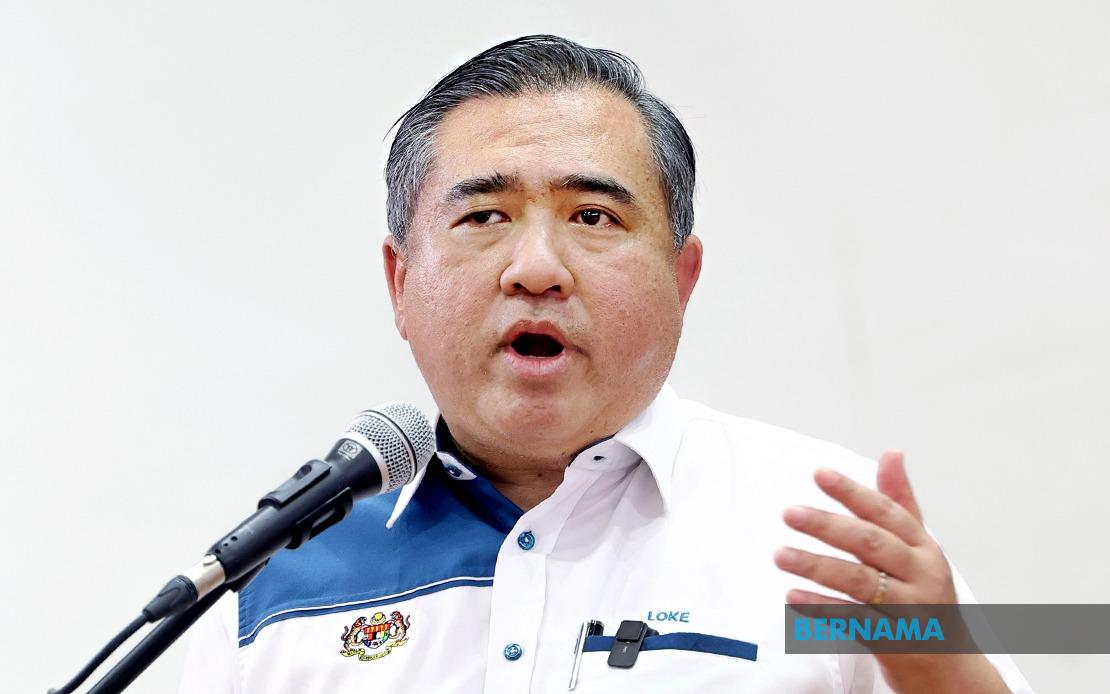
Transport Minister Anthony Loke has defended the continued operation of diesel locomotives on the Southern Shuttle service, positioning the arrangement as a pragmatic interim solution while the authorities await delivery of new Electric Multiple Unit trains. Speaking on social media in mid-June from Johor Bahru, Loke explained that the ministry faced a binary choice: either maintain the status quo and force commuters to wait two to three years for ten fresh EMU train sets to materialise, or deploy existing diesel rolling stock to serve passengers immediately. He opted firmly for the latter approach, prioritising the accessibility needs of Johor residents over technological purity.
The Ministry of Transport has committed substantial public resources to sustain the shuttle service, channelling between RM11 million and RM15 million annually in subsidies to expand rail-based commuting options across the southern corridor. This financial commitment underscores the government's determination to position rail as a viable alternative to road transport despite the interim reliance on older diesel technology. The subsidy framework reflects a broader strategy to make public transport economically accessible while the infrastructure undergoes modernisation, addressing concerns about affordability in an era when many Southeast Asian cities are shifting towards premium service tiers.
Loke's position captures a tension increasingly familiar across Malaysia's transport sector: the gap between immediate passenger demand and the lengthy timelines required for new infrastructure procurement and commissioning. Rather than ask commuters to endure years of service gaps or reduced capacity, the ministry chose to maximise utilisation of existing assets. This decision suggests a maturation in how authorities approach transportation planning, acknowledging that perfect solutions arriving late serve fewer people than imperfect solutions available now. The minister's reasoning carries particular weight in Johor, where commuting patterns have grown more complex as satellite towns and industrial zones expand around the Klang Valley's gravitational pull.
The Southern Shuttle operates across three principal nodes: Kulai, JB Sentral, and Pasir Gudang, creating a triangular service network that addresses growing mobility demands in Johor's developed southern belt. Journey times are competitive—roughly 40 minutes between Kulai and JB Sentral, and 40 to 45 minutes from Kempas Baru to Pasir Gudang—suggesting that even with diesel traction, the service delivers speed advantages over congested road corridors. These durations represent meaningful time savings for daily commuters, offsetting passenger concerns about the technology powering the trains. The Kempas Baru-Pasir Gudang corridor itself represents a significant innovation, having been converted from exclusive freight use to accommodate passenger services for the first time, thereby unlocking latent capacity within the existing rail network.
The eventual arrival of new EMU train sets will trigger a comprehensive shift in operations on the southern routes. Once the Gemas-Johor Bahru electrified double-tracking project reaches completion, the diesel locomotives will be retired and replaced by Electric Train Service operations, fundamentally transforming the character and environmental profile of the corridor. This upgrade carries implications beyond mere technological substitution. Electrified rail systems offer superior acceleration, reduced operational noise, lower per-journey emissions, and enhanced passenger comfort through improved climate control and smoother ride dynamics. The prospect of full electrification signals the ministry's longer-term vision for the southern corridor as a modern, efficient backbone of the region's transport network.
Opposition to the diesel service has emerged from commuters and transport advocates who view the fares as excessive relative to comparable services elsewhere in the Klang Valley. Critics have noted that Southern Shuttle pricing runs approximately three times higher than equivalent journeys on the Seremban and Kuala Lumpur networks, raising fairness questions about whether Johor passengers subsidise development elsewhere. This pricing disparity deserves scrutiny within the broader regional equity framework. Loke's subsidy commitment partially addresses this concern, yet the differential persists, suggesting that either operational costs in Johor genuinely exceed those of other corridors, or that fare-setting reflects different policy assumptions about user contributions to infrastructure sustainability.
The diesel-to-EMU transition also reflects Malaysia's incremental but genuine commitment to decarbonising its transport sector. While the Southern Shuttle's current diesel operations generate emissions criticism, they represent a measurable improvement over the private vehicles they displace, particularly given the substantial subsidy ensuring affordability. The shift toward electrification aligns Malaysia with regional peers like Thailand and Singapore, which have pursued rapid rail electrification to enhance urban mobility while reducing carbon intensity. Johor's modernisation thus positions the state within a regional sustainability narrative, even if the progress necessarily unfolds in phases.
From a passenger perspective, the minister's defence of diesel trains rests on an assumption that imperfect present service beats absent future service. This reasoning applies across Southeast Asia, where transportation infrastructure often struggles with capital constraints and extended procurement cycles. Commuters in Bangkok, Ho Chi Minh City, and Manila frequently navigate similarly aged rolling stock while awaiting modernisation promises. Loke's transparency about the temporary nature of the arrangement at least provides clarity—passengers know the situation is provisional rather than permanent, creating expectations for improvement. This contrasts with scenarios where ageing equipment persists indefinitely with minimal upgrade prospects, breeding frustration and cynicism about government commitment.
The successful deployment of the Southern Shuttle, even in its current diesel iteration, demonstrates that unutilised or underutilised rail corridors can rapidly absorb passenger demand when service frequency and reliability meet minimum thresholds. The Kempas Baru-Pasir Gudang passenger conversion illustrates this principle vividly. Opening existing freight lines to passengers extracts latent value from infrastructure already built and maintained, accelerating mobility improvements without waiting for new construction. Malaysia could potentially extend this approach to other dormant or underused rail segments, creating interim services that generate revenue and demonstrate demand while permanent solutions mature.
Looking forward, the Southern Shuttle's trajectory will serve as a bellwether for the ministry's ability to execute the Gemas-Johor Bahru electrification project on schedule. Delays in EMU delivery or electrification completion would leave diesel trains operating indefinitely, validating critic concerns about technological stagnation. Conversely, successful transition to EMU and ETS operations within the projected timeframe would vindicate Loke's interim strategy and provide a replicable model for other regional corridors. The stakes extend beyond Johor; the success of this intermediate approach will influence how Malaysian planners approach similar modernisation challenges across the rail network in coming years, potentially establishing whether pragmatic gradualism or more ambitious transformation drives the sector forward.