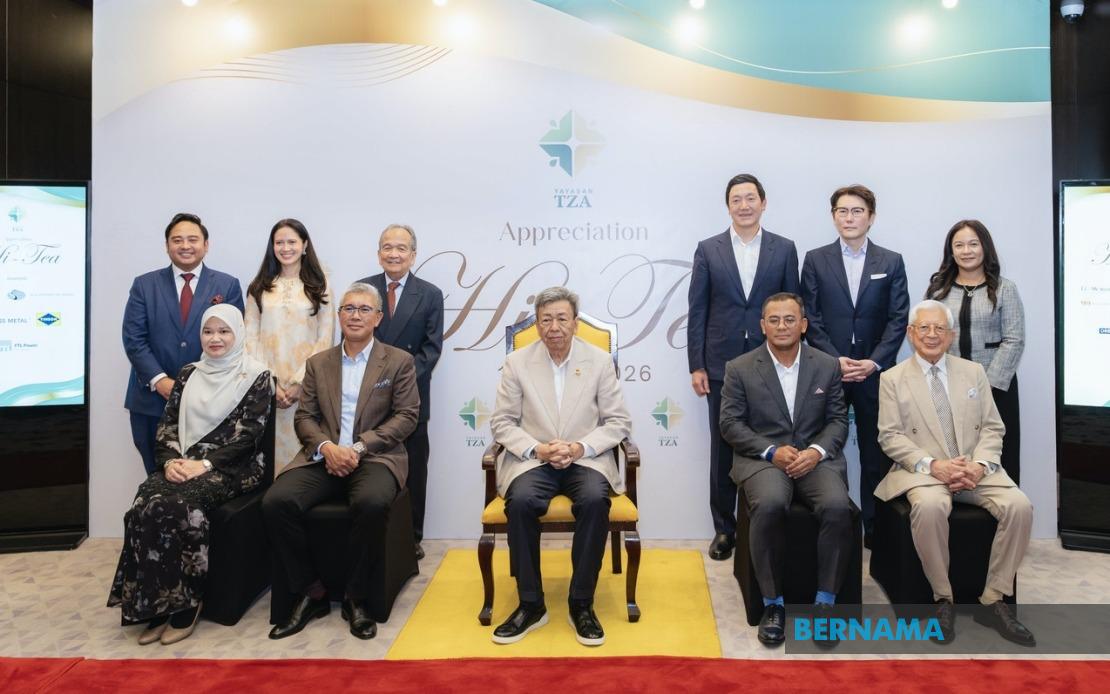
The Sultan of Selangor, Sultan Sharafuddin Idris Shah, lent his royal patronage to the Yayasan TZA (YTZA) Appreciation Hi-Tea Ceremony in Kuala Lumpur today, underscoring the monarchy's continued backing for grassroots social development initiatives across the state. The sovereign's attendance at the June 18 event represented an explicit endorsement of the foundation's work in addressing educational inequality and community resilience, themes that resonate deeply within Malaysia's broader development agenda.
Upon arrival at approximately 3.50 pm, Sultan Sharafuddin was welcomed by YTZA chairman Tan Sri Arshad Raja Tun Uda and advisor Tengku Datuk Seri Zafrul Abdul Aziz. The event drew significant government representation, with Selangor Menteri Besar Datuk Seri Amirudin Shari and Education Minister Fadhlina Sidek in attendance, reflecting the cross-sector collaboration characterising contemporary Malaysian social welfare efforts.
At the ceremony, Tengku Zafrul articulated the foundation's philosophy, positioning YTZA's work beyond mere charitable intervention toward systemic empowerment. Rather than addressing only immediate material needs, he explained, the foundation's programming targets long-term individual and community transformation through carefully designed initiatives spanning education, environmental sustainability, and cultural engagement. This strategic framework distinguishes YTZA from traditional aid models, instead emphasizing capacity-building and dignified self-reliance—principles increasingly central to Southeast Asian development discourse.
The foundation's flagship ACE SPM programme exemplifies this approach. Designed specifically to strengthen examination readiness among students sitting the Sijil Pelajaran Malaysia qualification, ACE SPM concentrates on youth from B40 households—those in the bottom 40 percent income bracket. In 2025 alone, the initiative reached 467 direct beneficiaries across ten Selangor schools, while complementary digital outreach touched over 4,000 additional learners. These figures underscore a critical reality within Malaysia's education landscape: examination success remains heavily stratified by household income, and bridge programmes addressing this disparity attract both government and philanthropic interest.
The expansion trajectory Tengku Zafrul outlined carries implications for Malaysia's human capital development. As automation and economic restructuring intensify regional labour market pressures, strengthening academic foundations among disadvantaged cohorts represents proactive investment in workforce competitiveness. That YTZA intends scaling these efforts further suggests growing recognition that demographic dividends depend on equitable educational access.
Financial support for YTZA's mission expanded visibly during today's ceremony. Kuok Brothers Sdn Bhd pledged RM1 million, while YTL Power International Berhad committed RM300,000, with Sultan Sharafuddin witnessing both announcements. These donations reflect corporate acknowledgment that sustainable business requires healthy communities and educated workforces—a philanthropic calculus increasingly prevalent among major Malaysian conglomerates navigating environmental, social, and governance pressures.
Concurrently, YTZA unveiled Larian KITA@Klang, positioning an October 10 community fun run as both celebratory and purposive. Scheduled in conjunction with the Sultan of Selangor's Silver Jubilee festivities, this fourth iteration of the Larian KITA series represents how contemporary foundations blend social programming with cultural celebration. The event framework emphasises inclusivity and communal participation while highlighting participating localities' heritage and commercial assets—a model gaining traction across Southeast Asia as cities seek to integrate social good with urban vibrancy.
The convergence of royal participation, ministerial attendance, corporate donations, and community programming visible at today's ceremony illuminates contemporary Malaysian approaches to social development. Rather than treating welfare as exclusively government responsibility, this ecosystem distributes agency across multiple stakeholders while maintaining state oversight. For regional observers, the model suggests one pathway through which middle-income economies balance growth imperatives with inclusive development—though execution quality and sustainability remain ongoing questions.
Tengku Zafrul's closing remarks acknowledged the complex ecosystem enabling YTZA's reach, specifically praising sponsors, donors, strategic partners, and volunteers. This explicit recognition of distributed agency reflects operational reality: foundations of YTZA's scale depend on continuous stakeholder engagement and resource mobilization. For Malaysian civil society, such interdependence creates both opportunity and vulnerability—opportunity to leverage diverse capabilities, but vulnerability to funding volatility or partner misalignment.
Looking forward, YTZA's expansion ambitions will test whether current models scale sustainably. As programme reach extends beyond initial Selangor concentrations, maintaining quality, ensuring cultural appropriateness across diverse communities, and sustaining donor enthusiasm will present ongoing challenges. Yet today's high-profile endorsement and fresh funding injections suggest institutional confidence that Malaysia's foundation sector can navigate these complexities while advancing its core mission of equitable opportunity creation.