Thailand's cannabis regulatory framework is undergoing intensive parliamentary review following mounting anxieties over uncontrolled distribution channels, gaps in existing legislation and public health implications since the country relaxed restrictions three years ago. The House Public Health Committee convened in June to examine whether cannabis should be returned to the narcotics list while authorities prepare comprehensive legislation, exposing a fundamental policy disagreement between medical and public health advocates on one side and industry operators and agricultural representatives on the other.
The crux of Thailand's regulatory predicament stems from the nation's 2022 decision to decriminalise cannabis cultivation and sales, a move intended to support medical research and traditional medicine practices. However, the interval between liberalisation and the establishment of formal controls created space for unregistered growers and unauthorised sellers to proliferate. Dr Tewan Thaneerat, a senior official at the Department of Thai Traditional and Alternative Medicine, informed the committee that concerns about misuse have persisted throughout this three-year window, escalating as enforcement mechanisms lagged behind market expansion. The department currently manages cannabis as a controlled herb under existing traditional medicine legislation, but this framework lacks the precision needed to address contemporary commercial realities.
The regulatory vacuum has created conditions for what officials describe as a grey economy where cannabis products circulate without proper registration, licensing or quality assurance. Deputy chairman Ekkapop Sittiwantana from the People's Party articulated the case for interim reclassification, arguing that returning cannabis to narcotics control temporarily would provide breathing room for authorities to establish proper protocols. He emphasised that unregistered cultivation and informal direct sales have become normalised, enabling sophisticated operators to exploit legal ambiguities that were never intended by policymakers. Sittiwantana proposed mandatory plant registration as a foundational control measure, suggesting that tracking cannabis from seed to consumer would substantially reduce illicit activity.
Medical professionals and civic health networks add weight to the reclassification argument by pointing to observable public health consequences already manifesting in practice. Assoc Prof Dr Smith Srisont, representing coalitions of doctors, academics and anti-drug advocacy groups, distinguished between cannabis extracts exceeding 0.2 per cent THC, which remain classified as narcotics, and other plant components that escape criminal controls despite comparable potency and effects. This distinction creates logical inconsistency in the regulatory scheme and enables trafficking through technically legal channels. Srisont advocated for returning cannabis to narcotics oversight first, then implementing a separate, dedicated regulatory law rather than attempting to manage both simultaneously through existing medical frameworks.
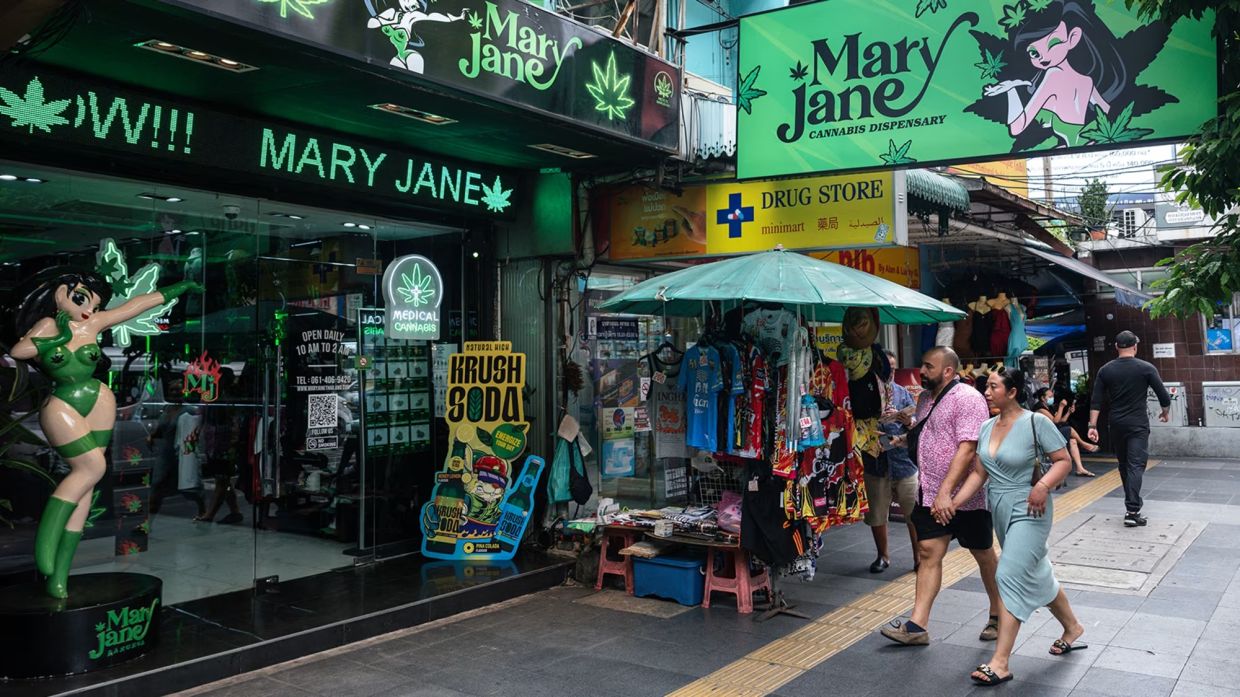
The Food and Drug Administration outlined its current oversight mechanisms, which encompass production site licensing, processing plant certification, import authorisation and retail shop accreditation for approved products. Agency representatives indicated that most cannabis-based products subjected to inspection have met prescribed standards for labelling, THC content and material safety. However, officials acknowledged that the fundamental weakness lies not in formal regulatory structures but in sales channels that operate entirely outside the licensed system, whether through unregistered shops, online platforms or informal distribution networks that authorities struggle to monitor or enforce against.
Thailand's cannabis industry representatives and farmers' advocates presented a starkly different perspective, arguing that legal operators face existential threats from precisely the enforcement actions favoured by medical groups. The Thai Cannabis Future Network contended that properly licensed businesses cannot compete with black market suppliers unfettered by compliance costs, testing expenses and regulatory burdens. They alleged that government officials have sometimes leveraged licensing authority to solicit bribes or benefits, discouraging legitimate operators while black market alternatives flourish. Additionally, the network raised concerns about healthcare infrastructure barriers that inflate costs for farmers seeking necessary medical certifications for legal cultivation.
Beyond immediate enforcement debates, the cannabis sector advocates emphasised that cannabis holds traditional and economic significance extending beyond pharmaceutical applications. They warned against concentrating control in ways that would benefit only large multinational investors or pharmaceutical enterprises at the expense of smallholder farmers who have invested in legal cultivation under the 2022 liberalisation framework. This economic dimension resonates particularly across rural Thailand, where cannabis cultivation represents alternative income for agricultural communities facing commodity price pressures. The network called for legislative approaches incorporating public participation and fairness rather than punitive measures designed primarily to restrict access.
The Public Health Ministry's draft cannabis and hemp bill, currently circulating through public consultation processes expected to conclude by late July, represents the government's formal regulatory response. The legislation was previously submitted to the Cabinet during an earlier administration but never progressed before parliamentary dissolution, creating continuity challenges and policy uncertainty. Current ministry leadership remains committed to advancing the bill, positioning it as a comprehensive framework addressing cultivation, processing, sales, research standards and international compliance simultaneously. However, the committee has signalled openness to considering alternative legislative proposals from various government sectors, suggesting that the final regulatory architecture may incorporate elements from multiple sources rather than adopting a single comprehensive bill.
Chairman Sakoltee Phattiyakul ordered immediate documentation of all legally licensed cannabis retail shops currently operating in Bangkok alongside FDA-certified cannabis products, indicating that parliamentary oversight will intensify before major legislative decisions proceed. He specifically highlighted youth access as a critical governance concern, mandating that future regulations establish distance buffers between cannabis retailers and educational institutions. This represents tacit acknowledgement that the 2022 liberalisation occurred without adequate consideration of accessibility controls or protection mechanisms for vulnerable populations, a gap that reformed legislation must address.
The committee's decision to commission broader epidemiological research on cannabis-related harms and affected population groups signals recognition that current policy sits on fragile evidentiary foundations. Thailand has not systematically documented health consequences, addiction patterns or developmental impacts since liberalisation, making regulatory decisions vulnerable to accusations of flying blind. Comparative Asian evidence from jurisdictions like South Korea and Japan suggests that rapid cannabis commercialisation without robust age verification, potency labelling and consumption guidance generates measurable public health burdens, particularly among adolescents whose neurological development remains incomplete.
The regulatory crossroads Thailand now faces reflects tensions common across Southeast Asia as nations grapple with cannabis liberalisation amid international shifting attitudes. Malaysia and other regional peers are observing Thailand's experience closely, as the outcomes will influence their own policy trajectories. If Thailand successfully implements balanced regulation protecting public health while enabling legitimate agricultural and research sectors, it could establish a regional model. Conversely, if reclassification proceeds without equivalent investment in enforcement capacity and regulatory infrastructure, it risks recreating the conditions that precipitated the current crisis.
The June committee hearing crystallised competing visions of cannabis governance that cannot be easily reconciled through legislative language alone. Medical and enforcement authorities prioritise minimising access and potential harms, particularly among young people, viewing cannabis as a public health threat requiring precautionary restrictions. Industry stakeholders and farmers view cannabis as legitimate agricultural and medical commodity requiring fair regulatory frameworks and market access. Parliament's challenge involves designing legislation that addresses genuine loopholes and uncontrolled sales without dismantling legal cultivation structures or importing enforcement approaches that international evidence suggests prove ineffective. The outcome will substantially shape Thailand's public health trajectory and agricultural development patterns for years ahead.