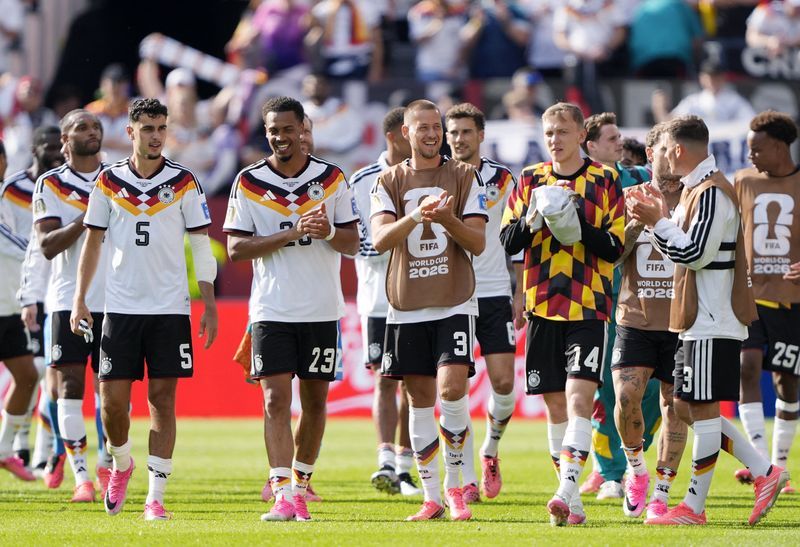
Germany's hopes of rediscovering their World Cup pedigree received a substantial boost in Toronto on Saturday when substitute Deniz Undav produced a man-of-the-match performance to overturn a one-goal deficit and secure a 2-1 victory over Ivory Coast. The result places Julian Nagelsmann's side atop Group E with six points and guarantees their advancement to the knockout stage, marking their first appearance in the latter rounds since clinching the tournament title in 2014.
The match played out as a dramatic contest befitting the stakes involved, with Germany's technical prowess clashing against Ivory Coast's frenetic attacking approach throughout a Group E encounter that offered both teams genuine chances to decide the outcome. What began as a frustrating opening period for the Germans—who watched two goals correctly disallowed for fouls in the build-up—transformed into a masterclass in tactical adaptation once Undav entered the fray and altered the game's complexion entirely.
Ivory Coast had seized the initiative early through Franck Kessie, whose alert finish capitalised on a rebound in the opening half when Amad Diallo's strike was parried, the move originating from Yan Diomande's penetrating run down the left flank. The West Africans' ability to breach Germany's defensive shape reflected their impressive tournament form, extending a sequence of seven consecutive matches with a goal—the longest scoring run in their World Cup history. This statistic underscored the tactical threat Ivory Coast posed despite their underdog status heading into the encounter.
Germany's frustration during the first forty-five minutes was palpable, particularly following Aleksandar Pavlovic's disallowed goal from a short corner in the 25th minute when the midfielder was ruled to have fouled goalkeeper Yahia Fofana, a decision that drew considerable protest from the substantial German contingent among Toronto's crowd. The city's population includes more than 100,000 people of German descent, creating a decidedly partisan atmosphere that amplified local disappointment whenever the referee intervened. Similar consternation greeted the subsequent cancellation of Jamal Musiala's effort for a foul on Odilon Kossounou, leaving Germany searching for breakthrough without reward despite eight shot attempts by the interval.
The introduction of Undav proved transformative, the versatile striker immediately bringing a different dynamic to Germany's attacking approach. His equaliser arrived in the 68th minute through a controlled volley that arrested Ivory Coast's momentum and shifted psychological advantage decisively towards the Germans. The confidence boost proved decisive when Undav struck again moments later, collecting possession on the turn before executing a precise finish that left Fofana with no possibility of preventing the goal. This brace extended Undav's extraordinary personal run to nine goals across his previous eight competitive matches, a rate of productivity that validates Nagelsmann's selection decision to deploy him from the bench.
The closing stages featured sporadic resistance from Ivory Coast, notably when Simon Adingra squandered a late opportunity within Germany's penalty area, his hesitation allowing the Germans to regain possession and surge forward. Nathaniel Brown subsequently tested Fofana with a low drive that the goalkeeper parried, preventing any grandstand finish that might have altered the final scoreline. Ivory Coast's inability to capitalise on fleeting attacking openings proved costly, leaving them on three points after two matches and facing an increasingly difficult path to knockout qualification.
The group stage landscape continues to shift as Ecuador and Curaçao contest their Saturday fixture in Kansas City, with those results determining the precise qualification permutations heading into the final round. Germany faces Ecuador in New Jersey on Thursday while Ivory Coast must travel to Philadelphia to confront Curaçao, matches that will determine the group's final composition and potential second-place finisher.
For Malaysian and Southeast Asian observers, Germany's victory reinforces the familiar pattern whereby European heavyweight nations possess the technical foundation and tactical flexibility to overcome adversity at tournament level. The Germans' second-half adjustment and attacking prowess, despite first-half setbacks, demonstrates the attributes that have historically made them tournament regulators. Ivory Coast's disappointing defensive performance against Germany's creative midfield and tactical discipline offers tactical lessons for regional football programmes, particularly regarding structure and positional awareness against technically superior opponents.