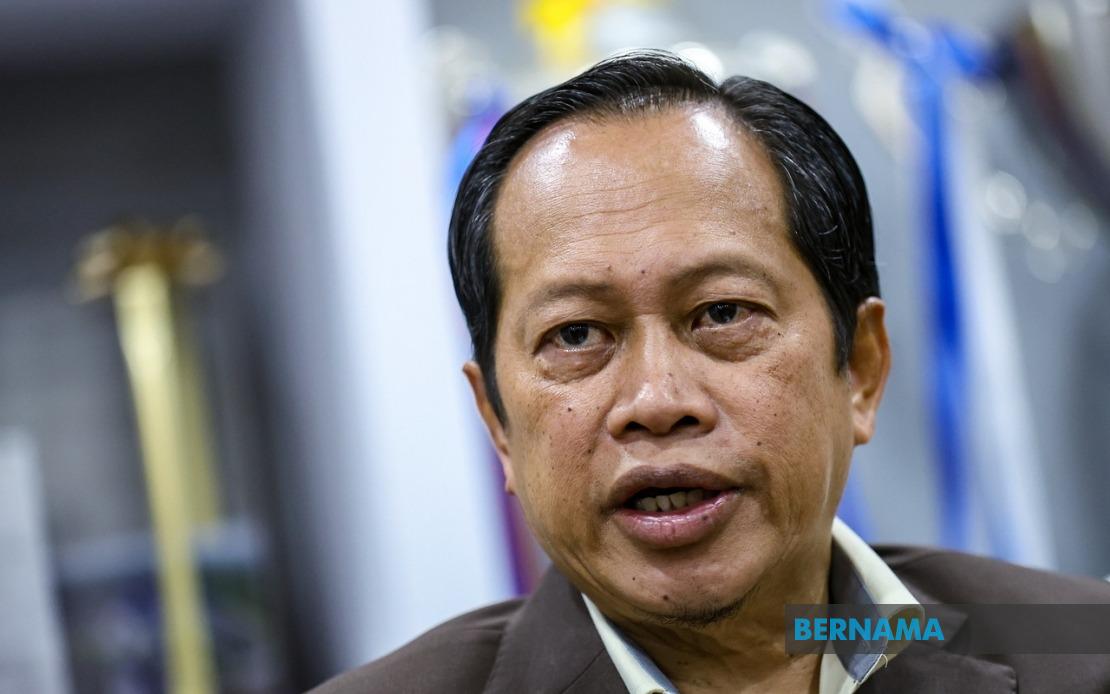
Johor's Barisan Nasional leadership structure undergoes a significant shift as Datuk Seri Dr Ahmad Maslan, the coalition's deputy chairman in the state, announced his decision to forgo participation in the forthcoming Johor state election. The confirmation came during a working visit to the Johor Public Works Department in Iskandar Puteri, where Ahmad fielded questions from journalists regarding speculation that had circulated within political circles linking him to contested state positions.
The Deputy Works Minister, who represents Pontian at the federal level, explicitly dismissed possibilities of mounting campaigns for either the Benut or Pulai Sebatang state constituencies, both falling within his parliamentary jurisdiction. His statement effectively closes the door on months of political speculation and uncertainty surrounding his electoral intentions. The decision represents a calculated political move, one that carries implications for how UMNO and its broader coalition partners will manage candidate selection and electoral strategy during this critical state-level contest.
Ahmad's announcement reflects a deliberate strategy to create space for fresh political talent within the party structure. By withdrawing from contention at the state level, he has signalled confidence in the emerging generation of UMNO representatives and a willingness to consolidate resources behind candidates positioned to strengthen the coalition's overall performance. Such moves are often crucial in managing intra-party dynamics, particularly in constituencies where multiple potential candidates might otherwise fragment support or create damaging factional divisions.
Despite stepping back from direct electoral competition, Ahmad has made clear his commitment remains unwavering when it comes to supporting the Barisan Nasional machinery during the election period. He intends to maintain an active campaign presence, leveraging his ministerial standing and party position to mobilize support across Johor's electoral landscape. This distinction between personal candidacy and collective campaign engagement reflects a common pattern among senior politicians navigating the balance between ambition and party loyalty.
The timing of Ahmad's confirmation is particularly significant given the Election Commission's announced calendar for the 16th Johor state election. With polling scheduled for July 11, nomination submissions due by June 27, and early voting provisioned for July 7, the political machinery has entered its most intensive phase. Ahmad's clarification at this juncture removes a lingering source of uncertainty that might otherwise complicate candidate vetting processes and campaign coordination in the crucial final weeks preceding the formal nomination period.
For Malaysian political observers, the move underscores how state elections function as mechanisms for talent circulation and organizational renewal within major coalitions. The Johor contest, with its significant implications for the ruling federal coalition's stability and legitimacy, commands particular attention. How successfully Barisan Nasional manages its candidate slate—and how effectively politicians like Ahmad translate their support into ground-level campaign infrastructure—will substantially influence whether the coalition can consolidate its position in this strategically important state.
The decision also carries broader significance for the peninsula's political balance. Johor, as Malaysia's southern economic anchor and a traditional BN stronghold, represents crucial electoral territory. Leadership decisions regarding who contests and who directs campaign operations reflect calculated assessments of where coalition strength can be maximized. Ahmad's withdrawal from personal candidacy while maintaining an elevated campaign coordination role suggests confidence in the party's overall position, even as it acknowledges the need for strategic flexibility in seat allocation.
Within UMNO specifically, such developments illustrate the ongoing negotiation between senior figures regarding electoral positioning and ministerial retention. Federal ministerial positions frequently intersect with state electoral ambitions, creating complex calculations around whether politicians should concentrate on consolidating parliamentary seats or extend their reach into state assemblies. Ahmad's choice prioritizes his federal works portfolio while enabling greater flexibility in how Johor's electoral resources are deployed at state level.
For constituencies like Benut and Pulai Sebatang, Ahmad's withdrawal opens the field for alternative candidates, potentially including emerging party figures or consolidation around candidates already identified through party selection mechanisms. This may facilitate a smoother candidate announcement process once the nomination period commences, reducing the possibility of last-minute changes or controversial allocations that could generate internal friction during an already pressure-filled campaign season.
The broader electoral environment in Johor will likely determine whether the ruling coalition views Ahmad's decision as strategically astute or whether it proves consequential in unexpected ways. The state has witnessed increasing political competitiveness, with opposition parties mounting increasingly sophisticated campaigns. How effectively Barisan Nasional translates its candidate strategy into electoral victory remains to be seen, but Ahmad's coordinated campaign involvement will clearly form part of that calculation.