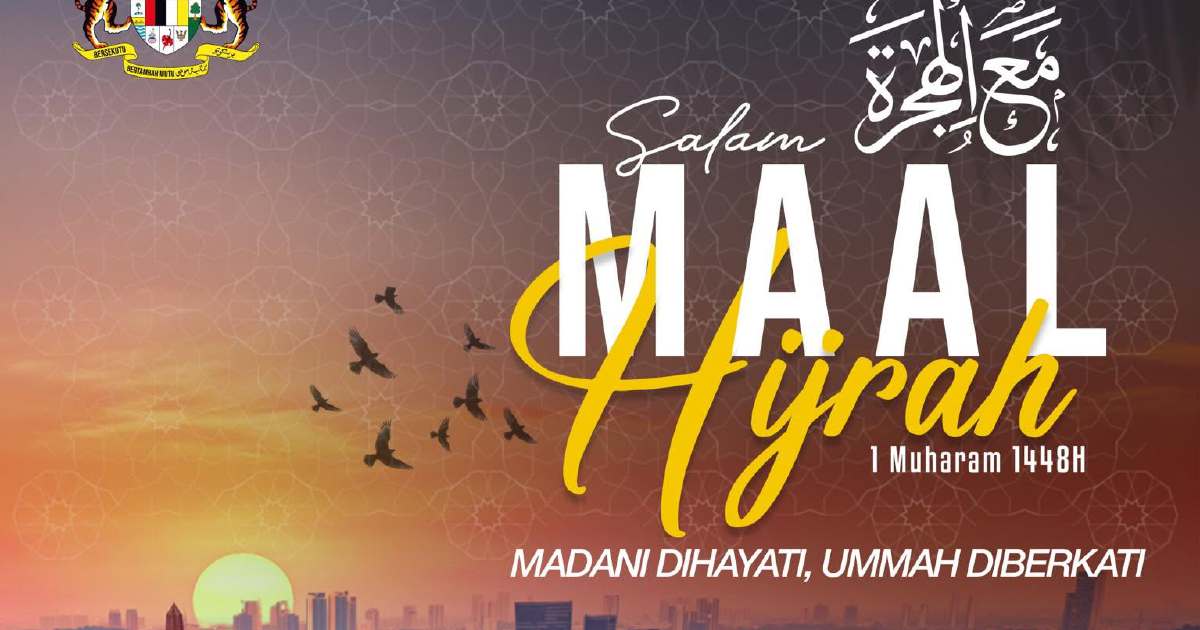
Prime Minister Datuk Seri Anwar Ibrahim has made a renewed appeal to the Malaysian public to embrace the philosophical and spiritual essence of Hijrah, positioning it as a foundational principle for the nation's continued progress and social cohesion. Speaking to the matter, the Prime Minister stressed that the concept transcends its historical religious significance, instead framing it as a universal framework through which Malaysians of all backgrounds can orient themselves towards shared national objectives.
The Hijrah principle, rooted in the Islamic tradition of migration and renewal, has increasingly become invoked by Malaysian political leadership as a metaphor for national transformation and moral recalibration. By invoking this framework, Anwar appears to be signalling that Malaysia's path forward requires not merely administrative or economic adjustments, but a deeper recommitment to foundational values that have historically bound Malaysian society together. The invocation carries particular weight given Malaysia's ongoing navigation of religious pluralism, communal harmony, and institutional trust.
The Prime Minister's emphasis on truth as a central pillar reflects growing concerns across Southeast Asia regarding misinformation, institutional credibility, and transparency in governance. In Malaysia's context, where successive administrations have faced accusations of financial impropriety and breaches of public trust, Anwar's emphasis on truthfulness suggests an intent to position his government as distinct from predecessors and committed to accountability mechanisms. This framing allows him to address citizen scepticism whilst articulating a moral foundation for policy implementation without necessarily introducing specific legislative changes in the immediate term.
Prosperity, the second value highlighted by the Prime Minister, addresses the economic anxieties that have shaped Malaysian public sentiment in recent years. Cost-of-living pressures, wage stagnation in certain sectors, and concerns about wealth concentration have animated political discourse throughout Southeast Asia. By tying prosperity to the Hijrah concept, Anwar connects economic advancement to spiritual and moral groundedness rather than framing development purely as a technical or market-driven outcome. This approach resonates with segments of the Malaysian electorate that have grown weary of growth-focused rhetoric disconnected from quality-of-life improvements or equitable distribution.
Security, the third value in Anwar's trinity, encompasses both physical safety and the security of social systems that citizens depend upon. In the Malaysian context, security encompasses border management, cybercrime prevention, and community policing alongside the protection of social safety nets and institutional stability. The Prime Minister's invocation of security as integral to Hijrah suggests that national progress depends not only on economic metrics but on citizens' confidence that their livelihoods, families, and futures remain safeguarded. This reflects regional concerns about transnational crime, digital threats, and social fragmentation that have emerged as pressing issues across Southeast Asia.
The timing of Anwar's appeal merits consideration within Malaysia's current political landscape. The government continues to navigate complex coalition dynamics, ongoing economic adjustments, and the expectations placed upon an administration elected partly on promises of institutional reform. By invoking a unifying concept rooted in Malaysian and Islamic tradition, the Prime Minister attempts to transcend partisan divisions and appeal to a cross-communal sense of shared purpose. This strategy reflects a recognition that narrow political coalitions prove insufficient for implementing transformative change, and that broader public buy-in requires articulation of values that extend beyond electoral platforms.
The Hijrah framework, as deployed by Malaysian political leadership, also carries implications for how the nation positions itself regionally. Southeast Asian governments increasingly leverage indigenous philosophical and spiritual traditions to legitimise development models that differ from purely Western-derived paradigms. By anchoring national progress in concepts with deep roots in Malaysian and Islamic history, Anwar signals that Malaysia's modernisation trajectory remains consistent with its cultural and religious identity. This approach addresses longstanding tensions within Malaysian society regarding the compatibility of development, governance, and religious values.
For the broader Malaysian public, the Prime Minister's call invites reflection on the relationship between individual action and national progress. Embracing Hijrah spirit, as framed by Anwar, implies that citizens themselves bear responsibility for cultivating truthfulness, pursuing legitimate prosperity, and contributing to collective security. This implicit civic appeal mirrors governance models throughout Southeast Asia that emphasise shared responsibility between state institutions and society members. However, the effectiveness of such appeals ultimately depends on whether government institutions themselves visibly embody the values they advocate, lending credibility to calls for public alignment with stated principles.
Looking forward, the substantive policy implications of Anwar's invocation remain to be seen. Whether the Hijrah framework translates into specific legislative initiatives, budgetary allocations, or institutional reforms will determine whether the appeal functions as genuine philosophical reorientation or primarily as rhetorical positioning. Malaysian observers and regional analysts will likely monitor whether subsequent government announcements and actions demonstrate commitment to the truth, prosperity, and security values outlined by the Prime Minister, or whether the invocation remains largely aspirational in character.