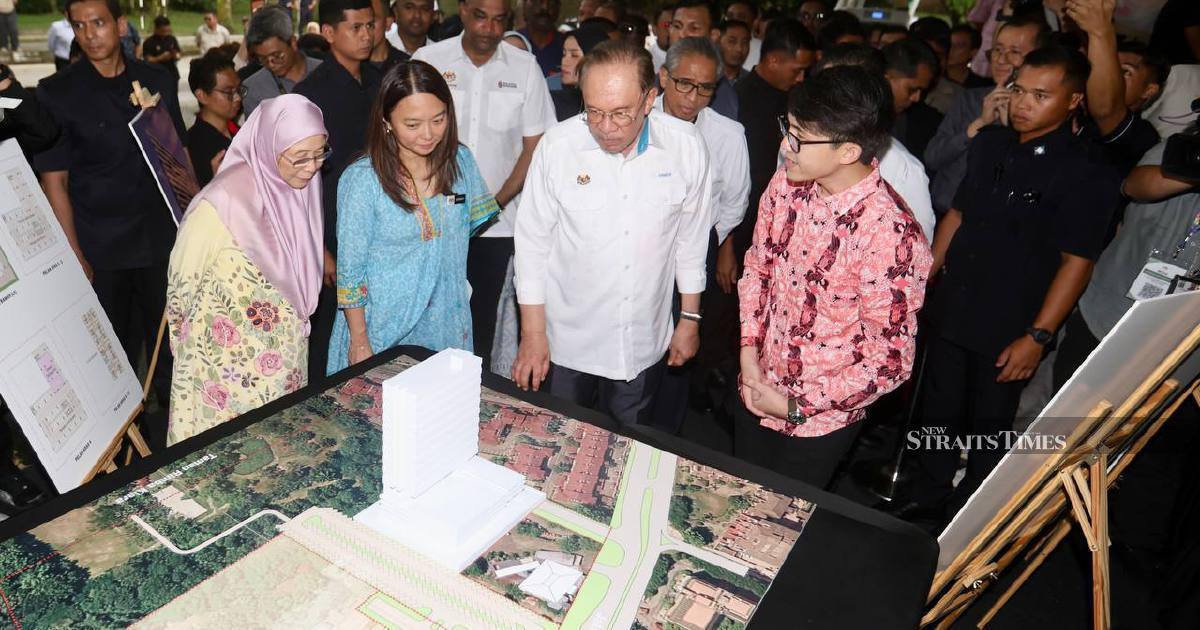
Prime Minister Datuk Seri Anwar Ibrahim has moved to reassure urban poor communities that the government has not abandoned their concerns or overlooked their aspirations for improved living standards. Speaking in his defence of the administration's social policy direction, Anwar stressed that protecting the rights and dignity of low-income Malaysians remains a core priority as the nation pursues broader development objectives. His comments emerge against a backdrop of growing scrutiny over how economic development projects are balanced against the needs of vulnerable populations in urban centres.
The prime minister specifically highlighted the Bukit Kiara project as concrete evidence that the government takes its obligation to marginalised communities seriously. By using this development initiative as his primary reference point, Anwar sought to demonstrate that poverty alleviation and urban regeneration are not mutually exclusive goals. The project appears to serve as a flagship example in the government's broader narrative around inclusive development, combining infrastructure improvements with protections for existing residents and their economic interests.
For Malaysia's urban poor, whose concerns often become secondary during periods of rapid development, Anwar's statement carries both symbolic and practical weight. Many lower-income residents in major cities worry that large-scale projects could displace communities or benefit mainly wealthier segments of society. The emphasis on the Bukit Kiara initiative suggests the government is attempting to reshape this perception by showcasing how new development can incorporate safeguards for vulnerable groups.
The timing of these remarks reflects broader political dynamics in Malaysia's capital, where balancing growth with social equity remains a perennial challenge. Urban poverty has become increasingly visible in Kuala Lumpur and other major centres, with informal settlements and marginalised communities occupying spaces alongside gleaming commercial developments. This stark contrast often fuels debate about whether economic policies genuinely serve all Malaysians or concentrate benefits among the privileged few.
The Bukit Kiara project embodies several contemporary urban development principles that resonate with international best practices in inclusive city planning. Rather than pursuing conventional top-down regeneration that historically displaced residents, the government's approach appears to integrate community considerations into project design. This methodology aligns with growing global recognition that sustainable urban development must account for social impacts and ensure existing communities share benefits from improvements to their neighbourhoods.
Anwar's defence of government policy also speaks to a wider tension within Malaysia's political economy. As the nation pursues middle-income status and competes for international investment, policymakers must navigate expectations from investors, established business interests, and citizens struggling with cost-of-living pressures. The prime minister's rhetoric suggests his administration seeks to position itself as addressing this tension through targeted interventions rather than allowing market forces to determine outcomes.
For Southeast Asian observers, Malaysia's approach to urban poverty and development carries regional implications. Several nations in the region grapple with similar challenges of rapid urbanisation, informal settlements, and wealth inequality. How Malaysia manages these tensions—through policy frameworks, project design, and political messaging—offers lessons for neighbouring countries confronting comparable demographic and economic shifts.
The invocation of Bukit Kiara as proof of commitment also reveals how governments construct narratives around development success. By emphasising one project as emblematic of broader policy intentions, the administration shapes public perception of its track record. Whether this messaging translates into tangible improvements for urban poor residents across multiple communities requires sustained scrutiny beyond any single initiative.
Political economists note that rhetoric about inclusive development often outpaces actual implementation. Programmes designed to protect vulnerable populations require sustained funding, effective governance, and accountability mechanisms. Anwar's statement, while clarifying government intentions, invites questions about resource allocation, implementation timelines, and mechanisms for ensuring that pledges translate into measurable improvements in the lives of Malaysia's urban poor.
Moving forward, the government's credibility on this issue will depend significantly on how comprehensively the Bukit Kiara model gets extended across other development projects. Should the project remain exceptional rather than representative of standard practice, initial optimism among urban poor communities may give way to scepticism. This represents a critical juncture where policy announcements must be reinforced through systematic application and demonstrable results.
The broader context of Malaysia's social policy also matters. Urban poverty intersects with issues of education access, healthcare quality, wage adequacy, and opportunities for economic mobility. While development projects provide housing and infrastructure, sustained poverty reduction requires coordinated action across multiple policy domains. Anwar's emphasis on specific projects, therefore, functions as one element within what must be a comprehensive poverty alleviation strategy addressing root causes rather than symptoms alone.