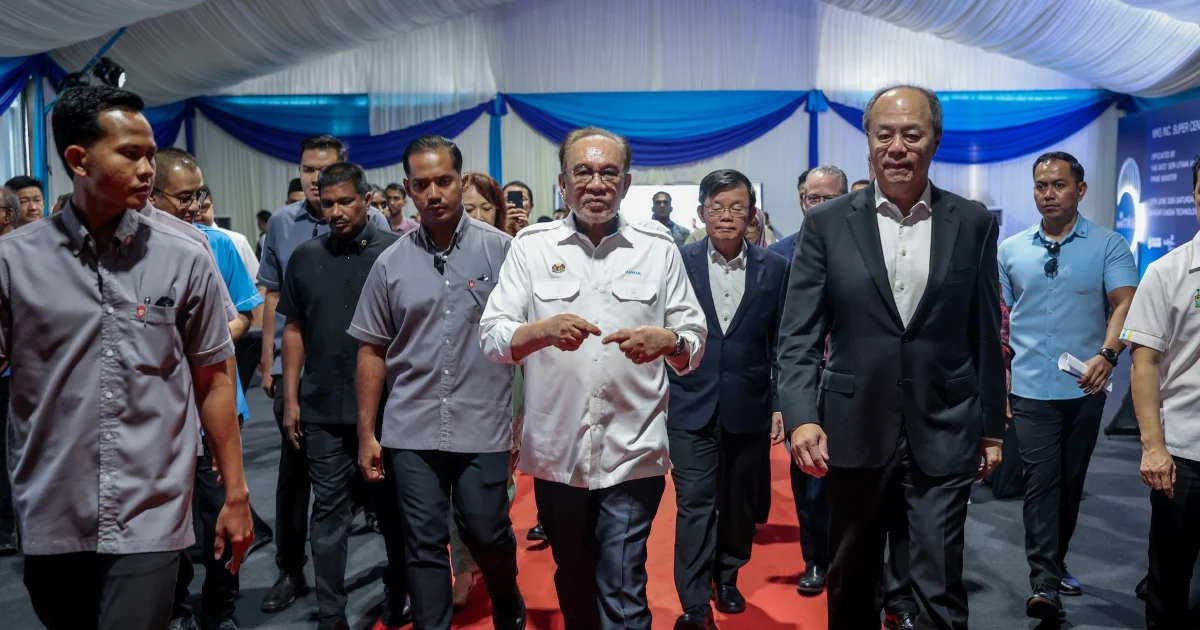
Malaysia's commitment to remaining politically neutral while actively engaging with nations across the geopolitical spectrum is emerging as a significant asset for attracting foreign investment and fostering economic expansion, according to Prime Minister Datuk Seri Anwar Ibrahim. Speaking in Batu Kawan, the premier underscored how this delicate diplomatic balance—refusing to align exclusively with any single power bloc while maintaining constructive relations with all trading partners—has become a compelling narrative for multinational enterprises seeking regional operations and Southeast Asian-based investment vehicles.
The strategic positioning articulated by Anwar reflects Malaysia's historical approach of pragmatism in international relations, a doctrine that has allowed the nation to cultivate partnerships without incurring the reputational or economic costs associated with polarization. In an era marked by intensifying geopolitical rivalry between major powers, particularly between the United States and China, smaller nations face mounting pressure to choose sides. Malaysia's rejection of this binary framework demonstrates that economic prosperity and investor allure need not depend on ideological alignment or exclusive security commitments. Instead, the country has fashioned itself as a reliable, stable jurisdiction capable of serving as an intermediary and neutral ground for global commerce.
This diplomatic philosophy carries particular resonance for multinational corporations contemplating their Southeast Asian operations. Investors increasingly view geopolitical stability and diplomatic neutrality as risk mitigation measures, especially when deploying capital into manufacturing, technology, finance, and regional headquarters functions. Nations perceived as uncommitted to destabilizing alliances or vulnerable to sudden foreign policy reversals present lower operational risks. Malaysia's consistent messaging about non-alignment provides institutional investors with confidence that sudden policy shifts or trade disruptions stemming from international conflicts are unlikely. This assurance translates into longer-term commitments and larger capital allocations than might otherwise occur in more volatile political environments.
The premier's comments arrive amid a competitive regional landscape where Vietnam, Thailand, Indonesia, and Singapore are simultaneously courting foreign investment through various policy initiatives. Malaysia's distinct advantage lies in articulating not merely business-friendly regulations or tax incentives, but rather a comprehensive geopolitical positioning that addresses investor anxieties about macroeconomic stability and political continuity. By framing neutrality as an active choice rather than a passive absence of commitment, Anwar has repackaged a traditional diplomatic stance as a modern competitive advantage grounded in genuine strategic thinking.
The practical implications of this approach are evident across Malaysia's industrial corridors and technology parks. Companies establishing regional distribution networks, research centres, or manufacturing facilities benefit from unimpeded access to supply chains that cross traditional geopolitical divides. A manufacturer based in Malaysia can source components from global suppliers without triggering sanctionary complications or diplomatic tensions. Similarly, a technology firm can facilitate knowledge transfer and talent exchange with partners across multiple power blocs without navigating the increasingly restrictive export controls or investment screening mechanisms that characterize relationships within polarized blocs. This operational flexibility—a direct consequence of neutrality—translates into competitive advantage and cost efficiency.
Anwar's emphasis on engagement with all powers simultaneously addresses another dimension of investor calculus: market access. Multinational enterprises seek locations that facilitate commerce with diverse consumer and production markets rather than restricting them to narrower regional configurations. Malaysia's diplomatic relationships position the nation as a gateway to markets across Asia-Pacific, the Middle East, and beyond, without the complications that arise when nations are perceived as aligned against particular trading partners. This geographic and diplomatic positioning enhances the market reach and revenue potential of operations established in Malaysia, rendering the country more attractive than alternative locations offering similar economic fundamentals but operating within more constrained diplomatic frameworks.
The sustainability of Malaysia's neutral positioning, however, depends on consistent political management and clear communication. As geopolitical pressures intensify, maintaining genuine neutrality becomes increasingly challenging, particularly when major powers escalate demands for explicit alignment in security matters, technology standards, or trade configurations. Anwar's reiteration of this policy at Batu Kawan represents not merely a statement of diplomatic principle but also a reassurance to investors that the government remains committed to this balancing act despite mounting external pressures. This consistency is crucial because investor confidence rests not solely on the existence of a favorable policy, but on the government's demonstrated capacity and will to maintain it despite challenges.
Regionally, Malaysia's approach contrasts with some neighbouring approaches that have involved greater alignment with specific powers or blocs. This differentiation strengthens Malaysia's market positioning by offering investors an alternative to either geopolitically aligned jurisdictions or those perceived as unstable due to contested alignments. Companies uncomfortable with exclusive commitments or concerned about the durability of alignment-based strategies find Malaysia's consistent neutralism particularly appealing. This creates a specialized niche in the regional investment competition that complements rather than duplicates the appeals of other ASEAN members.
The economic growth dividends that Anwar attributes to this diplomatic stance reflect multifaceted benefits. Beyond direct foreign investment in factories and offices, neutrality facilitates cross-border capital flows, technology partnerships, and talent mobility that generate broader economic vitality. Regional headquarters located in Malaysia become more valuable when executives and partners can travel freely and conduct business across diverse international contexts. Supply chains become more efficient when not constrained by geopolitical divisions. Trade volumes expand when commerce is not restricted by alignment-based preferences or sanctions regimes. These cumulative effects translate into job creation, tax revenue, and prosperity that ripples through Malaysian society.
Looking forward, Malaysia's ability to translate diplomatic positioning into sustained economic advantage depends on reinforcing this policy through consistent execution and clear messaging to both international partners and potential investors. The government must demonstrate that neutrality reflects genuine strategic independence rather than temporary expediency. This requires thoughtful navigation of security relationships, careful management of economic partnerships, and articulate communication of Malaysia's distinct positioning in regional and global affairs. For a middle-power nation like Malaysia, such diplomatic dexterity represents a fundamental competitive asset that, properly managed, can yield economic returns exceeding those available to nations pursuing more ideologically rigid international orientations.