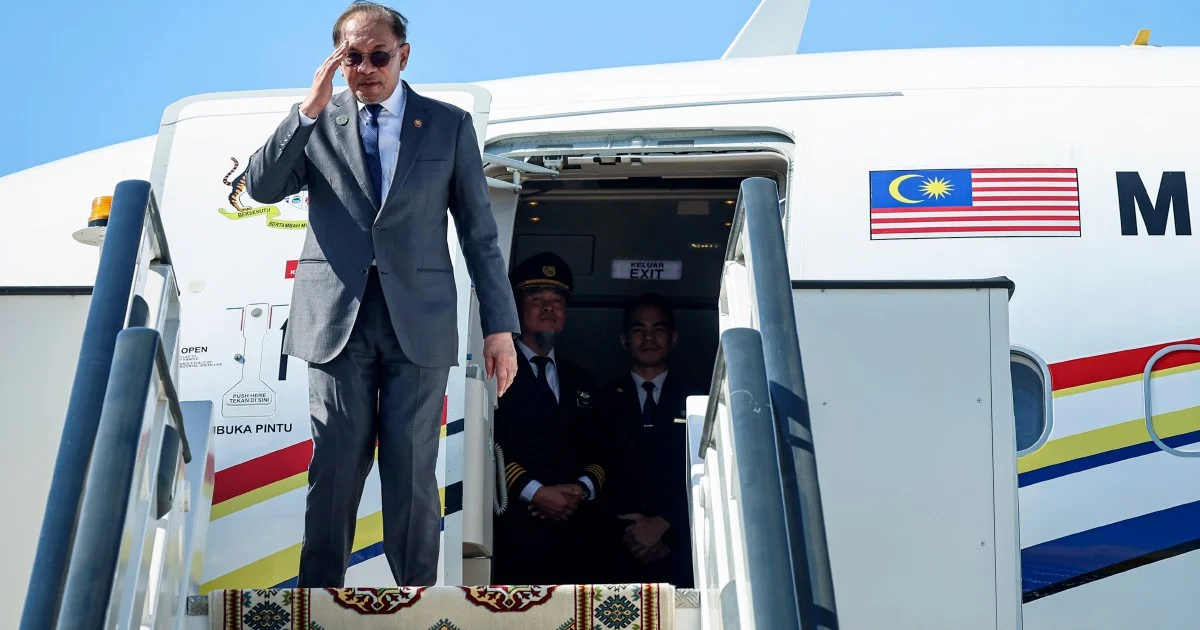
Prime Minister Datuk Seri Anwar Ibrahim stepped onto Malaysian soil in Penang today, bringing his Central Asian diplomatic mission to a close and immediately turning his attention to a packed schedule of domestic engagements. The timing of his arrival underscores the government's commitment to balancing international economic relations with domestic priorities, particularly in economically significant states like Penang. His journey from Turkmenistan to Butterworth marks a transition from bilateral trade discussions to direct engagement with Malaysian stakeholders, journalists, and business leaders across multiple sectors.
The visit to Turkmenistan, though brief in duration, carries strategic significance for Malaysia's broader economic positioning in Central Asia. Turkmenistan, as a natural gas-rich nation straddling key trade corridors between Europe and Asia, represents potential opportunities for Malaysian companies exploring energy partnerships and infrastructure investments. For Anwar's administration, such missions reinforce Malaysia's willingness to deepen ties with non-traditional trading partners and diversify the nation's international relationships beyond established regional frameworks. The timing also reflects government efforts to capitalise on global interest in sustainable energy and regional connectivity projects.
However, the immediate shift to Penang events signals that domestic momentum cannot be neglected despite international obligations. The National Journalists' Day, known locally as Hawana, serves as more than a ceremonial occasion; it represents an opportunity for the Prime Minister to address media professionals directly, shape narrative around government policies, and demonstrate accessibility to the press corps. For Anwar, participation in such events carries particular weight given his historical relationship with Malaysian journalism, marked by both confrontation and collaboration across different phases of his political career.
Penang itself holds considerable importance in Malaysia's economic architecture. As the manufacturing and technology hub of the northern corridor, the state attracts significant foreign direct investment and serves as headquarters for numerous multinational enterprises. Anwar's presence at investment-related events during this visit suggests the government remains focused on consolidating Penang's competitive advantages and attracting fresh capital flows into sectors such as advanced manufacturing, semiconductors, and digital services. Such engagement also strengthens ties with Penang's business community, whose support remains crucial for broader national economic objectives.
The confluence of events—Hawana 2026's grand finale coupled with investment forums—reflects a government strategy of bundling announcements and engagement opportunities to maximise media coverage and stakeholder awareness. By arriving directly from Turkmenistan and immediately hosting these events, Anwar creates narrative continuity between Malaysia's international ambitions and domestic implementation. This approach also demonstrates efficient use of the Prime Minister's time and resources, minimising unnecessary travel while maximising the symbolic value of his presence in key locations.
For Penang specifically, hosting the Prime Minister for multiple events elevates the state's profile as a venue for national-level decision-making and cultural celebrations. The Hawana event draws journalists from across the country, creating an audience that amplifies messages about government initiatives and regional development. Investment forums during the same visit provide platforms for announcing new policies, trade concessions, or sectoral initiatives that might particularly benefit Penang's existing industrial ecosystem.
The sequencing of Anwar's travel also hints at prioritisation within government scheduling. Turkmenistan, while important, appears to have been scheduled to allow for rapid return to Malaysia's domestic calendar. This suggests that the Prime Minister's office has aligned his movements with parliament's sitting schedule, state-level events, and corporate engagement calendars. For observers tracking government activity patterns, such sequencing provides insight into what leadership considers non-negotiable versus discretionary.
Meanwhile, the broader context of international engagement cannot be overlooked. Malaysia's relationship with Central Asian nations remains relatively underdeveloped compared to established ties with Middle Eastern, Asian, or Western partners. Anwar's personal visits to countries like Turkmenistan signal an attempt to raise Malaysia's profile in these regions and create pathways for future economic collaboration. Such missions often lay groundwork for subsequent business delegations, trade missions, and investment partnerships that materialise over months or years following high-level visits.
For Malaysian businesses watching from Penang and beyond, the Prime Minister's concurrent participation in investment events upon returning from Turkmenistan may serve as a cue to explore new markets and partnerships. Government officials accompanying such missions often carry preliminary agreements, feasibility studies, or investment frameworks that private sector participants can build upon. The investment events scheduled during this Penang visit may include announcements of joint ventures, technology partnerships, or infrastructure projects identified during bilateral discussions.
The decision to conclude the Turkmenistan visit and immediately proceed to Penang also reflects geographical and logistical realities. Penang's position in northwest Malaysia makes it a logical return point from international flights, and the state's infrastructure can accommodate the protocols and security arrangements required for prime ministerial events. Furthermore, Penang's established reputation as a destination for international conferences and business forums makes it an appropriate venue for launching or formalising investment initiatives.
Looking forward, the pattern of Anwar's engagement—combining diplomatic missions with domestic stakeholder events—will likely continue shaping Malaysia's policy narrative through 2026. The Hawana grand finale provides an opportunity to set expectations for media coverage and government communications in the coming year, while investment forums establish momentum for economic growth targets. For Malaysia's broader development trajectory, such visits represent the interconnected nature of modern governance, where international engagement and domestic delivery must proceed in tandem to achieve national objectives.


