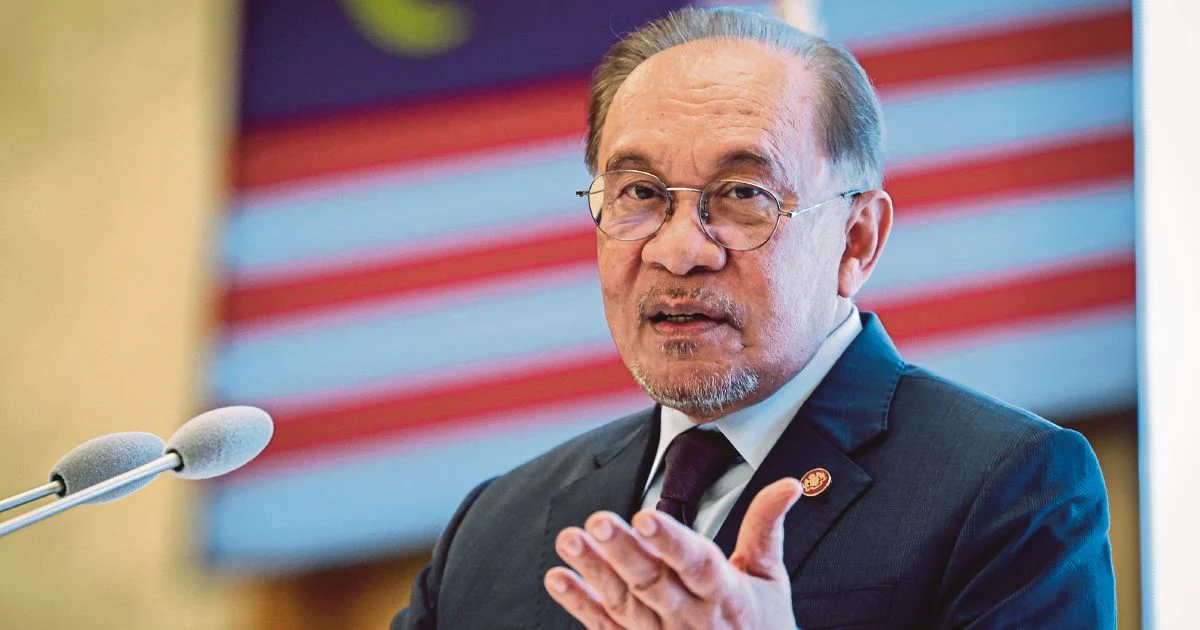
Prime Minister Datuk Seri Anwar Ibrahim has interpreted Petronas's successful bid for a stake in one of the world's largest gas fields in Turkmenistan as a powerful endorsement of Malaysia's standing in the international business community. Speaking in Batu Kawan, Anwar suggested that the energy giant's entry into the Central Asian nation's hydrocarbon sector represents more than a commercial transaction—it signals renewed confidence among foreign investors in Malaysia's political stability, social cohesion, and economic management at a time when the nation continues to navigate complex domestic and regional challenges.
The acquisition underscores Petronas's status as a credible and capable player in global energy markets, a position that has been carefully cultivated over decades of successful operations in multiple jurisdictions. Central Asia, with its vast untapped reserves and strategic importance to global energy security, has become an increasingly contested arena for international energy firms seeking long-term contracts and exploration rights. That Petronas secured a position in such a significant asset—one of the world's largest gas reserves—suggests the national oil and gas company retains considerable technical expertise and financial strength, even as the global energy sector undergoes rapid transformation driven by climate commitments and renewable energy investments.
Anwar's comments reflect a broader Malaysian narrative seeking to position the country as a reliable partner for major international infrastructure and investment projects. This framing carries particular weight in Southeast Asia, where regional governments remain deeply conscious of their standing relative to competitors in attracting foreign capital. The timing of the Petronas announcement arrives as Malaysia faces persistent economic headwinds, including global inflation, rising borrowing costs, and lingering impacts from pandemic-related disruptions to supply chains and tourism.
The Petronas investment in Turkmenistan also carries strategic dimensions extending beyond energy sector economics. Central Asia represents a critical crossroads connecting China, Russia, and South Asia, making energy infrastructure projects in the region subject to geopolitical considerations and competing great-power interests. By securing a stake in Turkmen gas development, Malaysia positions itself as a participant in one of the world's most dynamically shifting energy markets, offering an alternative to Chinese or Russian dominance in the region's hydrocarbon sectors.
For Malaysian policymakers, the Petronas venture serves as a counternarrative to concerns about the nation's political stability that surfaced prominently during the period before Anwar's government took office in late 2022. International investors had grown cautious about Malaysia following years of political volatility, including multiple changes of government and constitutional crises that created uncertainty around policy continuity. The new administration has prioritized economic stabilization and institutional reforms to restore investor confidence, and the Petronas deal potentially signals that such efforts have begun bearing fruit in attracting major new commitments.
The gas field development also reflects Petronas's strategic pivot toward maintaining energy export revenues even as global energy demand patterns shift dramatically. While many developed economies aggressively transition away from fossil fuels, emerging markets throughout Asia continue to rely on natural gas for electricity generation and industrial processes. For Malaysia, which derives substantial government revenue from Petronas dividends and taxation, maintaining the company's profitability across global portfolios remains economically significant, particularly for funding public services and development initiatives.
Central Asia's energy wealth has historically concentrated in the hands of a limited circle of international operators, primarily Russian, Chinese, and Western firms with established relationships in the region. Petronas's entry expands the geographic and institutional diversity of major players in Central Asian energy development, potentially creating opportunities for the Malaysian company to pursue projects aligned with its operational philosophy and environmental standards. The diversification of energy partnerships in Central Asia could also reduce geopolitical risks associated with concentration of investment among traditional power blocs.
For Malaysia's broader economy, Petronas's success in Turkmenistan carries implications extending well beyond the energy sector. Major international project wins by Malaysian companies frequently generate secondary opportunities for suppliers, consultants, engineers, and service providers across the domestic economy. The Turkmenistan contract could catalyze demand for Malaysian technical expertise, construction services, and specialized equipment, creating employment and knowledge transfer that strengthens the nation's industrial capabilities in engineering and project management.
Anwar's public emphasis on the Petronas deal also reflects his government's efforts to communicate an image of competence and effectiveness to both domestic audiences and international observers. After years of political turbulence that eroded Malaysia's reputation for steady governance, demonstrating tangible achievements—particularly in attracting major foreign investment and supporting champion national enterprises—helps rebuild confidence in the administration's ability to deliver on economic promises.
Looking forward, the Turkmenistan venture establishes a platform for Petronas to develop long-term partnerships in Central Asia while potentially opening doors to downstream opportunities in petrochemicals, liquefied natural gas processing, and energy-related manufacturing. These sectors could offer significant growth pathways as regional demand for energy-intensive products continues expanding with industrial development across South and East Asia.
The successful completion of negotiations with the Turkmen government also demonstrates Malaysia's diplomatic capacity to forge mutually beneficial relationships with countries beyond traditional Southeast Asian circles. This wider engagement reflects Malaysia's ambition to position itself as a major economy with interests and capabilities extending across multiple continents, reinforcing its claim to a larger role in global economic and diplomatic affairs during a period of geopolitical realignment.