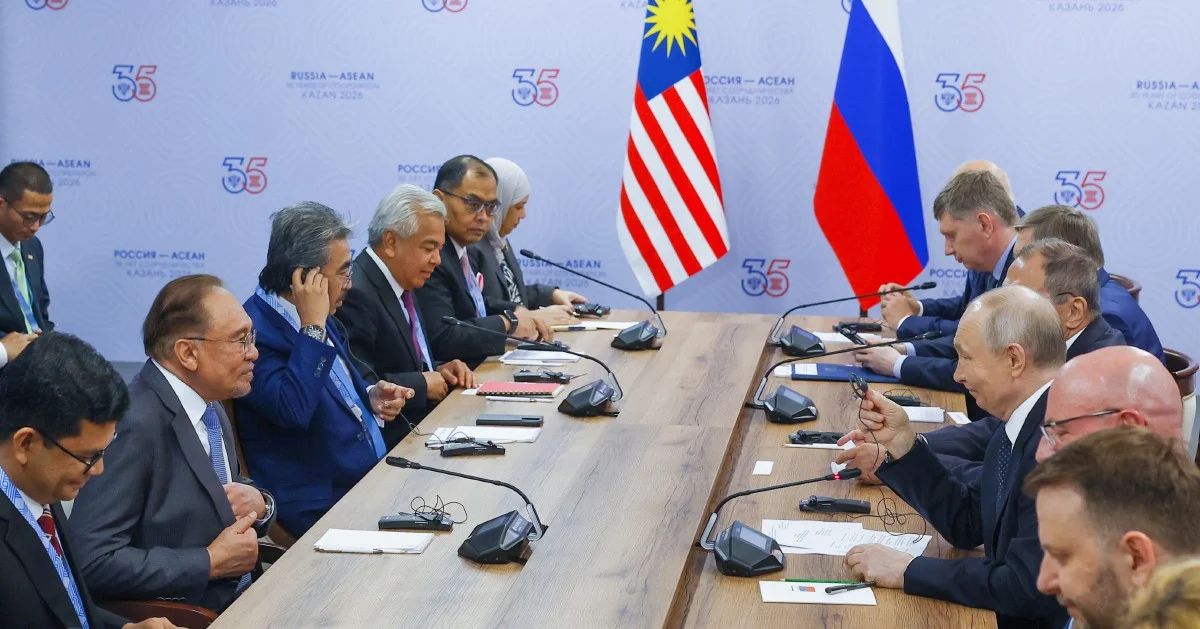
Prime Minister Datuk Seri Anwar Ibrahim has expressed gratitude to Russian President Vladimir Putin for backing Malaysia's efforts to deepen energy sector collaboration through Petroliam Nasional Bhd, the country's national petroleum corporation. The appreciation came during high-level discussions in Kazan, underscoring the strategic importance both nations place on strengthening bilateral ties in the hydrocarbon and energy sectors.
The exchange reflects Malaysia's broader diplomatic outreach to diversify its energy partnerships beyond traditional markets. As regional energy demands intensify and global energy transitions accelerate, Southeast Asian nations are increasingly engaging with multiple partners to secure stable supplies and investment in their energy infrastructure. Russia's endorsement of closer Petronas cooperation signals Moscow's interest in maintaining relevance in Asian energy markets despite international sanctions and geopolitical tensions.
Petronas, as Malaysia's flagship energy corporation, plays a central role in the country's economic strategy and export revenue generation. The company operates across exploration, production, refining, and liquefied natural gas operations globally, with significant upstream assets in Southeast Asia and beyond. Any strengthening of cooperation frameworks with major energy producers like Russia could potentially open avenues for technology transfer, joint ventures, or supply chain integration that benefit Malaysia's long-term energy security.
The timing of these discussions carries particular significance given Southeast Asia's energy landscape. The region remains heavily dependent on fossil fuels despite growing renewable energy investments, and maintaining stable international partnerships with established energy players remains crucial for economic stability. Malaysia, as one of the region's major energy producers and exporters, balances the need for traditional energy revenue with emerging pressures to transition toward cleaner sources. Cooperation arrangements with Russia could provide flexibility in this transition period.
From a geopolitical perspective, the bilateral engagement in Kazan demonstrates Malaysia's commitment to a non-aligned foreign policy stance. While maintaining strong partnerships with Western nations and ASEAN neighbours, Malaysia continues engaging with Russia across various sectors including energy, trade, and defence. This balancing act allows the country to leverage relationships with multiple global powers without appearing to align exclusively with any particular bloc, a principle consistent with Malaysia's long-standing diplomatic tradition.
Petronas has historically pursued international partnerships to enhance its operational capabilities and market reach. Such collaborations typically involve sharing expertise in extracting, processing, and distributing energy resources efficiently. By securing high-level political backing for energy cooperation, the corporation gains diplomatic support that can expedite negotiations and facilitate access to Russian markets or technologies that might otherwise face barriers.
The energy sector cooperation extends beyond simple commercial transactions. Infrastructure development, human resource training, research and development initiatives, and technology adoption agreements often accompany such partnerships. These elements can strengthen Malaysia's domestic energy sector capabilities and create spillover benefits for the broader economy through skill development and technological advancement.
Energy diplomacy has become increasingly central to Malaysia's international relations strategy. With global energy markets undergoing significant transformation due to climate concerns and geopolitical realignments, countries are using energy partnerships to strengthen diplomatic relationships and secure economic advantages. Putin's endorsement of Petronas collaboration provides Malaysia with valuable political momentum for pursuing specific energy projects or agreements that benefit national interests.
The mutual interest in energy cooperation also reflects Russia's strategic calculus in Asia. Despite Western sanctions and reduced access to European markets, Russia remains a major global energy supplier and seeks to deepen ties with Asian economies that require substantial energy resources. Malaysia's central location in Southeast Asia, combined with its existing energy infrastructure and technological expertise, makes it an attractive partner for Russian energy firms and state institutions.
For Malaysian policymakers, securing Russian support for energy cooperation aligns with efforts to ensure the country remains competitive in the regional energy landscape. As other Southeast Asian nations develop energy partnerships and infrastructure, Malaysia must maintain its position as a leading regional energy hub. International partnerships, particularly those endorsed at the highest political levels, enhance Malaysia's attractiveness to both investors and technology partners seeking to establish operations in the region.
The diplomatic emphasis on Petronas cooperation also highlights the corporation's continuing strategic importance to Malaysia's development agenda. As the country pursues diversified economic growth and seeks to reduce dependence on any single sector or market, Petronas remains a crucial revenue generator and strategic asset. Political support from major global partners like Russia reinforces the company's standing and operational independence in pursuing profitable ventures.
Looking forward, the endorsement of closer energy ties between Malaysia and Russia through Petronas opens potential avenues for expanded commercial relationships. Such cooperation could manifest in various forms, from joint exploration projects to supply agreements or technology partnerships. The successful translation of political goodwill into concrete business arrangements will depend on subsequent negotiations between relevant corporate and government agencies in both countries, market conditions, and alignment of commercial interests.