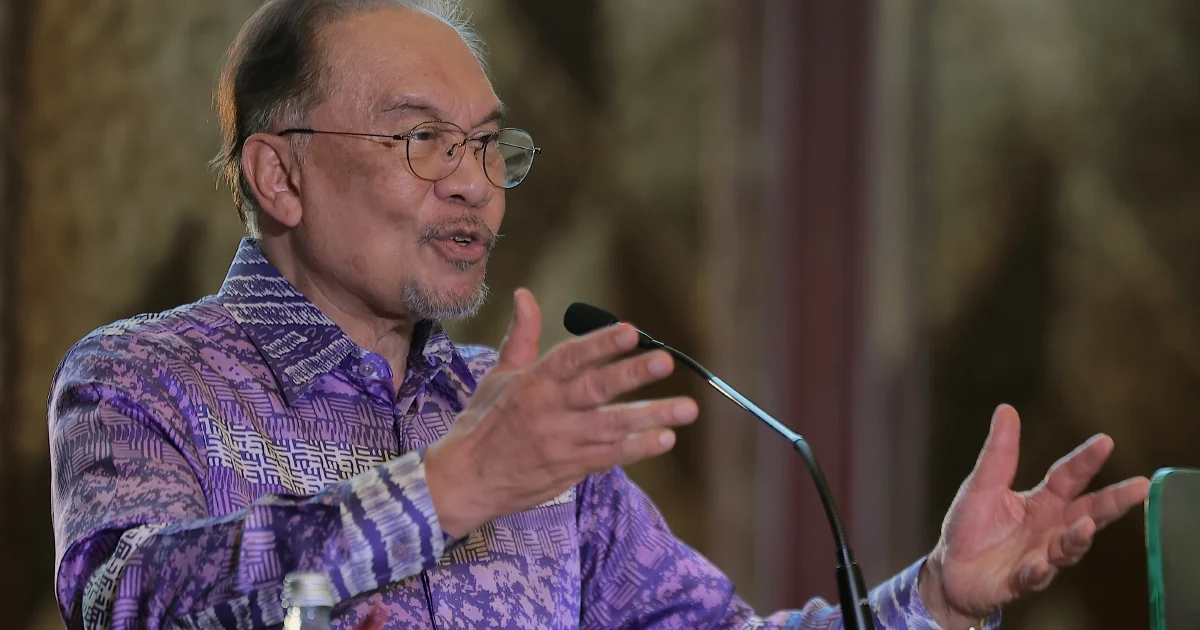
Prime Minister Datuk Seri Anwar Ibrahim is set to undertake a significant diplomatic mission to Kazan, the capital of Tatarstan in the Russian Federation, beginning June 17 for a two-day working visit that Malaysian officials say will reinforce bilateral relations with Moscow while positioning Asean as an active diplomatic player in an increasingly multipolar geopolitical landscape.
The centrepiece of Anwar's itinerary will be substantive discussions with Rais of the Republic of Tatarstan Rustam Minnikhanov, whose leadership of Russia's most economically developed autonomous republic makes him a key figure in shaping Moscow's regional policies and commercial strategies. This choice of interlocutor reflects the depth Malaysia intends to bring to the engagement, moving beyond ceremonial state visits toward practical cooperation in economic development, technology, and governance.
According to Malaysian diplomatic sources, the visit represents an effort to strengthen Malaysia-Russia ties at a moment when regional powers are reassessing their international alignments. Russia has faced considerable Western pressure following geopolitical tensions, creating an opening for non-Western nations like Malaysia to develop substantive partnerships based on mutual economic and strategic interests rather than ideological alignment. This positions Malaysia as a pragmatic player willing to engage with all major powers irrespective of international divisions.
The inclusion of Asean-Russia relations in the visit's stated objectives signals that Malaysia is not pursuing narrowly bilateral interests but attempting to elevate the entire Southeast Asian region's engagement with Russia. This approach echoes Malaysia's broader foreign policy philosophy of non-alignment and equidistance, which has historically shaped its approach to major power competitions. By facilitating Asean's collective relationship with Moscow, Malaysia could enhance its standing within the bloc as a diplomatic bridge-builder and strategic thinker.
Tatarstan itself holds particular significance for Malaysia's outreach. As Russia's largest Muslim-majority region and a major economic hub with diverse investment interests, Tatarstan offers Malaysian companies and investors tangible opportunities in energy, petrochemicals, information technology, and manufacturing. Minnikhanov's administration has been relatively open to international business partnerships, making the republic an ideal entry point for Malaysian firms looking to establish footholds in the Russian market despite broader Western sanctions regimes.
Energy cooperation looms large in potential discussions. Russia remains a major global energy exporter, and Malaysia, as an energy-consuming nation and regional energy hub, has natural incentives to maintain stable commercial relationships with Moscow. The visit may explore opportunities in liquefied natural gas, oil products, and potentially renewable energy technologies, sectors where both nations have complementary interests and capabilities.
Beyond commerce, the diplomatic initiative carries symbolic weight in the current international environment. Anwar's willingness to travel to Russia demonstrates Malaysia's commitment to maintaining constructive relations with all permanent members of the UN Security Council. This stance contrasts with some Western nations' approach and reinforces Malaysia's identity as a truly independent actor on the world stage, unbound by Cold War alignments or contemporary geopolitical blocs.
The timing of the visit also deserves scrutiny. Coming at a period when regional tensions in Southeast Asia remain elevated and global supply chains face disruption, Malaysia's effort to cement relations with a resource-rich major power could have ripple effects across Asean's strategic positioning. If successful in establishing stronger Malaysia-Russia mechanisms for dialogue and cooperation, the visit could influence how other Southeast Asian nations calibrate their own Russian engagement strategies.
From an Asean perspective, Malaysia's mediation role between the bloc and Russia addresses a genuine regional interest. Asean has consistently sought to remain non-aligned and maintain stable relations with all major powers, a balancing act that has become increasingly complex. By facilitating higher-level engagement between Asean and Moscow through bilateral initiatives like Anwar's Kazan visit, Malaysia reinforces the bloc's commitment to inclusive regional architectures that do not force Southeast Asian nations into choosing sides in great power rivalries.
The visit also reflects evolving Malaysian domestic politics and Anwar's consolidation of power. Demonstrating diplomatic competence on the international stage, particularly in engaging major powers and advancing national interests through strategic partnership, strengthens Anwar's position domestically. Malaysians increasingly expect their leaders to punch above their weight in global affairs, and high-profile visits to significant powers deliver the symbolic reassurance that Malaysia remains a consequential player in regional and international politics.
Looking forward, the outcomes from Anwar's Kazan discussions could establish templates for deeper Malaysian-Russian collaboration across multiple sectors. Whether concrete agreements emerge on trade facilitation, educational exchanges, cultural cooperation, or strategic dialogue mechanisms, the visit signals that Malaysia views Russia not as a pariah state to be avoided but as a legitimate international actor with whom serious engagement remains both possible and desirable.
As global alignments continue to shift and the international order shows signs of fundamental restructuring, Malaysia's proactive diplomacy toward Russia—coupled with its maintenance of strong ties to Western nations and Asian partners—positions the country as a sophisticated diplomatic actor navigating complexity with pragmatism. The Kazan visit exemplifies this balanced approach, seeking mutual benefit while respecting the multipolar reality of contemporary international relations.


