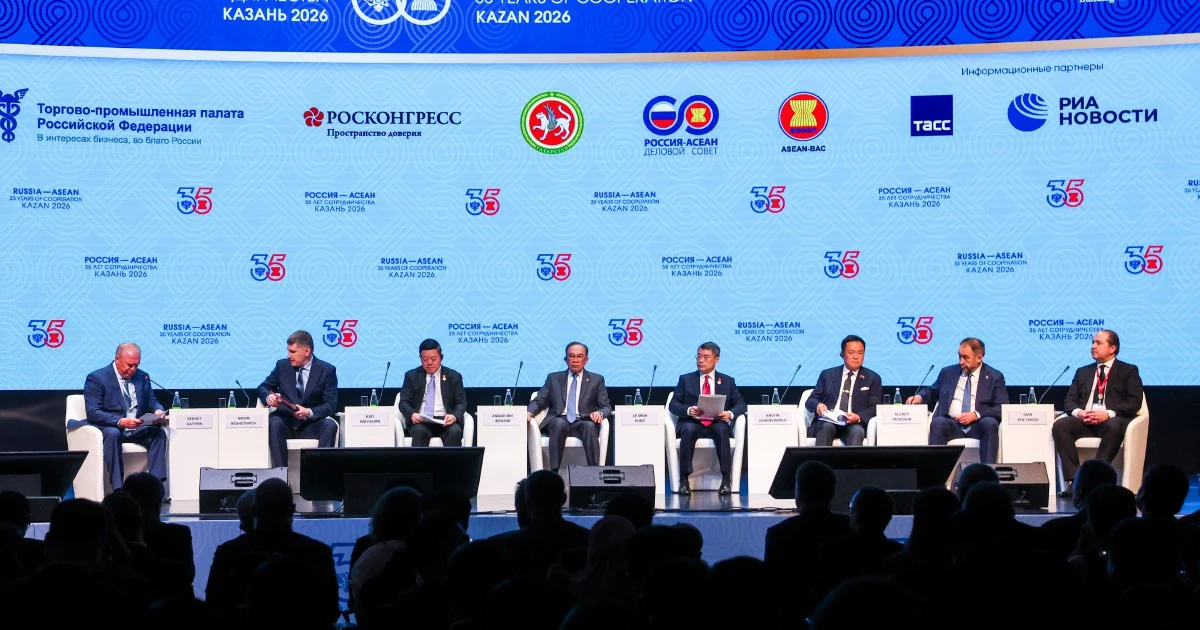
Prime Minister Datuk Seri Anwar Ibrahim has made a fresh call for ASEAN nations and Russia to substantially deepen their engagement across a spectrum of critical economic and technological domains. Speaking from Kazan, the Malaysian leader outlined a comprehensive vision for bilateral cooperation that extends beyond traditional political dialogue into areas that carry profound implications for regional prosperity and stability in Southeast Asia.
The emphasis on food security reflects growing concerns across ASEAN about supply chain vulnerabilities and agricultural self-sufficiency. Russia remains one of the world's largest producers and exporters of grains and fertiliser, a reality that has become increasingly significant for Southeast Asian nations dependent on imports to feed their populations. The geopolitical tensions disrupting global commodity markets have underscored the strategic importance of diversifying agricultural partnerships and building resilient supply chains. For Malaysia specifically, which imports substantial quantities of rice, wheat and agricultural inputs, strengthened ties with Moscow could offer alternative sources and potentially more stable pricing arrangements amid global uncertainties.
Energy cooperation between ASEAN and Russia presents equally significant opportunities, particularly as Southeast Asian economies intensify their push toward sustainable development while managing immediate energy demands. Russia's hydrocarbon reserves and expertise in energy infrastructure development could complement ASEAN nations' growing renewable energy ambitions. The partnership could encompass traditional oil and gas sectors while simultaneously advancing collaboration in nuclear energy technology, where Russian expertise has been internationally recognised. For countries like Malaysia, Vietnam and Indonesia with expanding industrial bases, access to diverse energy partnerships reduces dependency on any single supplier and enhances long-term energy security.
Anwar's reference to advanced manufacturing underscores regional efforts to create competitive production ecosystems independent of traditional Western supply chains. ASEAN has increasingly positioned itself as an alternative manufacturing hub for multinational corporations seeking to diversify production beyond China. Russian engagement in this sector could introduce new technologies and manufacturing methodologies, particularly in specialised areas where Moscow possesses distinct capabilities. This dimension of cooperation aligns with Malaysia's goal to move up the value chain in electronics, semiconductors and automotive production.
The digital technologies component recognises the accelerating transformation of Southeast Asian economies into digital societies. Russian capabilities in software development, artificial intelligence and cybersecurity could contribute meaningfully to ASEAN's digital infrastructure advancement. The region faces persistent challenges in closing technology gaps with developed nations and building indigenous innovation capacity. Partnerships with Russia could help ASEAN nations develop sovereign digital capabilities and reduce reliance on Western technology platforms, a concern that resonates particularly strongly in Malaysia and other regional capitals.
Educational collaboration between ASEAN and Russia would facilitate people-to-people exchanges and knowledge transfer. Historically, Russia has maintained strong educational ties with developing nations through scholarships and academic partnerships. Revitalising and expanding such programmes could help ASEAN develop skilled workforces in technical disciplines, research capabilities and institutional knowledge. For Malaysian students and professionals, opportunities to study in Russian institutions could provide access to quality education while broadening regional intellectual networks.
Anwar's intervention from Kazan carries diplomatic weight at a moment when ASEAN is carefully navigating its external relationships amid great power competition. The bloc has consistently sought to maintain non-aligned status and expand partnerships across all major powers. Russia, despite its current international isolation over Ukraine, remains a significant regional actor with historical ties throughout Southeast Asia. Malaysia itself maintains pragmatic bilateral relations with Moscow, balancing its Western security commitments with broader regional engagement.
The timing of these proposals reflects evolving dynamics within ASEAN itself. As member states pursue increasingly independent foreign policies while maintaining collective identity, bilateral partnerships become platforms for demonstrating ASEAN's agency and autonomy. By publicly articulating expansive cooperation frameworks with Russia, Anwar signals that ASEAN nations will not accept artificial constraints on their external engagement imposed by external powers.
Implementing these ambitious proposals requires translating rhetoric into concrete institutional mechanisms and commercial arrangements. Sectoral working groups, joint investment vehicles and capacity-building programmes would need to be established. Trade agreements facilitating the movement of goods and professionals between ASEAN and Russia would accelerate cooperation. Financial mechanisms and guarantees protecting bilateral investments would reduce business uncertainty in an environment of international sanctions affecting Russian operations.
For Malaysia specifically, deepened ASEAN-Russia cooperation offers opportunities to strengthen its position as a regional technology and financial hub. Malaysian firms could benefit from increased bilateral trade and joint ventures with Russian enterprises. Malaysian ports and logistics infrastructure could facilitate broader regional commerce with Russia. Universities and research institutions could establish collaborative programmes in emerging technologies.
The proposal also addresses broader Southeast Asian anxieties about economic resilience. The COVID-19 pandemic exposed vulnerabilities in global supply chains. Recent geopolitical shocks have further demonstrated risks of over-concentration in any single trading partner. Diversifying economic partnerships, including through renewed engagement with Russia, provides insurance against future disruptions. ASEAN nations recognise that prosperity depends on maintaining multiple sources of supply, investment, technology and markets.
Challenges remain substantial. International sanctions against Russia complicate commercial and financial interactions. Some ASEAN members maintain close Western security alignments that could create political sensitivities around deepened Russian engagement. Bridging these divergent national interests within ASEAN frameworks requires careful diplomacy and consensus-building. Nevertheless, Anwar's call signals that ASEAN remains committed to pragmatic, interests-based relationships unconstrained by ideological divisions shaping great power competition.


