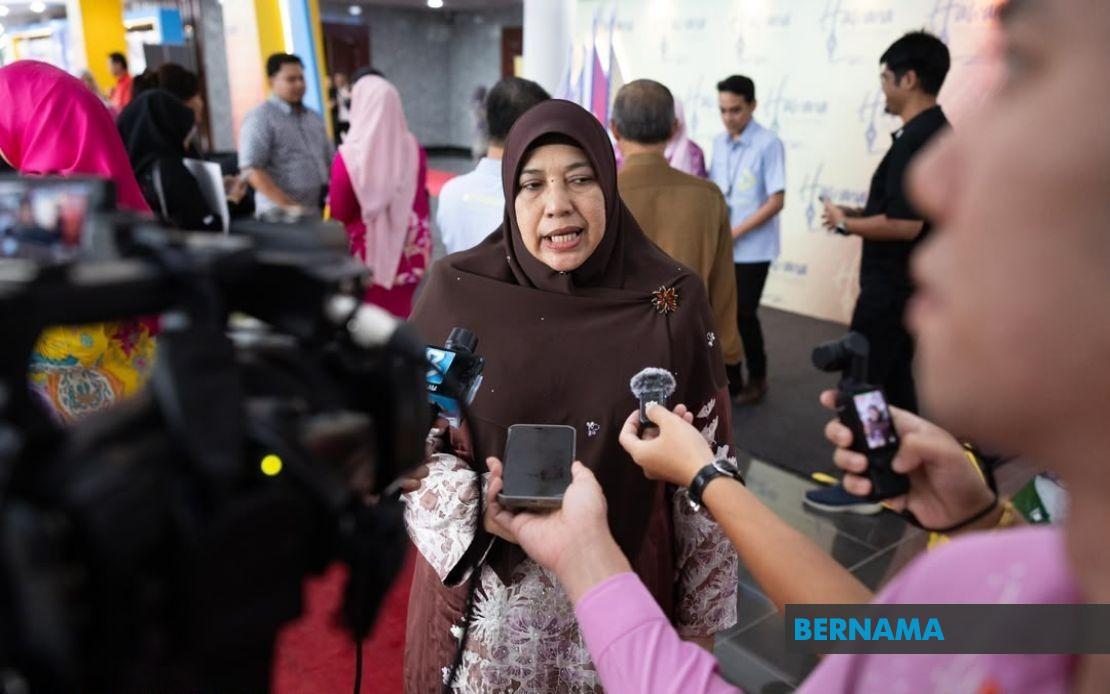
The Malaysian National News Agency's (Bernama) execution of the National Journalists' Day (HAWANA) 2026 Grand Finale in Butterworth has underscored the organization's capability to orchestrate significant national events using internal resources and expertise. The culminating event, held at PICCA Convention Centre @ Butterworth Arena, drew the participation of Prime Minister Datuk Seri Anwar Ibrahim, Penang Chief Minister Chow Kon Yeow, and Communications Minister Datuk Fahmi Fadzil, signalling the importance accorded to the gathering by Malaysia's political leadership.
Bernama's chief executive officer Datin Paduka Nur-ul Afida Kamaludin emphasized that the agency had managed the event through entirely internal coordination, with dedicated sub-committees ensuring every aspect of the operation proceeded smoothly. Her remarks underscore a significant institutional achievement: the successful delivery of a large-scale, high-profile gathering without external contracting, a demonstration of organizational maturity often absent from government agencies in the region.
A particularly noteworthy accomplishment was Bernama's inaugural live broadcast production conducted wholly through in-house capabilities. The technical and creative components—from artificial intelligence-powered video production to poster and layout design—were generated by Bernama's own personnel. This integration of contemporary digital tools with internal human capital represents a strategic shift toward self-sufficiency in media production, a capability increasingly valuable as news organizations navigate evolving technological landscapes.
The HAWANA 2026 edition, themed "Media Integrity Strengthens Credibility," attracted approximately 1,000 media practitioners, including journalists from other ASEAN nations. This transnational participation reflects the event's growing prominence as a regional forum for media professionals to exchange perspectives on industry standards, ethical practices, and emerging challenges. The presence of international delegates suggests that HAWANA has transcended its domestic parameters to assume regional significance, potentially positioning Bernama as a convening authority for media discourse across Southeast Asia.
Nur-ul Afida indicated that Bernama intends to rotate future HAWANA celebrations among different Malaysian states, a strategy that would simultaneously showcase regional diversity and extend media professionals' engagement with different geographical and cultural contexts. This rotational approach could strengthen journalism networks beyond Kuala Lumpur's traditional media epicentre, fostering professional relationships across Malaysia's federated structure and potentially elevating journalistic standards across provincial newsrooms.
The positive reception from attending media professionals, evidenced by preliminary inquiries regarding next year's venue, suggests HAWANA has successfully established itself as an indispensable annual calendar fixture within Malaysia's journalism community. This enthusiasm indicates that the event addresses genuine professional needs—whether networking, professional development, or recognition—that the fragmented Malaysian media landscape might otherwise struggle to facilitate.
Bernama's sixth consecutive year as HAWANA's implementing agency demonstrates sustained governmental confidence in the news agency's organizational competence. However, Nur-ul Afida's expressed hope for continued ministerial trust hints at institutional uncertainty regarding future assignments. This dependency dynamic reflects broader realities within Malaysia's state media ecosystem, where organizational continuation and expanded responsibility often remain contingent upon political satisfaction rather than institutional permanence.
The event's emphasis on media integrity and credibility carries particular resonance within Southeast Asia's contemporary information environment. Across the region, journalism confronts mounting pressure from disinformation, political interference, and audience fragmentation. By centring these themes, HAWANA positioning establishes a counternarrative asserting journalism's social importance precisely when the profession faces credibility deficits and economic pressures that threaten institutional viability.
For Malaysian journalists specifically, HAWANA 2026 provided a gathering that transcends typical professional isolation. Malaysia's diverse media ownership structure—spanning government agencies, political-aligned publications, and increasingly fragmented digital platforms—often prevents cohesive professional identity formation. Events facilitating practitioner assembly contribute to solidarity and collective standard-setting independent of proprietorial interests, essential functions for sustaining professional norms under economic and political duress.
Bernama's investment in internal capability development, demonstrated through HAWANA's execution, reflects strategic positioning for an evolving media landscape where news organizations must perform functions beyond traditional journalism. Event production, content design, and audience engagement increasingly determine organizational relevance and revenue generation. By cultivating these competencies internally, Bernama enhances its institutional value proposition beyond wire service provision.
The multinational attendance at HAWANA 2026 opens possibilities for deeper ASEAN media collaboration. Regional journalism networks remain underdeveloped compared to other professional sectors, partly reflecting lingering Cold War-era distrust and divergent national media models. Recurring gatherings like HAWANA, with explicit ASEAN participation, could gradually cultivate professional relationships that transcend national boundaries and foster collective problem-solving around shared challenges including digital transformation and economic sustainability.
As Malaysian newsrooms confront ongoing transformation—technological disruption, audience migration online, and economic retrenchment—institutional commitment to professional community-building becomes strategically important. Bernama's successful HAWANA 2026 delivery demonstrates that state institutions can facilitate professional collective action that serves journalism's public interest functions without compromising editorial independence. This model potentially offers pathways for other Southeast Asian state news agencies considering how institutional resources might enhance regional journalism's collective resilience.
The broader implication extends beyond Malaysia: government news agencies across Southeast Asia have largely retreated to narrow propaganda or service provision roles, often abandoned by professional journalists seeking greater autonomy. Bernama's demonstration that state institutions can organize spaces for genuinely valued professional engagement suggests alternative institutional trajectories where state news agencies become convening platforms for journalism's broader ecosystem rather than remaining isolated propagandistic appendages.