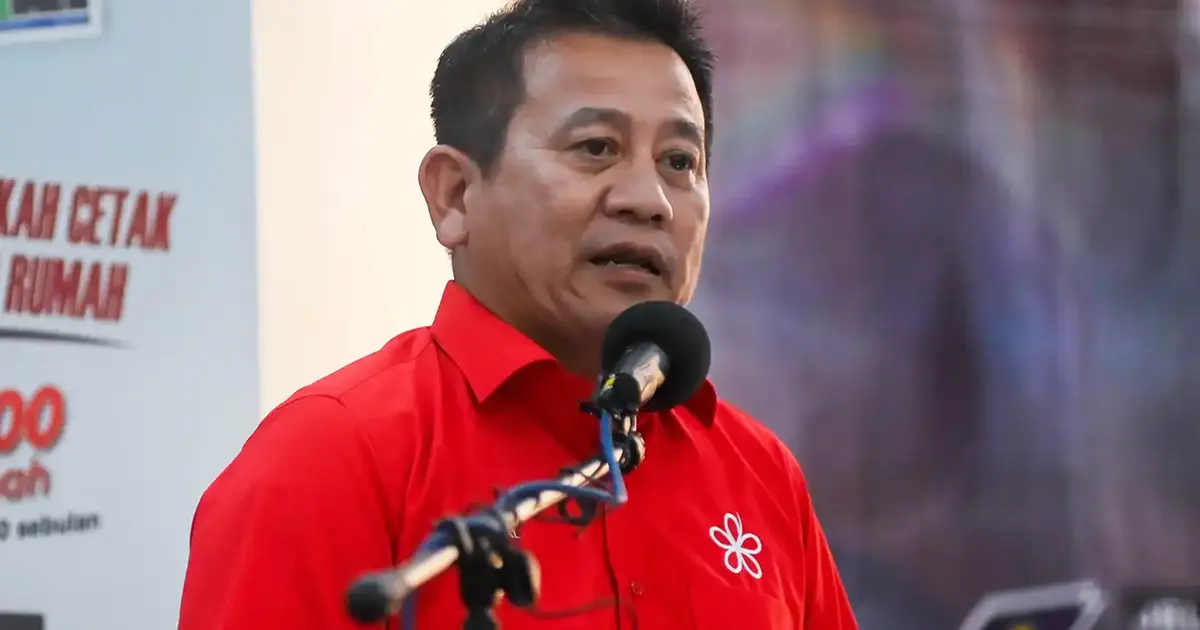
Tensions within the Perikatan Nusantara coalition have surfaced anew, with Bersatu's information chief Tun Faisal Ismail Aziz warning that PAS is methodically strengthening its hold over the partnership following a recent organisational restructuring. The senior Bersatu figure contends that the reshuffle reveals an unmistakable pattern of centralised decision-making that prioritises the Islamist party's interests at the expense of collective coalition governance.
The friction highlights the fragility of the three-party alliance that brought Barisan Nasional down from federal power in the 2023 general election. Bersatu, despite its vocal opposition role, remains bound to PN through formal agreements that have become increasingly strained as policy differences and leadership disputes emerge. Tun Faisal's intervention suggests that rank-and-file frustration within the former ruling party has reached a threshold where public criticism signals deeper discontent with power-sharing arrangements.
PAS, which commands the largest parliamentary contingent within PN and holds several ministerial portfolios in the Anwar Ibrahim administration, has positioned itself as the coalition's de facto authority figure. The party's recent moves to reshape coalition structures have been interpreted by Bersatu strategists as an effort to marginalise competing voices and concentrate decision-making authority. This dynamic reflects a broader pattern in Malaysian politics where larger partners within coalitions seek to subordinate smaller members through institutional mechanisms rather than outright expulsion.
Tun Faisal's accusation that PAS exhibits an "authoritarian attitude" carries particular weight given Bersatu's own complicated history with internal discipline and leadership consolidation under Mahathir Mohamad and subsequently Muhyiddin Yassin. The charge suggests that Bersatu perceives the manner in which PAS conducts coalition affairs as incompatible with the collegiate approach necessary for multi-party partnerships to function effectively. This criticism also implies that Bersatu may be repositioning itself as a potential counterweight to PAS dominance, a strategic calculation that could reshape PN's internal balance.
The coalition's structure places it in an unusual position within Malaysia's political landscape. While PN supports the current government from a distance, it functions as both a parliamentary opposition and a quasi-partner arrangement with Barisan Nasional. This ambiguous status creates opportunities for internal actors to manoeuvre for advantage, and PAS's efforts to consolidate control can be understood as an attempt to ensure it retains maximum influence regardless of future electoral outcomes or coalition reconfigurations.
For Malaysian observers, the deteriorating dynamics within PN carry implications for government stability. The current federal administration depends on PN's tacit cooperation in parliamentary votes, and visible acrimony between coalition partners could encourage defections or parliamentary complications. Should tensions escalate to the point where Bersatu considers withdrawing from PN, the political arithmetic in parliament would shift significantly, potentially destabilising the Anwar administration's legislative agenda.
The reshuffle that triggered Tun Faisal's criticism involved adjustments to portfolio assignments and committee memberships within the coalition structure. From PAS's perspective, these changes likely represented necessary administrative refinements that streamline decision-making. From Bersatu's standpoint, however, the alterations appear designed to limit the smaller party's capacity to block initiatives or champion alternative viewpoints during coalition deliberations. This divergence in interpretation reflects the fundamental tension between efficient governance and equitable partner representation.
Historically, Malaysian coalitions have proven vulnerable to exactly this type of conflict. Barisan Nasional itself experienced repeated crises when dominant members such as UMNO marginalised smaller partners, breeding resentment that eventually contributed to the coalition's 2018 electoral collapse. PAS may be replicating patterns that ultimately prove self-defeating, particularly if Bersatu concludes that remaining within PN offers fewer advantages than pursuing independent strategies. Given that both parties compete for Malay-Muslim voter support, intra-coalition conflict can damage their collective electoral prospects.
The public nature of Tun Faisal's critique signals that Bersatu leadership has calculated the political value of repositioning itself as a defender of coalition principles against unilateral power consolidation. This messaging could appeal to PN supporters who favour genuine partnership over hierarchical arrangements, and it establishes a record of Bersatu resistance that protects the party's independence narrative. Should PN face electoral challenges, Bersatu can claim it attempted to maintain principled governance while larger coalition members pursued naked self-interest.
Looking forward, observers should monitor whether this dispute escalates into formal procedural conflicts within PN structures, or whether back-channel negotiations between Muhyiddin Yassin and PAS leadership produce informal accommodations. The coalition's sustainability depends on mechanisms that allow smaller partners genuine influence over major decisions, and if Bersatu perceives such mechanisms as illusory, the partnership's durability becomes questionable. In Malaysia's volatile political environment, coalition stability often proves more fragile than it appears.