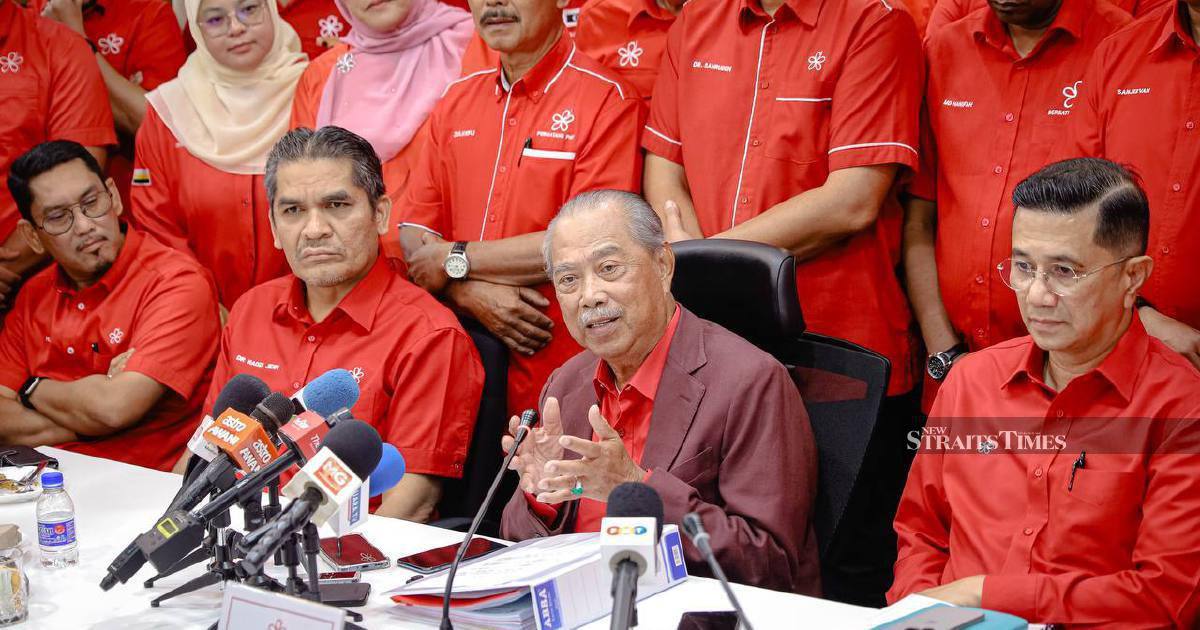
Bersatu's leadership has signalled a combative readiness to compete directly with PAS in Johor's next state election, should negotiations over parliamentary constituency allocations break down between the two parties. Party president Tan Sri Muhyiddin Yassin made the declaration during recent remarks in Petaling Jaya, underscoring the competitive tensions that persist beneath the surface of Malaysia's fractious political alliances.
The statement reflects deepening fissures within the Malay-Muslim political establishment, where Bersatu and PAS, despite both operating within the broader Perikatan Nasional framework, maintain fundamentally divergent organisational interests and electoral strategies. Muhyiddin's comments suggest that while formal coalition ties remain intact at the federal level, state-level cooperation cannot be guaranteed—a pattern increasingly evident across Malaysia's multi-layered political system. The Johor context carries particular significance given the state's status as an electoral bellwether and its representation of significant parliamentary seats crucial to national government formation.
Historically, Johor has functioned as a relatively stable power base, yet recent electoral cycles have demonstrated increased volatility and shifting voter preferences. The prospect of Bersatu and PAS contesting identical seats introduces unpredictability into state-level calculations and complicates coalition management at both regional and national levels. Muhyiddin's readiness to embrace such confrontation suggests Bersatu believes it possesses sufficient organisational capacity and grassroots support to prevail in direct competition with PAS's established machinery in critical constituencies.
The underlying tension reflects broader questions about how Malaysian political coalitions function in practice. While Perikatan Nasional presents a unified face federally, its constituent parties—Bersatu, PAS, and various smaller components—maintain separate electoral machines and compete for relevance within their respective communities. These contradictions intensify during state electoral cycles when seat negotiations become zero-sum propositions, with each party seeking to maximise representation and consolidate political standing.
PAS, with its extensive grassroots network particularly in rural and semi-urban Malay-Muslim constituencies, has established formidable presence across multiple states including Johor. Bersatu, by contrast, operates with a more elite-driven structure inherited from its origins within UMNO's upper echelons. The party has struggled to develop comparable grassroots depth, though it has made strategic gains in specific constituencies through targeted campaigns and tactical positioning within coalitional arrangements. Muhyiddin's confidence statement may represent an attempt to project strength and deter PAS from aggressive expansion in constituencies Bersatu views as defensible territory.
The Johor electoral context carries implications extending beyond state politics. Johor's parliamentary constituencies feed into national government formation, and the distribution of seats between coalition partners directly influences their bargaining power during federal arrangements. PAS's strengthened parliamentary presence in recent cycles has enhanced its leverage in coalition negotiations, a trend that threatens Bersatu's capacity to secure ministerial portfolios and policy influence proportionate to its federal role. Protecting Johor constituencies thus becomes strategically essential for Bersatu's long-term positioning within Malaysian politics.
Muhyiddin's statement also signals internal Bersatu confidence despite the party's relatively modest membership compared to established competitors. The party leadership clearly believes it can mobilise resources and messaging sufficiently to overcome PAS's organisational advantages in head-to-head contests. Whether such confidence reflects accurate assessment of voter sentiment or represents aspirational positioning remains an open question, though previous electoral cycles suggest PAS maintains structural advantages in purely competitive scenarios without coalition coordination mechanisms.
From a broader Malaysian political perspective, Muhyiddin's remarks highlight the fundamental instability inherent in contemporary coalition politics. The federal government's stability depends upon maintaining coalition discipline, yet individual component parties possess strong incentives to expand their electoral footprint and political influence. Johor's election becomes a potential flashpoint where these contradictory imperatives converge, testing both coalition cohesion and the parties' willingness to subordinate electoral ambitions to broader alliance maintenance. If serious seat clashes materialise, they could trigger coalition tensions that reverberate across Malaysian politics.
Regional observers have watched Perikatan Nasional's development with interest, viewing it as one of Southeast Asia's notable recent political reconfigurings. The coalition's capacity to manage internal competition while maintaining federal governance represents a significant test of political maturity. Failures in seat negotiation or subsequent electoral conflicts could undermine confidence in coalition stability, potentially affecting investor sentiment and governance effectiveness. Conversely, successful management of Johor's electoral process through negotiated accommodations could strengthen coalition credibility heading toward subsequent national electoral cycles.
The practical implications for Johor voters remain uncertain pending final seat allocation decisions and campaign dynamics. Constituencies potentially subject to inter-coalition contests may experience intensified competition, more sophisticated campaign strategies, and greater voter choice—though such contests also risk fragmenting Malay-Muslim political support and creating openings for opposition parties to consolidate non-Malay constituencies and capture swing voter segments. Muhyiddin's stance essentially acknowledges that internal coalition dynamics remain fluid and subject to competitive pressures that may override partnership considerations.


