The leadership of PAS has taken an increasingly critical stance toward coalition partner Bersatu, with the Islamic party's treasurer questioning the sustainability of the smaller party's position within Perikatan Nationale. Iskandar Abdul Samad's remarks signal growing tensions within the opposition coalition as Malaysia's political landscape continues to shift following recent electoral developments and changing parliamentary dynamics.
In his assessment, Iskandar Abdul Samad suggested that Bersatu will struggle to maintain operational viability as part of Perikatan Nationale given the current political environment. The treasurer's comments reflect broader concerns within PAS about the coalition's cohesion and the practical limitations facing smaller coalition partners. This public critique from a senior PAS figure carries significant weight, as it suggests internal coalition discussions may be increasingly questioning Bersatu's role and contribution to the broader opposition framework.
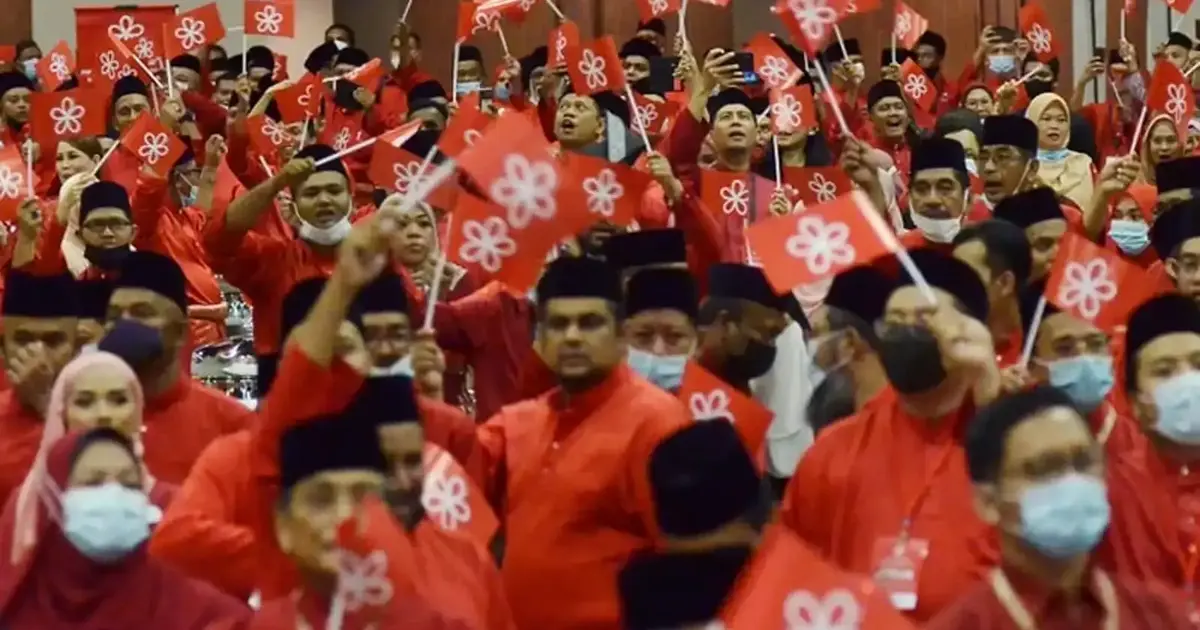
Bersatu, led by former Prime Minister Muhyiddin Yassin, has occupied an uneasy position within Malaysian politics since its formation in 2016. The party has navigated multiple coalition realignments, first supporting the Pakatan Harapan government, then playing a central role in the Sheraton Move that brought down that administration in 2020, and subsequently establishing Perikatan Nationale. The party's relatively modest parliamentary representation has sometimes made it dependent on coalition partners for political relevance and ministerial appointments.
Peikatan Nationale was formed in 2020 as an alternative opposition coalition, challenging Pakatan Harapan's dominance. The grouping brought together PAS, Bersatu, and several other parties, positioning itself as a Malay-Muslim-centric alternative to the more multiethnic Pakatan coalition. However, the coalition's electoral performance has not matched its initial ambitions, and internal dynamics have become increasingly strained as parties jostle for influence and position.
For Malaysian observers, the tensions within Perikatan Nationale reflect the volatility characteristic of opposition politics since 2020. The collapse of Pakatan Harapan's government and the subsequent realignment that created PN appeared to offer a stable alternative, yet the coalition has struggled to present a unified front or clear policy platform that resonates broadly beyond its core base. Questions about party discipline, coalition discipline, and the distribution of spoils have repeatedly threatened cohesion.
The PAS treasurer's critique may also reflect concerns about Bersatu's broader trajectory and viability. The party has lost significant parliamentary representation in recent electoral cycles, and its influence within coalition governance structures has correspondingly diminished. Without substantial numbers in parliament, Bersatu's leverage in coalition negotiations becomes limited, potentially rendering it more of a liability than an asset to partners like PAS who command larger blocs of seats.
Regionally, Malaysia's coalition instability mirrors challenges faced by other Southeast Asian democracies, where opposition politics often fragments and coalition-building becomes a perpetual challenge. Unlike Thailand or Cambodia, where military coups have reshaped political structures, Malaysia's multiparty system creates conditions where coalitions must constantly negotiate power-sharing arrangements. The sustainability of these arrangements depends heavily on equitable distribution of political rewards and realistic mutual expectations.
Iskandar Abdul Samad's willingness to publicly voice doubts about Bersatu's position suggests that behind-the-scenes discussions within Perikatan Nationale have likely become more pointed. Coalition partners may be considering scenarios in which they operate without Bersatu or with significantly reduced Bersatu participation. Such contingency planning is normal in Malaysian politics, where coalition reconfiguration occurs regularly based on electoral performance and shifting strategic calculations.
For Bersatu specifically, such criticism presents both immediate and longer-term challenges. Immediately, it signals vulnerability within the coalition and suggests that other partners may be positioning themselves to extract concessions or renegotiate terms. Over the longer term, persistent exclusion or marginalization within opposition politics could push Bersatu toward accommodation with the government or toward additional independent actions designed to restore its political relevance.
The timing of these comments also merits examination. Depending on when they were made relative to by-elections, parliamentary sessions, or internal coalition meetings, they may reflect calculated pressure on Bersatu to either demonstrate greater value to the coalition or accept diminished roles. In Malaysian politics, such public statements frequently serve as signals in ongoing negotiations rather than final assessments.
For Malaysian voters and political observers, Perikatan Nationale's apparent dysfunction offers a cautionary perspective on opposition coalition building. While such coalitions are necessary to balance the government's advantages, they require genuine commitment to shared objectives and realistic mutual expectations. When they become merely vehicles for individual parties to pursue separate agendas, their effectiveness deteriorates rapidly.
Moving forward, Bersatu faces pressure to either reinvigorate its political base and parliamentary representation or accept a subordinate role within Perikatan Nationale. The party's leadership, particularly Muhyiddin Yassin, must decide whether to invest heavily in rebuilding party strength or to pursue alternative political strategies. The current political environment offers limited clear pathways forward, which likely explains both PAS's growing impatience and Bersatu's underlying vulnerability.