The Paris VivaTech festival has become a global showcase for emerging technologies with profound implications for Southeast Asia, and this year's exhibitors demonstrate the convergence of artificial intelligence, biomedicine and aerospace innovation that promises to reshape multiple industries. Across three sprawling floors of demonstrations, startups are unveiling solutions to long-standing challenges in orthopaedic surgery, urban mobility, fraud prevention and athletic performance monitoring—innovations that could have immediate relevance for Malaysian hospitals, logistics companies and financial institutions navigating an increasingly digital economy.
Berlin-based Blueprint Biomed is tackling one of orthopaedic surgery's persistent problems: the limitations of bone grafts harvested from patients' own bodies. These autologous grafts, which surgeons have relied upon for decades to support healing in millions of annual procedures worldwide, carry inherent risks. Complications from donor-site trauma can occur, and graft failure necessitates additional operations that prolong patient recovery and inflate healthcare costs. The company's solution involves biodegradable artificial scaffolding that eliminates the need for harvesting bone from patients themselves, potentially transforming treatment protocols in Malaysian hospitals where such procedures are routine. Chief executive Aaron Herrera explained that Blueprint's engineered structures employ a 3D-printed framework of polycaprolactone—a medical-grade polymer—combined with collagen, both substances naturally resorbed by the body within defined timeframes as new bone regenerates. The technology's flexibility allows customisation for complex fractures and spinal procedures, addressing cases where conventional grafts prove inadequate. As the company advances toward human trials with $2.5 million in funding secured, a 2028 target for patient implantation represents a critical timeline for regulatory approval across major markets including the European Union and eventually Asia-Pacific nations.
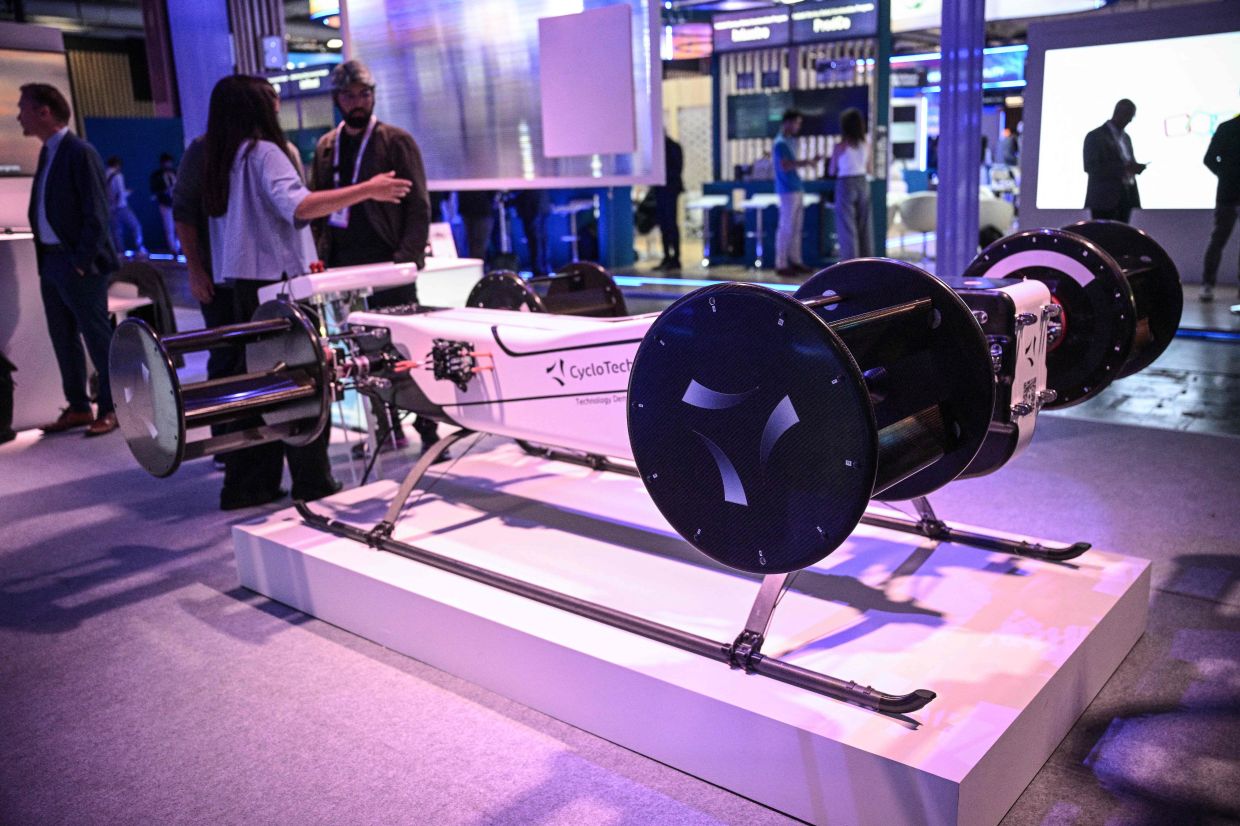
The evolution of drone technology showcases how mechanical innovation continues to outpace expectations despite the maturation of quadcopter designs. Austrian startup CycloTech has developed cylindrical motors featuring radial blade configurations that fundamentally alter how unmanned aircraft manoeuvre through space. Unlike conventional rotors constrained by fixed orientations, CycloTech's design permits simultaneous hovering, forward flight, backward motion and mid-air braking from a single motor configuration—capabilities that expand operational possibilities beyond existing drone applications. Marketing chief Andrea Marchsteiner outlined scenarios ranging from last-mile parcel delivery in congested urban areas to passenger transport and military reconnaissance, each demanding the precise control and agility that alternative rotor designs struggle to achieve. The 65-person company has already secured €40 million in venture funding and now pursues partnerships with established aerospace manufacturers seeking to integrate this motor technology into existing platforms. For Malaysia's burgeoning e-commerce and logistics sectors, such innovations address persistent challenges in delivering packages to high-density residential areas where traditional ground routes prove inefficient. The technology also carries implications for emergency response and infrastructure inspection in terrain difficult for conventional transport.
Deepfake audio represents an emerging security threat that financial institutions and telecommunications companies across Southeast Asia are only beginning to recognise and address systematically. French firm Whispeak initially developed voice-recognition technology for customer authentication in banking contexts, but the company has pivoted toward detecting fraudulent audio as generative AI tools have made voice imitation increasingly accessible and convincing. Chief executive Florent Van Calster emphasised that voice replication now requires merely ten seconds of authentic audio and can be achieved through freely available software, creating vulnerability for elderly customers and high-net-worth individuals susceptible to social engineering attacks. Whispeak's deepfake detection system, developed through three years of refinement with proprietary machine learning tools, has achieved first-place finishes in multiple international detection competitions and reportedly maintains error rates below one per cent under current conditions. The partnership with French telecommunications operator Bouygues demonstrates practical deployment potential, with real-time call screening and user warnings now operational. However, Van Calster acknowledged an inherent limitation: as fraud technology advances, detection systems must continuously evolve in a perpetual competition between authenticators and attackers. For Malaysian banks and financial services companies, particularly those serving significant elderly populations, such detection capabilities address growing concerns about voice-based account takeover attempts and wire fraud schemes orchestrated through spoofed calls.
Athletic performance monitoring has traditionally relied upon invasive blood sampling and wearable devices measuring heart rate variability and movement patterns—metrics that, while useful, provide incomplete pictures of physiological state. Hong Kong-based startup PointFit offers a fundamentally different approach through adhesive biosensory patches that analyse sweat composition rather than cardiac or kinetic data. Chief executive Kenny Oktavius, who initiated the technology development in 2019 while still a university student, recognised that professional athletes wearing expensive monitoring systems still experience unexpected performance collapse, indicating that heart-rate measurement alone omits critical information. His company's patches detect biomarkers including glucose and cortisol concentrations, feeding this data into an artificial intelligence system that generates personalised performance indices adjusted for demographic factors and environmental conditions like temperature. The practical advantage extends beyond elite athletics to mainstream fitness and occupational health contexts where heat stress and metabolic imbalance create safety risks. Collaborations with Red Bull's Athlete Performance Centre and Puma's innovation laboratory validate the technology's credibility within professional sports ecosystems, while Oktavius's stated ambition to pursue consumer retail partnerships with companies like Decathlon and EssilorLuxottica suggests trajectories toward mass-market accessibility. For Malaysian sports facilities, military training programmes and industrial workforces operating in tropical climates, non-invasive biomarker monitoring could transform occupational health protocols and injury prevention strategies.
These innovations collectively illustrate how emerging technology companies are addressing systemic inefficiencies across healthcare, logistics, security and wellness sectors through approaches that prioritise user experience, safety and accessibility. The concentration of such solutions at a single showcase event reflects broader investment momentum behind technologies solving tangible problems rather than pursuing abstract capabilities. For Malaysian policymakers, venture capital firms and corporate innovation leaders monitoring global technology trajectories, these examples demonstrate where competitive advantages may emerge and which sectors warrant accelerated adoption timelines. The timeline for commercialisation varies significantly—Blueprint Biomed's orthopaedic implants await regulatory approval, while CycloTech and PointFit pursue integration partnerships that could accelerate market entry. Whispeak's deepfake detection addresses an immediacy that other solutions lack, given current threats to financial institutions. Collectively, these companies represent investment theses emphasising practical problem-solving over speculative technology, a shift that may signal where venture capital flows concentrate in coming years.