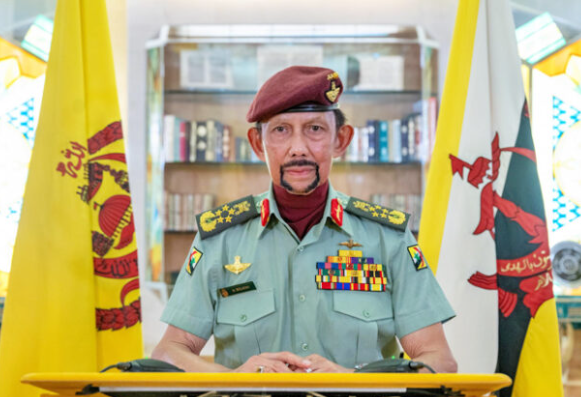
Brunei's Sultan Hassanal Bolkiah has framed the arrival of the Islamic New Year 1448 Hijrah as a moment for collective renewal rather than commencement, urging the nation to deepen its resolve in pursuit of simultaneous advancement across economic, social and spiritual dimensions. In his address marking the occasion, the monarch stressed that genuine progress demands persistent dedication and unwavering commitment from all segments of society, positioning the new year as an inflection point for recommitting to existing obligations rather than initiating entirely fresh endeavours.
The Sultan articulated a comprehensive vision for national development that distinguishes between material and immaterial spheres of advancement. The material dimension encompasses economic growth and infrastructure development, while the spiritual realm extends to knowledge acquisition, educational strengthening and dakwah—the Islamic call to faith and moral guidance. This dual framework reflects Brunei's approach to nation-building, which seeks to balance contemporary economic imperatives with religious and cultural values that constitute the bedrock of the sultanate's identity.
Central to the monarch's message was an appeal for citizens to channel their efforts through sincere intention directed solely towards Allah the Almighty, transforming personal and national aspirations into acts of worship. The Sultan articulated this by inviting the populace to collectively express gratitude for the privilege of welcoming another Islamic new year, framing material development and personal advancement not as secular pursuits but as extensions of faith. This rhetorical approach aligns religious consciousness with contemporary governance priorities, a strategy increasingly visible across Southeast Asian Muslim-majority states grappling with modernisation while maintaining Islamic identity.
Acknowledging the turbulent global landscape, the Sultan noted that international conflicts and wars continue to inflict widespread suffering without offering tangible benefits to any party involved. His remarks came against a backdrop of geopolitical tensions affecting trade routes and regional stability—considerations particularly salient for Brunei, a small oil-producing nation whose prosperity depends on maritime security and international commerce. By framing conflict as universally destructive, the Sultan subtly reinforced the value of Brunei's maintained neutrality and careful diplomatic positioning.
Yet the Sultan expressed profound gratitude that Brunei has sustained relative peace and stability, remaining untouched by the natural disasters that regularly devastate neighbouring regions. This rhetorical emphasis on comparative fortune serves multiple purposes: it reinforces national pride, justifies existing governance structures, and frames Brunei's peace as a divine blessing rather than merely the product of effective administration. The attribution of stability to collective prayers, religious remembrance and Quranic recitation reflects how the sultanate integrates religious discourse into official narratives of national success.
Despite these achievements, the Sultan identified crime—particularly drug-related offences and theft—as a pressing concern demanding urgent collective action. This pivot to internal security threats reveals anxieties within Brunei's governance establishment about criminal activity's capacity to undermine social cohesion and national image. Drug trafficking and consumption represent particular concerns across Southeast Asia, where the region serves as both a transit point and emerging market for narcotics, with implications for Brunei's reputation and security despite its relatively low crime rates compared to regional neighbours.
The Sultan directed specific responsibility toward government agencies overseeing security and religious affairs, mandating swift and effective responses to criminal behaviour. Simultaneously, he emphasised that religious institutions bear particular responsibility for intensifying educational efforts and dakwah campaigns designed to cultivate societal rejection of drugs and criminal conduct. This allocation of preventative responsibility to religious authorities reflects Brunei's governance model, which integrates Islamic institutions into state functions in ways distinct from secular Southeast Asian systems.
The emphasis on collective vigilance emerged as a leitmotif throughout the address, with the Sultan cautioning against negligence or complacency. He framed heightened awareness as both a practical security requirement and a religious obligation, positioning vigilance as inseparable from faith observance. This integration of security consciousness with spiritual practice resonates with broader patterns in Southeast Asian Islamic governance, where religious authenticity increasingly encompasses engagement with contemporary security challenges.
The Sultan reinforced that protecting the ummah—the broader Islamic community—and the nation constitutes a shared responsibility transcending individual, institutional or sectarian boundaries. This language of collective guardianship extends beyond formal security structures to encompass every citizen's role in maintaining social order. For Malaysian observers, this framing offers insight into how Brunei's sultanate mobilises religious identity to reinforce national cohesion and collective obligation, a strategy with potential applications and limitations within Malaysia's more pluralistic context.
In essence, the Sultan's address articulated an integrated vision where material prosperity, spiritual growth, crime prevention and religious observance form interconnected components of national wellbeing. Rather than treating development as distinct from faith or security from spirituality, the monarch presented these domains as mutually reinforcing. This holistic framework reflects how contemporary Southeast Asian Islamic governance attempts to navigate tensions between modernisation imperatives and religious authenticity, positioning faith not as an obstacle to progress but as its fundamental prerequisite and animating principle.