Cambodia's government is pursuing an ambitious economic transformation, moving away from its historical dependence on labour-intensive garment production toward advanced manufacturing and technology-driven sectors. This strategic shift came into sharp focus during Deputy Prime Minister Sun Chanthol's investment promotion tour of South Korea in June, where he led a high-level delegation aimed at convincing Korean companies to expand operations in Cambodia or establish new ventures. The mission, which included company visits and an investment roadshow in Incheon, signals Phnom Penh's determination to reshape its industrial base by targeting sectors that offer greater value-addition, skill development and integration into regional supply chains.
Chanthol's delegation focused specifically on attracting Korean investment in automotive components, electric vehicle systems, logistics, energy, construction and digital healthcare—all sectors where South Korea maintains world-class expertise and where Cambodia sees significant growth potential. The government has positioned itself as ready to provide comprehensive facilitation packages, citing improvements in macroeconomic stability, investment protection mechanisms and new incentive structures under the Kingdom's updated investment law. By bringing together the Council for the Development of Cambodia, relevant ministries, the Korean Chamber of Commerce in Cambodia and prominent local business associations, the roadshow underscored how comprehensively Phnom Penh is attempting to orchestrate investment attraction across diplomatic, regulatory and private-sector channels.
The mission carried particular weight because Cambodia can point to concrete examples of Korean companies already operating successfully within the Kingdom. Daejoo KC Group, a major South Korean conglomerate spanning metallurgy, chemicals, logistics, construction and automotive sectors, operates two subsidiaries in Cambodia that together demonstrate the viability of expanded Korean presence. Camko Motor, one subsidiary, assembles Hyundai vehicles for the domestic market and manufactures automotive wire harnesses for export, while also supporting nearly 500 workers. Its partner company, Camko Infracore, handles vehicle distribution and after-sales services. These operations represent more than job creation; they provide infrastructure, supplier networks and institutional knowledge that facilitate deeper integration into regional manufacturing ecosystems.
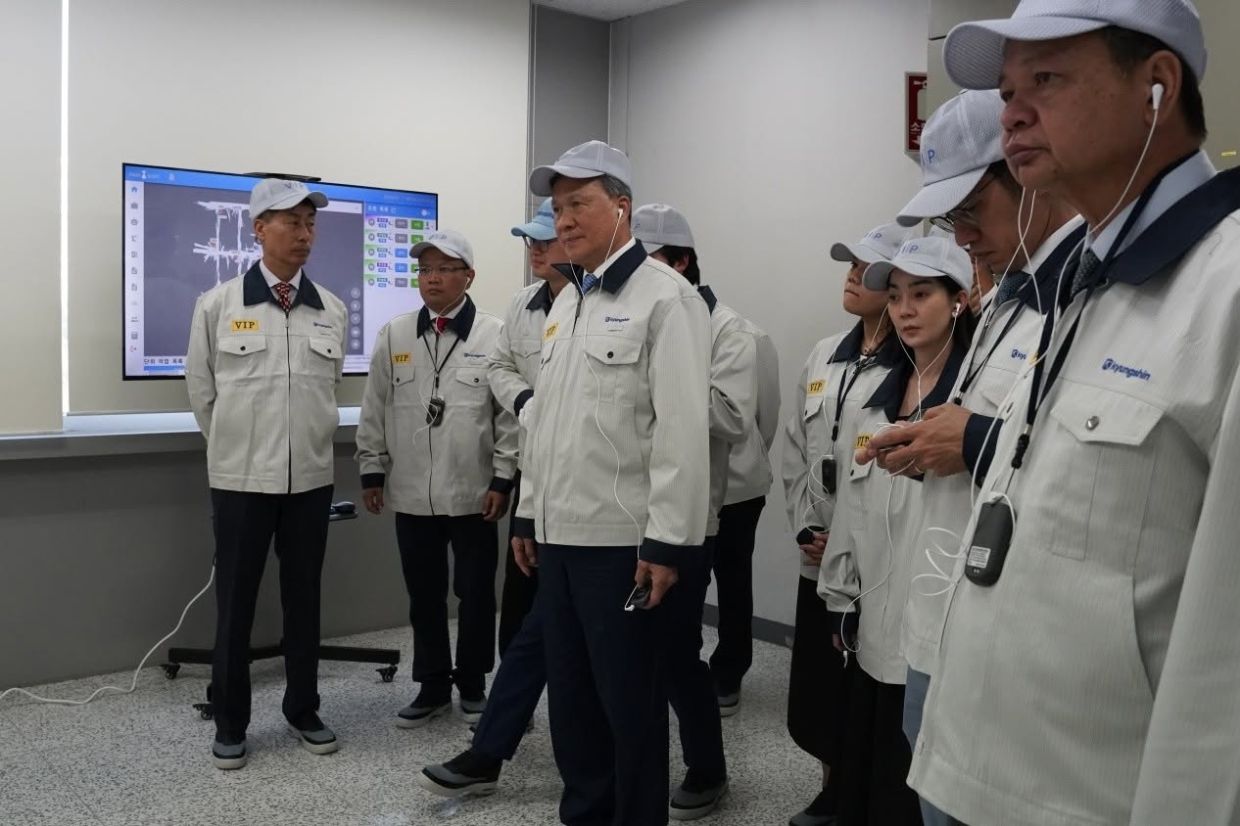
Equally significant is the presence of Kyungshin Co., Ltd., a Korean specialist in automotive electronic components and wire harness manufacturing founded in 1974. Operating in Cambodia since 2012 through a factory in Kandal province, Kyungshin has invested approximately US$20 million and currently employs 1,467 workers. The company manufactures wiring harnesses, connectors, junction blocks and electrical systems specifically designed for electric vehicles—precisely the type of high-precision, technology-intensive manufacturing that Cambodia aims to expand. Kyungshin's long operational history and substantial workforce demonstrate that Cambodia can support complex manufacturing at scale, addressing potential concerns among Korean investors about technical capacity, supply-chain reliability and labour stability.
Cambodia's focus on electric vehicle systems and automotive electronics reflects the global automotive industry's accelerating transition toward electrification and smart mobility. By positioning itself as a manufacturing hub for EV components and electrical systems, Cambodia can capture investment flows being redirected across Asia as companies diversify production away from traditional automotive heartlands. The timing is strategic: as major manufacturers ramp up EV production, demand for specialised component suppliers is expanding rapidly. Cambodia's lower labour costs, improving infrastructure and location within Southeast Asia offer competitive advantages, particularly for companies seeking to serve the region's growing EV market. The presence of established Korean manufacturers like Daejoo and Kyungshin provides proof of concept and facilitates technology transfer that might otherwise be difficult to achieve in a developing market.
Beyond manufacturing, the delegation's visit to Incheon Baek Hospital reflected Cambodia's broader ambition to attract high-end services and knowledge transfer alongside physical investment. Chanthol explicitly requested technical assistance in healthcare technology, digital management systems and professional training, framing healthcare infrastructure as a government priority. This indicates that Cambodia is not simply seeking foreign factories but attempting to develop local capacity in advanced services that will strengthen both public welfare and private enterprise. Healthcare technology represents a significant opportunity for Korean companies, given South Korea's leadership in medical innovation, while offering Cambodia a pathway to develop higher-skilled employment and institutional capabilities that extend beyond traditional manufacturing.
The strategic logic underlying Cambodia's approach addresses a fundamental economic vulnerability: the Kingdom's manufacturing base has historically rested on labour-intensive sectors like garments, footwear and travel goods. While these sectors remain substantial employment sources and export drivers, they face intense competition from lower-wage countries and increasing automation. They also offer limited opportunities for productivity growth or value-chain integration. By contrast, automotive components, EV systems and healthcare technology generate significantly higher margins, require more skilled labour and create stronger linkages to regional and global supply networks. Companies operating in these sectors typically invest in worker training, establish supplier-development programmes and maintain long-term commitments to their locations.
The investment law reform accompanying this promotional push provides the institutional framework intended to support expanded Korean participation. By offering improved incentive packages, fiscal benefits and enhanced investment protection, Cambodia is attempting to compete more effectively with other Southeast Asian nations seeking the same Korean capital. Thailand, Vietnam and Indonesia all maintain more established automotive and electronics industries and have pursued aggressive campaigns to attract EV-related investment. Cambodia's strategy necessarily emphasises its comparative advantages: lower labour costs, improving political stability under the current government, strategic location relative to regional markets and, as demonstrated through Daejoo and Kyungshin, proof that Korean companies can operate profitably and at scale within the Kingdom.
The participation of Cambodian officials, diplomats and business associations in the Incheon roadshow illustrated a coordinated, whole-of-government approach to investment promotion. This contrasts with ad-hoc or purely commercial investment recruitment. When deputy-level government officials travel abroad to promote investment alongside ministry representatives and diplomatic staff, it signals that capital attraction is treated as a strategic national priority rather than a sectoral concern. This approach can strengthen investor confidence by demonstrating political commitment and reducing perceived regulatory risk. However, it also creates accountability: if such high-level missions fail to generate tangible investment flows, questions arise about government effectiveness and resource allocation.
For Malaysia and other Southeast Asian nations, Cambodia's industrial diversification strategy carries significant implications. The Kingdom is directly competing for Korean investment that might otherwise flow to established manufacturing hubs. However, Cambodia's approach also reflects a regional trend: multiple countries are simultaneously pursuing automotive, EV and technology-sector investment, suggesting that Southeast Asia faces potential overcapacity in these industries if investment exceeds genuine market demand. Malaysian manufacturers and exporters may face new competition from Cambodian-based suppliers, while Malaysian investors might view Cambodia as a secondary or tertiary location for labour-intensive operations displaced from higher-wage countries. The success or failure of Cambodia's effort to attract Korean investment in advanced sectors will shape competitive dynamics across Southeast Asia's manufacturing landscape.
The longer-term significance of Chanthol's mission extends beyond immediate investment commitments. It reflects Cambodia's acknowledgement that sustained economic growth cannot rely indefinitely on labour-cost advantages in labour-intensive sectors. Global production networks are continuously restructuring, driven by automation, trade policy shifts and companies' desire to diversify geographic risk. By pursuing investment in skill-intensive, technology-driven manufacturing alongside services, Cambodia is attempting to position itself for the post-labour-cost-advantage era. Whether this strategy succeeds will depend on Cambodia's ability to develop technical education systems, maintain political stability, invest in digital and physical infrastructure, and coordinate investment promotion effectively across multiple channels. The Korean companies already present in Cambodia, particularly Daejoo and Kyungshin, will likely serve as anchors for further investment if their operations continue performing well, creating positive demonstration effects that justify Korean companies' confidence in the Kingdom's business environment.