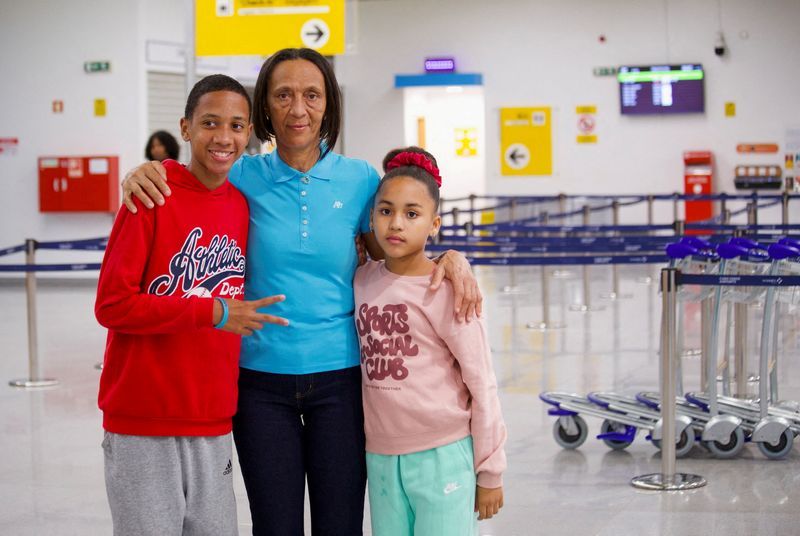
Cape Verde goalkeeper Vozinha's mother will finally experience her son's World Cup journey in person after the United States granted her a visa to travel, ending a poignant chapter that saw the family separated during one of the tournament's early standout moments. Ana Candida Evora had been unable to witness her 40-year-old son's exceptional performance in Cape Verde's opening match, a goalless encounter against European champions Spain in Atlanta, but diplomatic intervention following his emotional public disclosure has now cleared the path for her attendance at upcoming matches.
Vozinha's heroics in that opening fixture were remarkable by any measure. The experienced goalkeeper produced seven saves to help secure an impressive 0-0 stalemate against Spain, one of the tournament's title contenders, earning him player-of-the-match honours and establishing himself as a crucial asset for the African nation's campaign. The performance was all the more significant given that Cape Verde, a small island nation off the coast of West Africa, has limited experience at football's grandest stage. Despite the magnitude of his achievement, however, Vozinha's triumphant moment was shadowed by the absence of his most important supporter.
The emotional weight of playing such a consequential match without his mother present proved too much to keep private. When Vozinha revealed publicly that visa complications and associated travel costs had prevented Evora from making the journey, the disclosure struck a chord far beyond the confines of sports journalism. The story captured broader attention as an example of how immigration bureaucracy and economic barriers can intersect with personal human moments, particularly for citizens of smaller nations seeking to participate in global events.
The United States State Department responded swiftly to the goalkeeper's tearful revelation, recognizing both the humanitarian dimension of the situation and its public relations implications. Officials confirmed that their visa processing team based in Praia, Cape Verde's capital, had initiated close contact with Evora and was expediting her application through standard procedures. This rapid mobilization underscored how high-profile sporting events can occasionally unlock diplomatic flexibility in otherwise rigid administrative systems.
A State Department spokesperson addressed the matter with characteristically measured language, assuring reporters that Evora's travel approval was proceeding with full speed in accordance with established policies and protocols. The choice of phrase suggested an unusual urgency applied to her case, though officials maintained they were simply ensuring she received the services to which any applicant was entitled. Evora's visa clearance means she will be present when Cape Verde competes against Uruguay in their second group-stage encounter in Miami on Sunday, providing her the opportunity to watch her son in action and experience the World Cup atmosphere alongside him.
The broader context of Evora's initial inability to attend reveals structural challenges facing smaller nations at major international tournaments. Cape Verde citizens were among dozens of nationalities whose members faced the requirement to post substantial bonds of up to $15,000 as a condition of United States entry under the stricter immigration policies implemented during President Donald Trump's administration. Such amounts represent a prohibitive barrier for most citizens of developing island economies, effectively pricing out ordinary people from witnessing their nation's rare moments on the global stage.
Although the Trump administration subsequently waived these bond requirements specifically for individuals holding World Cup tickets, the damage to accessibility had largely been done. Many families had already decided against attempting the journey once they learned of the financial preconditions. Evora's initial cost calculations reflected this reality; the combination of visa fees, bond requirements, and travel expenses simply exceeded what was feasible within her family's financial constraints. That the requirement was later relaxed came too late to reverse many such decisions, and the story would likely have remained one of missed opportunity had Vozinha not drawn international attention to his mother's absence.
For Cape Verde football, Vozinha's emergence as a tournament standout has already provided invaluable global exposure. The nation, with a population of approximately 600,000 people, faces immense challenges in developing competitive football infrastructure compared to larger continental powerhouses. Yet here was Vozinha, at an age when many goalkeepers are winding down their careers, delivering performances that merited comparison with much more celebrated rivals. His mother's eventual ability to witness his contribution to Cape Verde's World Cup story transforms the narrative from one of exclusion to one of partial redemption through diplomatic intervention.
The resolution of Evora's visa situation also highlights how celebrity and media attention can occasionally cut through standard procedures, particularly when sympathetic personal circumstances align with public interest. Vozinha's emotional honesty in discussing his mother's absence created a narrative hook that transcended typical sports coverage, prompting official action. For other families facing similar immigration barriers at major events, however, such interventions remain unavailable unless they achieve similar media prominence.
As Cape Verde prepares for their encounter with Uruguay, Vozinha will carry the weight and benefit of finally having his mother present in the stadium. The goalkeeper's mother will witness firsthand the accomplishments that made her son a tournament talking point, and Vozinha gains the psychological boost of performing before his most important audience. Their reunited experience encapsulates both the deeply personal stakes underlying international sporting spectacle and the very real obstacles that still separate families across borders.