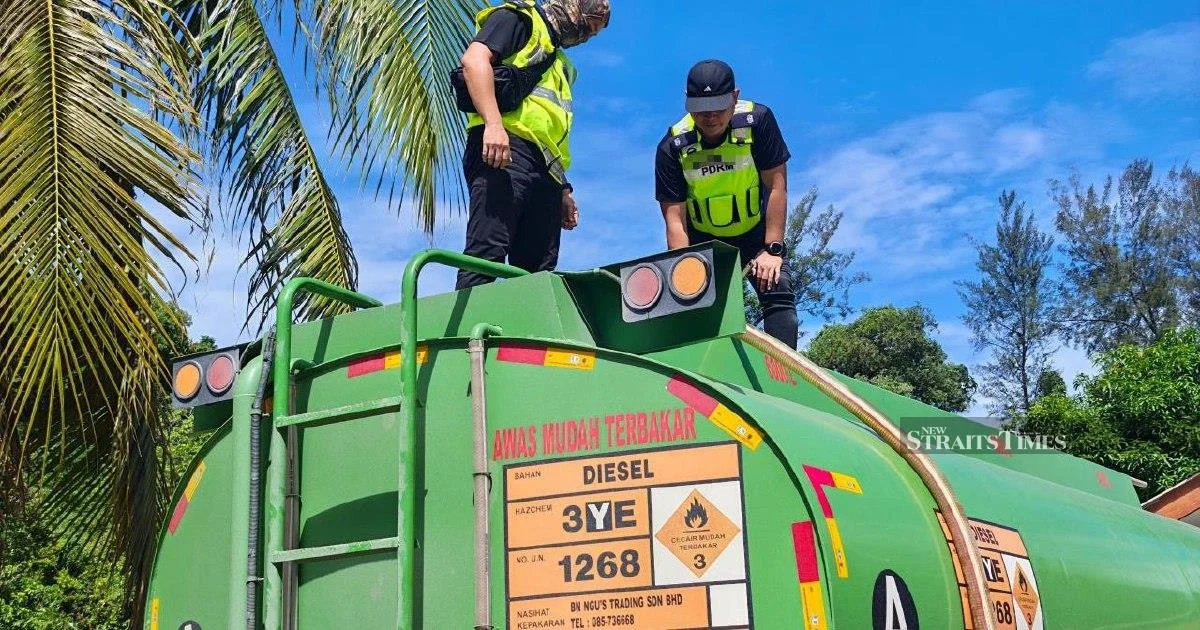
Police in Miri have successfully uncovered and shut down an elaborate underground diesel smuggling operation hidden within a residential bungalow in Tanjung Lobang, marking a significant blow to fuel subsidy theft in the region. The coordinated enforcement action led to the impounding of 15,000 litres of diesel and the detention of four individuals suspected of orchestrating the illegal diversion of government-subsidised fuel. The discovery underscores the persistent challenge authorities face in combating organised fuel theft syndicates that systematically exploit Malaysia's price-controlled energy subsidies.
The illicit depot had been operating discreetly from a private residential property, a concealment strategy commonly employed by sophisticated smuggling networks seeking to evade detection. By situating their operation within a residential zone rather than industrial or commercial premises, the syndicate calculated that such a location would attract less regulatory scrutiny from authorities conducting routine patrols or inspections. The use of private dwellings to process and stockpile diverted fuel represents an evolution in criminal tactics designed to circumvent border controls and enforcement checkpoints that typically concentrate on major transport corridors and fuel distribution centres.
Subsidised diesel in Malaysia, which is intentionally priced below market rates to support transportation, fishing, and agricultural sectors, has become a consistent target for organised criminal enterprises. The price differential between government-controlled rates and international benchmark prices creates lucrative arbitrage opportunities for syndicates capable of acquiring bulk quantities and redirecting them to unauthorised buyers. These operations frequently involve corrupt intermediaries within the legitimate supply chain, including depot workers, transporters, and retailers who facilitate the diversion of fuel meant for essential economic sectors.
The seizure of 15,000 litres represents a substantial quantity that would have generated significant illicit profits had it reached black-market buyers or been smuggled across borders to neighbouring jurisdictions where prices command premiums. The volume confiscated in this single operation reflects the scale at which organised syndicates operate, suggesting the bungalow facility served as a distribution and storage hub rather than a minor ad-hoc operation. Intelligence gathering and coordination among enforcement agencies likely proceeded this raid, as such clandestine facilities rarely come to light through chance discovery alone.
The arrest of four suspects provides investigators with opportunities to dismantle the broader network structure supporting the diversion scheme. These individuals may include fuel station operators, delivery personnel, and syndicate coordinators responsible for managing the logistics of fuel acquisition, storage, and distribution. Law enforcement will likely focus on extracting information about the suppliers who provided the diverted fuel, the network of downstream buyers, and any officials or intermediaries whose cooperation enabled the operation to function undetected. The scale of coordinated arrests suggests this was not an isolated incident but rather a targeted operation against a known or suspected criminal enterprise.
Fuel subsidy fraud carries significant economic consequences for Malaysia, straining government finances and distorting market mechanisms designed to support vulnerable economic sectors. When subsidised fuel is systematically diverted to unauthorised markets, the intended beneficiaries—fishing communities, agricultural producers, and transportation operators—face supply shortages and elevated effective prices as they compete with black-market alternatives. This creates cascading economic impacts across supply chains dependent on price-controlled energy inputs, ultimately affecting consumer prices for essential goods and services throughout the economy.
Miri, located in northern Sarawak near the Brunei border, occupies a geographically strategic position that makes it particularly vulnerable to fuel diversion schemes. The proximity to international borders, established smuggling routes, and cross-border commercial networks creates structural opportunities for fuel trafficking. Local authorities have consistently reported fuel-related smuggling activities in the region, reflecting both the local demand for diverted fuel and the logistical advantages the location provides to criminal syndicates seeking to move products across borders or to clandestine buyers.
The disclosure of this operation reflects enhanced enforcement capacity and intelligence-sharing mechanisms between Malaysian enforcement agencies tasked with combating fuel subsidy theft. Successful busts require coordination between customs authorities, police, maritime enforcement, and fuel regulatory bodies, with intelligence typically developed through tip-offs, surveillance, or follow-up investigations into suspicious fuel movements. The publicity surrounding such seizures serves a deterrent function, signalling to potential participants in subsidy fraud schemes that enforcement remains active and carries genuine consequences.
Going forward, authorities will scrutinise whether this particular syndicate supplied fuel to specific retailers, transporters, or end-users whose involvement would warrant separate investigations. The detention of four suspects enables interrogation regarding supply chain relationships and potential corruption within legitimate fuel distribution infrastructure. Any evidence of official involvement or negligence that enabled the operation would be particularly significant, as insider participation represents one of the most difficult aspects of subsidy fraud to counter through enforcement alone.
The seizure and arrests represent a tactical victory in the ongoing struggle against fuel diversion, yet the underlying market incentives that drive such criminal activity remain structurally unchanged. As long as substantial price differentials exist between government-controlled domestic rates and international market prices, organised groups will continue seeking opportunities to exploit these gaps. Long-term solutions require balancing legitimate subsidy objectives with market surveillance mechanisms, supply chain transparency, and sustained law enforcement pressure against criminal networks engaged in systematic fuel theft operations.


