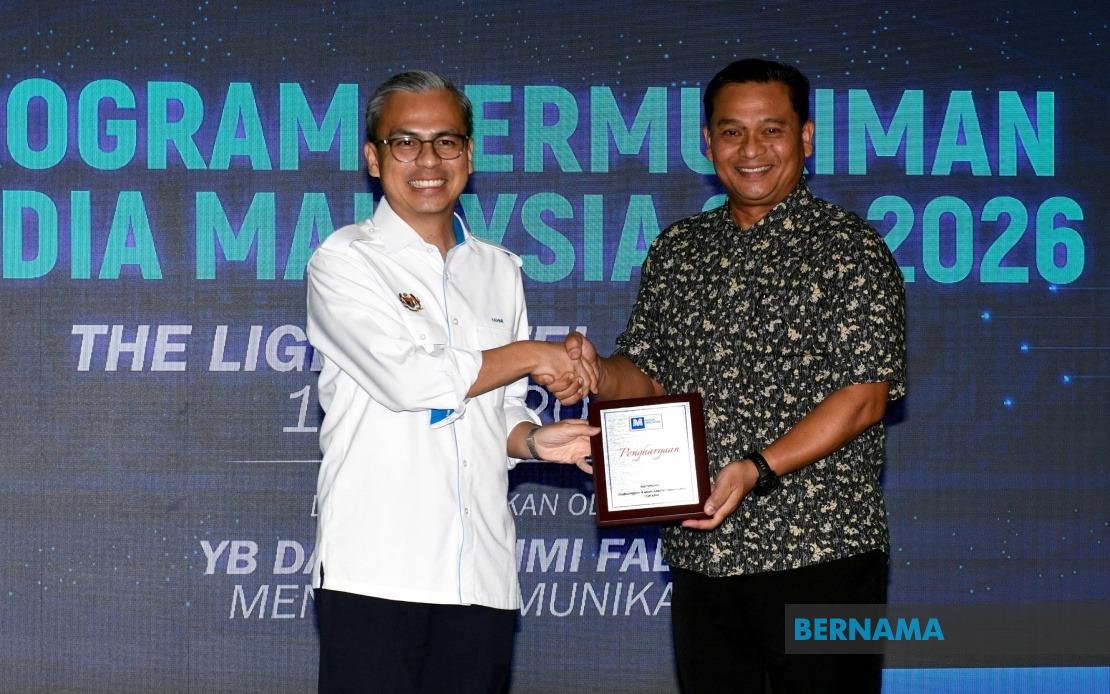
Communications Minister Datuk Fahmi Fadzil has unveiled a financial commitment aimed at bolstering the journalism sector, announcing that the Ministry of Communications will distribute RM10,000 to each state media club affiliated with the Malaysian Media Clubs Association (GKMM), while providing an additional RM30,000 to GKMM itself. The declaration came during the Malaysia Media Retreat Programme 2.0 in Butterworth, signalling the government's intention to address systemic challenges affecting media practitioners across the nation.
The initiative represents a tangible government investment in the welfare infrastructure of Malaysia's journalism community at a time when the industry faces mounting pressures from digital transformation and economic uncertainty. Fahmi emphasised that these funds should be strategically deployed to maximise their impact on media practitioners, underscoring the ministry's recognition that professional journalists require institutional support mechanisms beyond individual employment arrangements. The allocation to GKMM specifically targets activities and programmes designed to enhance the collective welfare of journalists, acknowledging the association's role as a coordinating body for state-level media clubs.
Fahmi articulated a broader philosophical position regarding journalism's indispensability in Malaysia's information ecosystem. He contended that despite technological advancement and the proliferation of artificial intelligence systems, human journalists remain irreplaceable in their capacity to gather information from primary sources, apply professional judgment, and synthesise complex narratives through disciplined methodology. This assertion carries particular significance in Southeast Asia, where concerns about media freedom and journalistic independence regularly surface in international assessments, and where governments increasingly navigate tensions between regulating information flows and supporting legitimate press operations.
The minister framed journalism as a foundational democratic service, emphasising that journalists function as vital witnesses to events unfolding across Malaysian society. By positioning journalism as essential rather than dispensable, Fahmi attempted to establish a conceptual framework in which government support for media practitioners reflects not patronage but investment in national information infrastructure. This rhetorical approach carries implications for how Malaysia positions itself internationally regarding media development and freedom of expression standards.
Acknowledging GKMM's hybrid institutional status, Fahmi noted that while the association operates outside the formal workers' union framework, it retains capacity to aggregate and communicate grievances and concerns from media professionals to governmental bodies. This observation hints at deliberate policy design: by channelling support through GKMM rather than establishing formal bargaining structures, the government maintains flexibility in responding to media sector challenges while avoiding unionisation frameworks that could introduce additional regulatory complexity. The arrangement reflects a pragmatic accommodation between supporting the journalism profession and preserving existing governance structures.
The government's continued consultation with media practitioners during policy formulation was highlighted as evidence of collaborative governance. Fahmi referenced the development of the Malaysian Media Council Act, which he claimed incorporated substantial input from industry stakeholders, thereby demonstrating the government's openness to practitioner perspectives when shaping regulatory environments. Whether this consultation has substantively influenced policy outcomes or functioned primarily as legitimation ritual remains subject to interpretation, but the minister's invocation of inclusive policymaking suggests awareness of industry expectations regarding institutional voice.
The announcement reflected a broader institutional presence, with Communications Ministry secretary-general Datuk Abdul Halim Hamzah, Malaysian National News Agency (Bernama) chief executive officer Datin Paduka Nur-ul Afida Kamaludin, and Bernama editor-in-chief Arul Rajoo Durar Raj attending the retreat. This constellation of senior officials underscored the event's significance within ministry priorities and signalled institutional commitment beyond rhetoric. Bernama's prominent presence indicated the state news agency's role as a policy stakeholder and implementation partner in media sector engagement.
For Malaysian readers, this funding allocation carries immediate practical implications. State media clubs, which typically operate with limited budgets and rely on membership contributions, will find enhanced capacity to organise professional development activities, welfare assistance schemes, and advocacy initiatives. The RM10,000 per club figure, while modest in absolute terms, may substantially improve operational capacity for clubs serving smaller states with fewer resources. The centralised RM30,000 to GKMM could strengthen coordination mechanisms, expand reach of services, and potentially fund secretariat operations supporting multi-state initiatives.
The initiative also reflects shifting government attitudes toward media sector challenges. Rather than addressing journalist concerns through direct employer mandates or legislative intervention, the approach channels support through professional associations, allowing industry bodies greater autonomy in determining spending priorities. This strategy potentially builds goodwill within the journalism community while maintaining government influence through funding mechanisms. However, the funding levels suggest a supplementary rather than transformative intervention, unlikely to address fundamental structural challenges affecting journalist employment stability, compensation standards, or editorial independence.
For Southeast Asian media ecology more broadly, Malaysia's approach offers insight into how governments attempt to navigate competing imperatives: demonstrating commitment to press freedom and professional standards whilst preserving regulatory control and political influence. The emphasis on journalist welfare, professional development, and association building reflects international best practices, yet occurs within Malaysia's distinctive media regulatory environment characterised by various legislative instruments affecting editorial operations and content standards.
Looking forward, the sustainability and effectiveness of these allocations will depend on GKMM's capacity to deploy resources strategically and transparently, and state media clubs' ability to translate funding into measurable improvements in practitioner welfare. The announcement should be contextualised within Malaysia's broader media development trajectory, including ongoing debates about digital journalism sustainability, regulatory frameworks, and the profession's capacity to maintain independence and credibility amid technological and economic disruption.