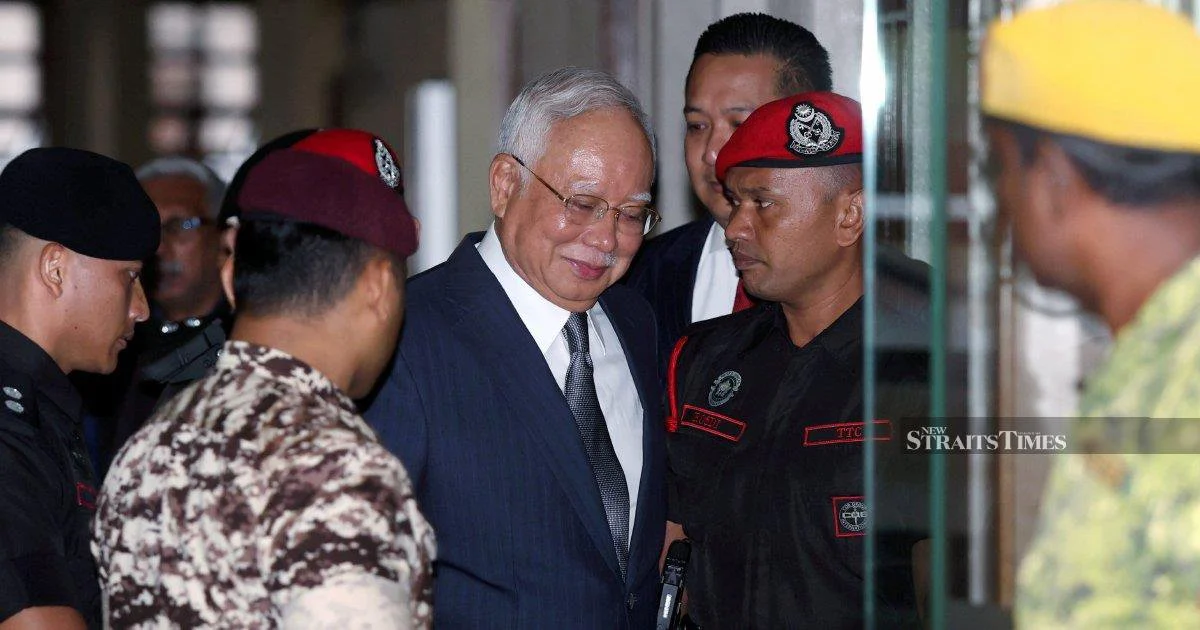
A Malaysian judge has concluded that former Prime Minister Datuk Seri Najib Razak and fugitive financier Low Taek Jho, commonly known as Jho Low, functioned as coordinated partners in orchestrating the large-scale misappropriation of 1Malaysia Development Bhd (1MDB) funds, marking a significant judicial determination in Malaysia's most sprawling financial scandal.
The court's determination that the two men operated collaboratively to extract billions of ringgit from the sovereign wealth fund represents a pivotal moment in the prolonged legal proceedings surrounding 1MDB. The judgment underscores the calculated nature of the alleged scheme, suggesting it was not a spontaneous breach of fiduciary duty but rather a methodical partnership designed to exploit the fund's resources for personal enrichment and benefit.
For Malaysian observers and the broader Southeast Asian region, this judicial finding carries substantial implications regarding corporate governance, accountability within state-owned enterprises, and the mechanisms through which high-level officials can compromise national institutions. The case has reverberated beyond Malaysia's borders, prompting international scrutiny of financial oversight, money laundering networks, and the ease with which vast sums can migrate across jurisdictions when institutional safeguards prove inadequate.
Jho Low's status as a fugitive adds complexity to the proceedings, as he has evaded extradition attempts and maintained a position beyond Malaysia's direct legal reach. The businessman's continued absence from Malaysia while facing accusations of orchestrating the fund's depletion underscores the challenges that nations face in pursuing white-collar criminals who leverage international networks and offshore financial arrangements. His role in coordinating with Najib, according to the court's assessment, was instrumental in translating political access into actionable schemes for fund diversion.
The specifics of how the two men allegedly functioned in tandem involve the exploitation of 1MDB's governance structure. By leveraging Najib's position as Prime Minister and Chairman of the 1MDB Advisory Board, and combining it with Jho Low's sophisticated understanding of international finance and asset mobility, the pair allegedly created conditions whereby substantial sums could be transferred, obscured, and ultimately diverted to accounts and entities beyond legitimate oversight.
For Malaysians, the judgment reinforces the eventual consequences of institutional capture—when government agencies designed to serve the public interest become instruments of private gain. The 1MDB saga exposed how a development fund that was intended to generate returns benefiting the nation instead became a channel through which billions disappeared into luxury acquisitions, private investments, and personal accounts across multiple continents.
The judicial determination arrives at a moment when Malaysia continues wrestling with the institutional and reputational aftermath of the scandal. The recovery of misappropriated funds has proven difficult, with assets seized internationally, negotiations over repatriation ongoing, and the full scope of damage to Malaysia's sovereign wealth and international standing still being quantified. The court's findings provide a factual foundation for understanding how extensively institutional mechanisms were compromised.
The coordination between Najib and Jho Low, as the judge has now determined, demonstrates that the 1MDB theft was not a case of isolated negligence or incompetent oversight, but rather systematic criminality at the highest echelons of government decision-making. This distinction matters profoundly for Malaysia's reform agenda, suggesting that preventative measures must focus not merely on auditing procedures but on fundamentally restructuring checks and balances to prevent concentrated power from being weaponized against state assets.
International financial regulators and investigative bodies, including those in Singapore, the United States, and Switzerland, have engaged extensively with the 1MDB matter, recovering portions of stolen assets and pursuing related money laundering charges. The Malaysian court's formal conclusion that Najib and Jho Low worked in coordination reinforces the findings of these parallel investigations, creating a consistent international narrative regarding the scandal's mechanics and culpability.
The broader implications extend to discussions about whether Malaysia's regulatory frameworks surrounding state-owned enterprises remain sufficiently robust. The case underscores the necessity for independent oversight bodies with genuine authority to question executive decisions, transparent appointment processes for fund leadership, and mandatory disclosure requirements that prevent opacity from shielding malfeasance.
As Najib continues contesting various legal proceedings while Jho Low remains beyond Malaysia's jurisdiction, the judgment crystallizes the evidentiary foundation supporting the allegation that they operated as deliberate partners in what represents one of the twenty-first century's most significant cases of state asset theft. The court's assessment provides clarity on the culpability question, establishing not mere wrongdoing but deliberate conspiracy between two powerful figures leveraging their complementary access and expertise.