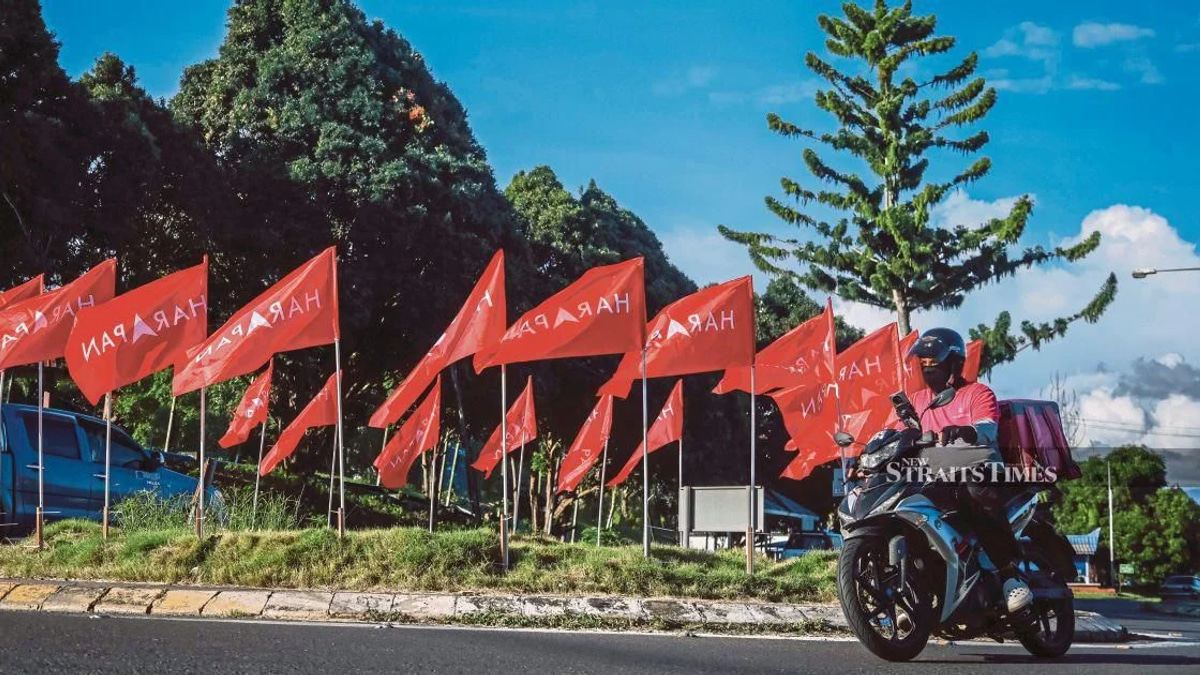
The Democratic Action Party has formally announced its candidate lineup for two strategically important Johor constituencies, selecting figures from within its organizational hierarchy as it seeks to consolidate support in the state's political landscape. The party's selection underscores DAP's approach to fielding contenders with established party credentials and administrative experience in constituencies where competition is expected to intensify.
Nor Zulaila Ghani has been selected to represent DAP in the Tiram seat, bringing to the contest her background in federal-level politics. As private secretary to Liew Chin Tong, the deputy finance minister, Ghani has gained exposure to the mechanics of government and financial policymaking at a significant level of administration. This positioning suggests DAP intends to leverage her connection to economic governance messaging, a strategic angle given rising inflation and cost-of-living concerns affecting Malaysian households across income brackets.
For the Johor Jaya constituency, DAP has chosen Lee Wern Yiing, who currently leads the party's youth division in Johor. Lee's appointment reflects the party's confidence in its younger generation of political operatives and signals an intention to energize younger voters, a demographic that DAP has traditionally cultivated in urban centres. Youth engagement has become increasingly important in Malaysian electoral contests as first-time voters reassess their political alignment following recent shifts in the national political environment.
These selections come at a moment when DAP seeks to maintain and expand its footprint across Malaysian states. Johor, long a stronghold for other political forces, represents contested territory where DAP has methodically built organizational capacity over recent years. The choices of these two candidates reflect the party's analysis of what constituency dynamics require—federal-level policy expertise in one seat, grassroots youth mobilization in another.
The Tiram constituency, with its mixed demographic profile, has seen shifting electoral patterns that favour parties emphasizing economic competence and transparency in financial management. Nor Zulaila's proximity to finance ministry operations positions her to articulate DAP's economic narratives during campaign periods when voters scrutinize parties' proposed approaches to taxation, subsidy reform, and public spending priorities.
Meanwhile, Johor Jaya's composition has become increasingly urbanized, attracting young professionals and families seeking affordable housing in the Johor Bahru metropolitan region. Lee Wern Yiing's role as youth leader suggests DAP plans to emphasize policies addressing housing affordability, employment opportunities for graduates, and digital economy participation—concerns that resonate particularly among voters aged 18 to 40 who represent a growing share of the electorate.
Both constituencies have experienced population growth exceeding state averages, creating opportunities for parties willing to invest in grassroots organization and community engagement. DAP's selection of candidates with different but complementary backgrounds indicates the party recognizes that contemporary electoral success requires simultaneously mobilizing experienced administrators who understand government machinery and energetic younger figures who can sustain organizational momentum between election cycles.
The timing of these announcements positions DAP to build campaign infrastructure in advance of potential electoral contests. Malaysian electoral cycles have become less predictable in recent years, with unexpected dissolutions and early voting periods becoming more common. Parties that organize earlier gain advantage in volunteer recruitment, local alliance-building, and media presence development.
Johor's political significance extends beyond state-level considerations. As the nation's southernmost peninsula state and Malaysia's economic gateway, Johor's electoral outcomes carry implications for broader national political mathematics. Federal coalitions depend substantially on securing sufficient seats in large states, making Johor constituencies disproportionately important in determining which political combinations can command parliamentary majorities.
DAP's strategy in these two seats reflects its broader repositioning as a multiracial, economically-focused alternative to other political options available to voters. The party has worked to distance itself from perceptions of narrow communal appeal, instead emphasizing governance competence, anti-corruption credentials, and inclusive policymaking. Nor Zulaila's appointment in particular allows DAP to discuss federal financial matters while demonstrating that its upper-echelon membership includes individuals engaged directly in economic management.
For Lee Wern Yiing, the Johor Jaya nomination represents validation of youth leadership within DAP's hierarchy and signals the party's commitment to generational renewal. Parties that fail to promote younger candidates risk appearing stagnant to voters increasingly skeptical of political establishments dominated by aging figures. By elevating youth division leaders to contested seats, DAP sends messages about its internal democratic culture and preparedness to trust newer members with significant responsibilities.
The intersection of these candidacies—one anchored in federal administrative experience, one rooted in state-level youth organization—demonstrates DAP's understanding that contemporary electoral politics in Malaysia requires simultaneous appeal across multiple voter constituencies and ideological registers. Neither candidate alone would fully address all voter concerns within their respective seats, but their combination projects an image of party breadth and internal diversity that DAP increasingly emphasizes in its public communications and campaign positioning.