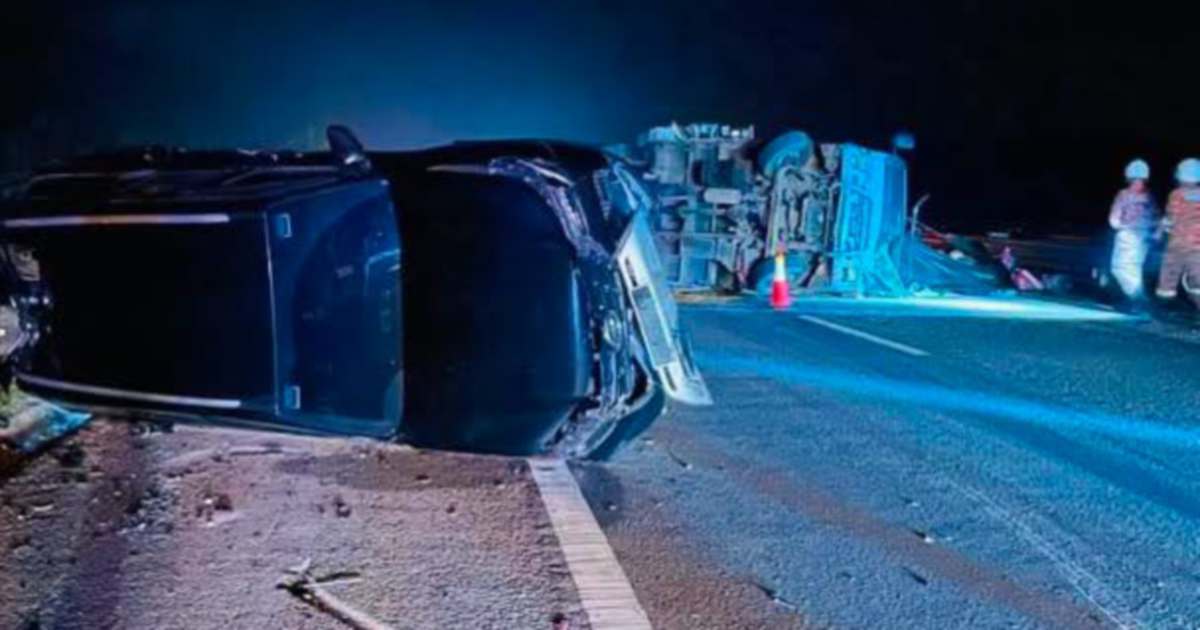
A collision involving three vehicles on the East Coast Expressway near Maran early this morning left seven people injured, including three media officers attached to Deputy Prime Minister Datuk Seri Dr Ahmad Zahid Hamidi. The accident occurred at the 144-kilometre mark of the major north-south highway corridor, a stretch frequently travelled by high-ranking government officials and their delegations moving between Peninsular Malaysia's east and west coasts.
The presence of government personnel in the vehicles underscores the significant security and logistical considerations involved in transporting senior officials on expressway routes. Media teams accompanying cabinet ministers typically operate on tight schedules, coordinating press coverage and public communications for official visits, parliamentary sessions, and government events. Such arrangements require careful coordination with highway authorities and can heighten awareness of road safety protocols among those in these specialised roles.
While details about the exact sequence of events remain under investigation, the incident highlights ongoing concerns about road safety on major expressway networks in Malaysia. The East Coast Expressway, connecting Kuantan to Kota Bharu, serves as a vital economic corridor linking Peninsular Malaysia's east coast states with the Klang Valley and central regions. Heavy traffic volumes, particularly during peak travel periods and when official delegations are in transit, can increase accident risks despite modern infrastructure.
The fact that the three media officers escaped serious injury proved fortunate given the involvement of three vehicles in the collision. Modern vehicle safety features, coupled with the professional awareness that accompanies work in high-profile government settings, may have contributed to limiting the severity of injuries sustained. Emergency response protocols for incidents involving government personnel are typically expedited, with immediate medical attention and documentation procedures.
The broader implications of this accident extend beyond the immediate incident. Highway safety agencies regularly monitor accident patterns on major expressways, particularly those involving multiple vehicles, to identify infrastructure improvements or traffic management adjustments. The Maran stretch of the East Coast Expressway has historically experienced moderate to heavy traffic flows, especially during weekdays when government officials conduct inter-state visits and official functions.
For Malaysian media organisations and those in government communications roles, such incidents reinforce the importance of adhering to safety protocols while maintaining the demanding schedules required for covering official activities. The professional responsibilities of journalists and media officers often necessitate rapid deployment across considerable distances, sometimes competing with prudent driving practices and fatigue management.
The incident also reflects broader road safety challenges affecting Malaysian expressways despite significant investments in highway infrastructure over recent decades. While sophisticated engineering and modern design standards characterise major routes like the East Coast Expressway, human factors including speed, driver fatigue, and vehicle spacing remain significant contributors to collision patterns. Government agencies and private expressway operators continue implementing education campaigns and enforcement measures targeting these behavioural elements.
Emergency services responding to the crash demonstrated the effectiveness of established protocols for incidents on major expressways. Rapid medical assessment and evacuation capabilities have improved substantially across Malaysia's highway network, benefiting all road users regardless of their professional status or government connections. The three media officers' escape from serious injury likely reflected both fortunate circumstances and the responsiveness of emergency responders in the Maran area.
As investigations proceed into the accident's precise causes, relevant authorities will examine factors including vehicle conditions, driver conduct, weather and road surface conditions, and spacing between vehicles at the moment of impact. Such analysis contributes to the evidence base informing future highway safety policy and infrastructure decisions. For government communication teams, the incident provides practical reinforcement of the importance of defensive driving practices and fatigue awareness during official travel schedules.
The incident comes at a time when Malaysian road safety agencies continue advocating for improved compliance with speed limits, proper distance maintenance, and vehicle maintenance standards. The involvement of a Deputy Prime Minister's media contingent in the accident, while not unusual in operational terms, may prompt additional safety reviews within government protocol frameworks for official travel arrangements. Such incidents, when they involve government personnel, often receive elevated scrutiny leading to recommendations for enhanced safety measures.


