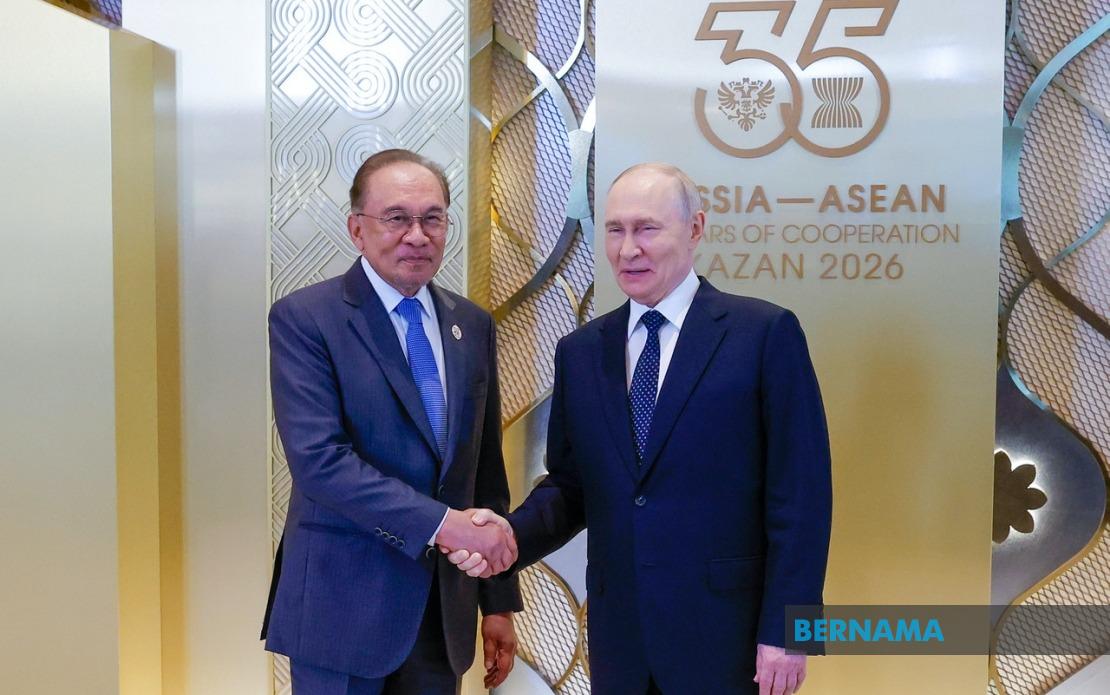
Prime Minister Datuk Seri Anwar Ibrahim has underscored the critical role that structured engagement mechanisms play in helping nations navigate an increasingly complex geopolitical landscape. Speaking at the ASEAN-Russia Commemorative Summit in Kazan on June 18, Anwar emphasized that multilateral platforms and bilateral diplomatic channels serve as essential conduits for building confidence and clarifying mutual interests amid persistent global uncertainties. His remarks reflect a diplomatic perspective that prioritizes dialogue and incremental relationship-building as antidotes to misunderstanding and strategic miscalculation in international affairs.
The Prime Minister's attendance at the summit, hosted in Kazan—the capital of Tatarstan—demonstrates Malaysia's commitment to maintaining active engagement with major powers outside the Western sphere. The gathering, held from June 17 to 18, brought together ASEAN leaders and Russian officials for substantive exchanges on shared interests and emerging challenges. For Malaysia particularly, such high-level diplomatic participation reinforces the country's positioning as a voice for balanced, non-aligned foreign policy within Southeast Asia and on the broader international stage.
Anwar highlighted that the summit transcended ceremonial significance by functioning as a genuine mechanism for fostering closer interpersonal relationships among participating leaders. The gala dinner hosted by President Vladimir Putin provided informal settings where policymakers could engage in candid conversations beyond the confines of formal negotiating sessions. These behind-the-scenes interactions often prove instrumental in breaking down barriers, humanizing political actors, and creating atmospheres of goodwill that facilitate more productive discussions on substantive matters.
The Prime Minister specifically noted that such summits offer invaluable opportunities to explore concrete areas of bilateral and multilateral cooperation that stand to benefit all parties involved. In the context of ASEAN-Russia relations, potential areas of mutual interest span trade and investment, defence and security cooperation, energy partnerships, and cultural exchanges. By creating dedicated forums for these discussions, both sides can identify synergies, align expectations, and establish mechanisms for implementing collaborative initiatives. For Southeast Asian nations like Malaysia, such engagement helps ensure that regional voices are heard in Moscow's strategic calculations.
Anwar's remarks also reflected appreciation for Russia's cultural contributions and historical significance, suggesting that economic and security cooperation is best situated within a broader framework of civilizational respect and understanding. By acknowledging Russia's rich heritage and cultural achievements, he sought to position diplomatic engagement not merely as transactional calculation but as a genuine meeting between peoples and societies. This framing resonates particularly in Southeast Asia, where many nations have deep historical ties to Russia dating back to post-colonial periods and Cold War alignments.
The summit itself carried symbolic weight as a commemorative occasion, suggesting commemoration of longstanding ASEAN-Russia connections while simultaneously charting pathways for future collaboration. For ASEAN member states navigating complex relationships with multiple major powers—including the United States, China, India, and Russia—such forums provide opportunities to maintain equidistant balancing acts and prevent strategic overcommitment to any single partner. Malaysia's role in these discussions reinforces its reputation as a pragmatic mediator capable of engaging constructively with diverse geopolitical actors.
Anwar's emphasis on trust-building carries particular significance given contemporary international tensions and competition among major powers. In regions where great power rivalry intensifies, smaller and middle powers face increasing pressure to choose sides or accommodate competing interests. ASEAN's historical success in maintaining relative autonomy and strategic flexibility depends partly on its capacity to engage meaningfully with all major powers simultaneously. By advocating for robust dialogue platforms, Anwar articulated a vision of international relations that resists zero-sum framing and prioritizes inclusive engagement.
The dual role of Anwar as both Prime Minister and Finance Minister indicates Malaysia's institutional commitment to deepening ASEAN-Russia ties across multiple dimensions beyond foreign affairs. Economic cooperation, including potential joint ventures, trade arrangements, and investment flows, often requires synchronized engagement across diplomatic and financial portfolios. His presence in both capacities signals to Russian counterparts that Malaysia approaches the relationship with seriousness and comprehensive institutional backing.
For Malaysia and other ASEAN members, the summit underscored the ongoing relevance of maintaining productive relations with Russia despite geopolitical tensions elsewhere, particularly following Russia's military actions in Ukraine. While some Western nations have pursued policies of isolation and containment, Southeast Asian countries have generally maintained pragmatic engagement, viewing dialogue and economic ties as preferable alternatives to escalating tensions. This approach reflects the region's historical experience with non-aligned movements and its contemporary preference for inclusive rather than exclusive diplomatic architectures.
The emphasis on bilateral relations alongside multilateral summits suggests recognition that sustainable cooperation requires both institutional frameworks and individual relationship-building among national leaders. Bilateral engagements allow for addressing specific national interests and grievances, while multilateral platforms enable coalition-building and the articulation of common regional positions. This dual-track approach has proven effective for ASEAN in managing relationships with major powers while preserving internal cohesion.
Looking forward, Anwar's statements reflect confidence that regular engagement through formal summits and diplomatic channels can gradually expand the foundation of mutual understanding upon which deeper cooperation can be constructed. In an era of technological disruption, shifting economic patterns, and security challenges that transcend borders, nations increasingly recognize that isolation and confrontation yield suboptimal outcomes. Instead, diplomatic mechanisms that facilitate ongoing communication, cultural exchange, and exploration of common ground offer more promising pathways for addressing shared challenges while pursuing legitimate national interests.