Johor Menteri Besar Datuk Seri Onn Hafiz Ghazi has underscored the strategic importance of the Elevated Autonomous Rapid Transit (E-ART) initiative in mitigating severe congestion anticipated in Johor Bahru once the Johor Bahru-Singapore Rapid Transit System (RTS) Link becomes operational in 2025. Speaking during the launching of the Southern Shuttle train service at KTM Kulai Station, Onn Hafiz framed E-ART as an indispensable long-term infrastructure investment designed to absorb and manage the substantial surge in passenger volumes expected to flow through Johor Bahru's transport ecosystem.
The Menteri Besar acknowledged that existing short and medium-term interventions, notably the Park & Ride facility expansions and intelligent traffic management systems being deployed at JB Sentral, can only provide temporary relief to the congestion challenge. These stopgap measures, while necessary to bridge the gap until major infrastructure is complete, lack the scale and capacity required to permanently resolve mobility pressures once cross-border demand materialises at full capacity. Onn Hafiz characterised the current interim solutions as essential holding strategies while awaiting the primary solution that would genuinely redistribute traffic flows away from saturated road networks.
The urgency for E-ART stems from Johor Bahru's demographic and geographic significance. With approximately 1.8 million residents—a population scale comparable to Penang—the city faces exponential pressure on its transport infrastructure. This concentration of people, coupled with the city's pivotal role as Malaysia's primary international gateway facilitating substantial cross-border commerce and commuter traffic, creates a unique mobility challenge that conventional road-based transport cannot sustainably accommodate. The anticipated influx of Singapore-bound and Johor Bahru-destined passengers once RTS Link opens will intensify demand on existing routes, rendering rapid implementation of alternative transit systems essential.
The E-ART project represents a technological leap in urban mobility, offering elevated, autonomous rail capacity that bypasses conventional street-level congestion. By establishing a dedicated, grade-separated transit corridor independent of road traffic, the system would create genuine capacity relief rather than merely redistributing congestion. This architectural advantage makes it fundamentally different from conventional bus rapid transit or upgraded conventional rail, allowing for higher throughput and more reliable journey times insulated from vehicular congestion below.
Onn Hafiz's remarks reflect broader planning tensions facing rapidly urbanising Southeast Asian cities. While major cross-border connectivity projects like the RTS Link promise economic benefits and integration, they simultaneously impose substantial infrastructure demands on receiving cities. Without complementary transit systems like E-ART, such gateway cities risk experiencing acute congestion that neutralises the efficiency gains promised by the new transport link itself. The paradox is that success of the RTS Link—measured by passenger adoption—directly translates into gridlock without supporting infrastructure.
The Menteri Besar's emphasis on federal government commitment and swift implementation carried implicit pressure for accelerated approval and construction timelines. His assertion that such projects represent meaningful Federal intervention capable of generating tangible public appreciation signals that transport infrastructure delivery has become politically charged, with state leaders increasingly held accountable for mobility outcomes by their constituents. This politicisation of transport planning reflects growing recognition that congestion directly impacts voter satisfaction and economic productivity.
Johor Bahru's position as a dual-city gateway—serving both as a destination for Singaporean workers and a residential base for cross-border commuters—amplifies the city's transport vulnerability. Unlike inland cities with relatively stable local demand patterns, Johor Bahru experiences volatile, surging flows during peak periods, particularly at border crossing times. The RTS Link will formalise and likely increase this volatility by making cross-border movement more convenient and efficient, paradoxically intensifying congestion challenges if adequate internal distribution systems do not exist.
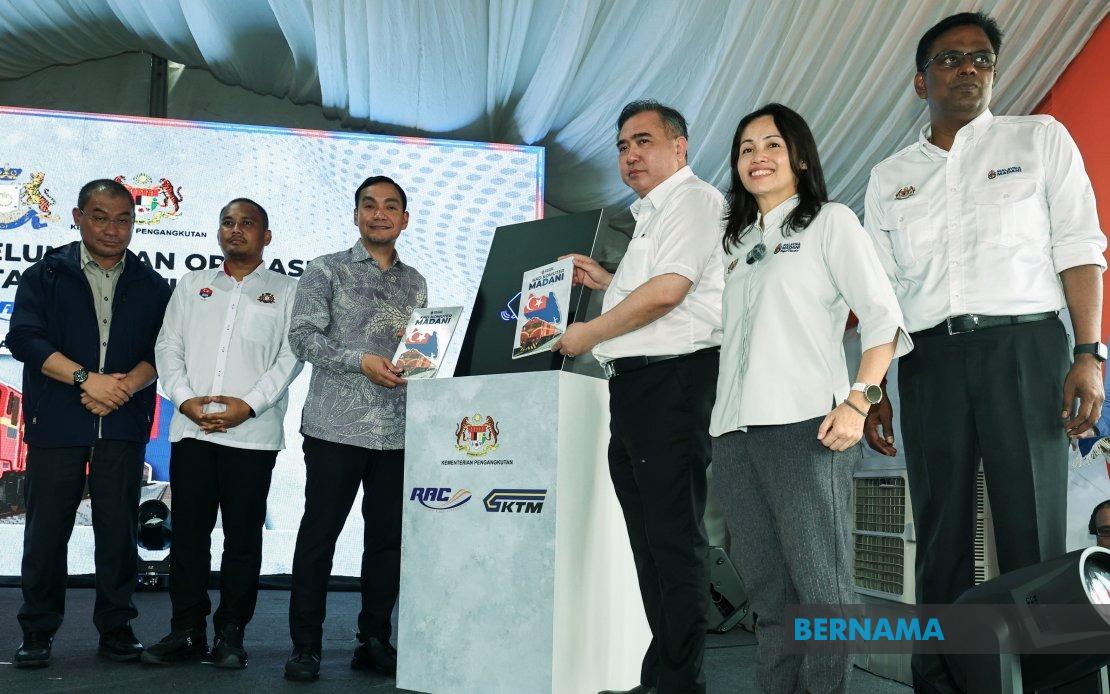
Transport Minister Anthony Loke and Deputy Communications Minister Teo Nie Ching, the Kulai Member of Parliament, were present at the Southern Shuttle launch, indicating high-level government engagement with Johor's transport transformation. This ministerial attendance underscores the federal government's recognition of Johor's transport challenges and its commitment to addressing them, though questions persist regarding funding timelines and project implementation schedules for E-ART.
The E-ART initiative's advancement faces several practical hurdles beyond political will. Elevated autonomous rail systems are capital-intensive, requiring substantial upfront investment in infrastructure, rolling stock, and operational systems. Land acquisition for elevated corridors, environmental assessments, and technical design specifications all demand extended preparation periods. Johor's rapid urbanisation and existing dense development in central areas complicate route planning, potentially increasing costs and extending timelines further.
International precedents offer mixed lessons regarding elevated autonomous transit system success. While emerging markets have experimented with such technologies, scalability challenges, maintenance requirements, and integration with existing networks remain contested. For Johor Bahru specifically, E-ART would need to serve multiple purposes—capturing RTS Link overflow, serving intra-city mobility needs, and connecting dispersed development nodes—placing substantial technical and operational demands on system design.
The convergence of the RTS Link opening and Johor Bahru's continued economic growth creates an urgent policy window for E-ART implementation. Delaying the project risks entrenching congestion patterns that become self-reinforcing, as businesses and residents respond to poor mobility by relocating, potentially undermining the city's economic competitiveness. Conversely, successful E-ART implementation could establish Johor Bahru as a regional model for managing rapid urban growth and cross-border mobility, potentially attracting regional investment and talent.
Onn Hafiz's positioning of E-ART as indispensable reflects mature transport planning that recognises infrastructure interdependency. Rather than viewing RTS Link and E-ART as separate projects, forward-thinking planners should conceptualise them as integrated components of a coordinated metropolitan transport system. This systems perspective—where each project's success depends on complementary infrastructure—represents important evolution in Malaysian urban transport strategy, moving beyond siloed project management toward holistic metropolitan mobility planning.