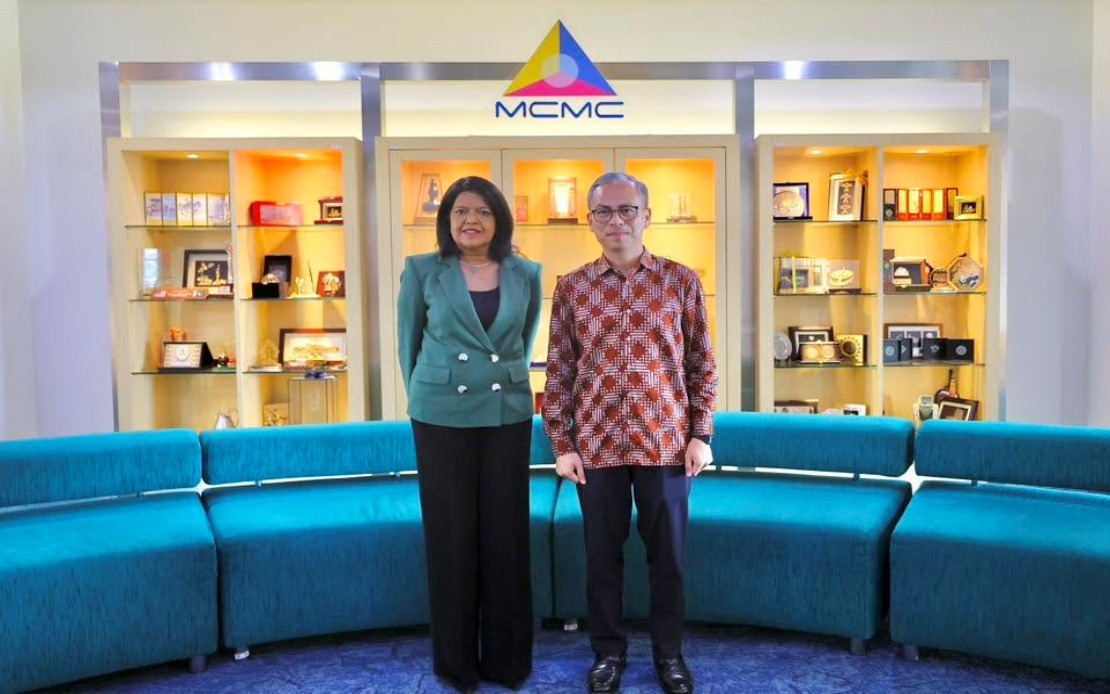
The Malaysian Media Council has appointed Tan Sri Nallini Pathmanathan as its new chairman, marking a watershed moment in the country's evolving approach to media governance. Communications Minister Datuk Fahmi Fadzil formally acknowledged the appointment through a public statement, underscoring the significance of placing a seasoned legal professional at the helm of the industry's self-regulatory framework during a period of heightened scrutiny over press freedom and journalistic standards.
Nallini's elevation to the top position comes following unanimous endorsement by the council's board members during a meeting convened on May 26. Her selection represents a deliberate choice to anchor the Malaysian Media Council with judicial experience and demonstrated commitment to institutional integrity. The appointment arrives as the council itself transitions into a new institutional phase under the Malaysian Media Council Act 2025, which formally establishes its mandate and operational parameters within Malaysia's broader regulatory architecture.
Fahmi's congratulatory message, disseminated via social media, revealed the government's strategic priorities for the council's direction under Nallini's stewardship. The minister specifically highlighted three interconnected objectives: safeguarding what he termed responsible media freedom, strengthening ethical standards across newsrooms, and ensuring the media industry remains both economically sustainable and enjoys public confidence. These emphases reflect broader tensions within Malaysian media governance between enabling press autonomy and establishing guardrails against misinformation or irresponsible reporting.
The selection of Nallini, whose background encompasses service as a Federal Court judge, signals a deliberate institutional choice to vest significant regulatory power in someone with deep understanding of constitutional principles and judicial reasoning. Her legal expertise provides potential advantages in navigating the complex intersection between media rights protections and public interest considerations. Malaysian newsrooms and media proprietors will likely view her appointment through the lens of how her judicial temperament might influence the council's handling of complaints, ethical breaches, and disputes between the industry and regulators.
The Malaysian Media Council itself represents a significant structural element within Southeast Asia's media landscape. As an industry-led self-regulatory body rather than a government agency, it theoretically offers journalists and editors greater autonomy than state-controlled frameworks while maintaining accountability mechanisms to the public. However, questions persistently arise regarding whether self-regulation proves sufficiently robust, particularly when commercial pressures or political sensitivities influence editorial decisions. Nallini's judicial background may either strengthen the council's credibility by ensuring principled adjudication, or raise concerns among press freedom advocates who worry that conservative legal reasoning might restrict journalistic scope.
The timing of this appointment carries particular weight given Malaysia's recent media landscape evolution. The country has witnessed competing pressures: demands from civil society for greater press freedom and investigative capacity, alongside government concerns about unverified information and what officials characterise as irresponsible reporting. The Malaysian Media Council's role as mediator between these forces requires leadership capable of earning trust across multiple constituencies. Nallini's reputation as a respected jurist provides potential bridge-building credibility, though her actual performance in the chairman role remains untested.
Fahmi's invocation of journalistic ethics deserves closer examination within Malaysia's particular context. Recent years have seen significant scrutiny of newsroom standards, ownership consolidation effects on editorial independence, and the challenge of maintaining investigative journalism amid economic pressures facing traditional media. The council's capacity to strengthen ethics frameworks depends substantially on whether it possesses enforcement mechanisms with real consequences and whether industry players genuinely embrace recommendations. A former judge might bring heightened expectations for procedural rigour, which could either enhance the council's standing or create bureaucratic friction if implementation becomes overly legalistic.
The council's establishment under a dedicated statutory act represents institutional maturation. Previous media governance in Malaysia operated through less formalised arrangements. The 2025 legislation provides legislative foundation for the council's operations, budgeting, board composition, and dispute-resolution processes. This legal architecture creates both opportunity and constraint: clarity regarding authority and procedures, but also potential vulnerability to legislative revision if political circumstances shift. Nallini's leadership will partly involve navigating this new statutory terrain and establishing practical procedures that operationalise abstract legislative principles.
Regional implications deserve consideration as well. Malaysia's media council approach contrasts with regulatory models elsewhere in Southeast Asia, where government agencies typically exercise more direct control over broadcasting and print sectors. The Malaysian self-regulatory model, even with judicial oversight, potentially offers a middle path between complete state control and entirely unregulated markets. Nallini's tenure could influence whether other regional governments perceive self-regulation as sufficiently effective, potentially informing broader conversations about media governance across ASEAN.
The council's public credibility will ultimately depend on demonstrable fairness in handling complaints and ethical matters. Nallini's first significant test will likely involve high-profile disputes where media organisations, journalists, or the public seek council intervention. Her decisions in these matters will either burnish the council's reputation for impartiality or invite criticism that it inadequately protects either press freedom or public interests. The judicial training that informed her previous career may prove invaluable in managing these tensions, though media governance differs considerably from courtroom adjudication.
Longer-term success for Nallini's leadership depends partly on factors beyond individual capability. The council requires adequate funding, staffing expertise in media law and journalism standards, and genuine industry cooperation. If major media organisations view council determinations as inconvenient or lacking enforcement power, self-regulation becomes performative rather than substantive. Her role will include advocating for resources and influence necessary for the council to function as a credible arbiter of media standards rather than merely a consultative forum.