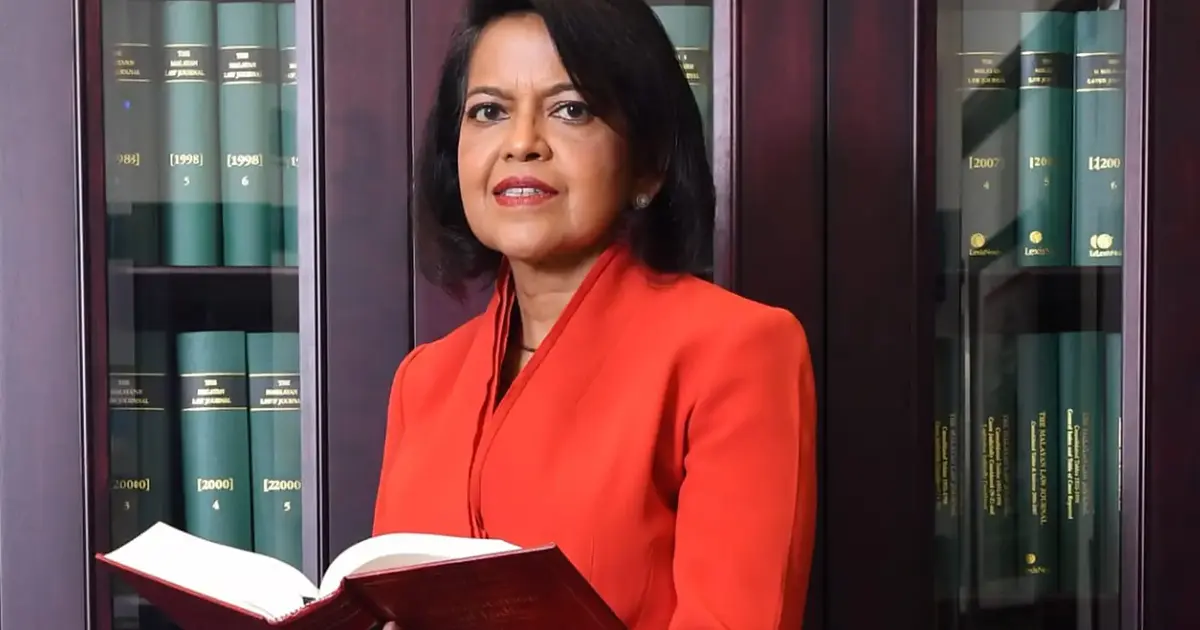
The Malaysian Media Council has named Nallini Pathmanathan, a former Federal Court judge, as its new chairman, signalling a shift toward judicial experience in leading the self-regulatory body at a time when Malaysia's media landscape faces unprecedented challenges. The appointment underscores the council's determination to bring heightened credibility and institutional gravitas to its leadership during a period marked by economic pressures, regulatory scrutiny, and evolving digital disruption across traditional newsrooms.
Pathmanathan's background on the bench brings distinctive credentials to the role. Her tenure in Malaysia's highest court positions her to navigate complex questions around press freedom, editorial independence, and the boundaries between self-regulation and state intervention—matters that have grown increasingly contentious in recent years. The appointment reflects confidence that judicial temperament and constitutional knowledge will prove valuable as the council grapples with its mandate to uphold professional standards while defending the industry's autonomy.
The Malaysian media sector currently confronts a constellation of interconnected difficulties. Revenue models that sustained print journalism for decades have eroded as advertising migrates to digital platforms, forcing many publications to downsize or restructure editorial operations. Simultaneously, the proliferation of social media and online news portals has fragmented audience attention and intensified competition for market share, compelling traditional newsrooms to compete against lower-cost, often less rigorous competitors operating outside established regulatory frameworks.
Regulatory pressures compound these commercial headwinds. Media outlets navigate complex licensing requirements, content guidelines, and political sensitivities that require careful institutional navigation. Questions about what constitutes responsible reporting—particularly around sensitive topics involving religion, ethnicity, and state security—remain contested, placing journalists in positions where editorial choices carry reputational and legal implications. Self-regulatory bodies like the Malaysian Media Council serve as intermediaries in this environment, attempting to establish industry standards that satisfy both professional ethics and regulatory compliance.
The appointment also signals recognition that the council itself requires enhanced authority and visibility to fulfil its role effectively. In markets where media self-regulation functions credibly, the chair typically combines editorial understanding with institutional standing that commands respect across multiple sectors. Pathmanathan's judicial background suggests the council intends to position itself as a body of principle and impartiality rather than mere industry lobby, a distinction that matters when adjudicating complaints and establishing guidelines that affect editorial operations.
For Malaysian journalists and publishers, this transition carries both practical and symbolic weight. A chair with demonstrated judicial independence may prove more willing to defend press interests against government pressure, particularly on matters involving investigative reporting or critical commentary. Conversely, her appointment might reassure policymakers that the industry can police itself responsibly, potentially forestalling more direct government regulation. The council's effectiveness will depend partly on whether Pathmanathan can maintain credibility with both constituencies—an inherently difficult balancing act.
The timing of her appointment coincides with broader regional trends affecting Southeast Asian media. Across the region, traditional news organisations face similar commercial pressures while operating in environments where political constraints on editorial freedom remain substantial. Malaysia's experience—wrestling with questions of adequate self-regulation while preserving independence—mirrors challenges faced in Thailand, Indonesia, and the Philippines. How Pathmanathan's leadership develops could offer lessons relevant to media governance across Southeast Asia.
Internally, the Malaysian Media Council itself has faced questions about its legitimacy and enforcement capacity. Critics have argued that self-regulatory bodies lack real teeth to sanction powerful media owners or well-connected publishers, rendering their codes of conduct more aspirational than binding. Whether judicial experience can strengthen institutional capacity to enforce standards against resistant players remains to be demonstrated through concrete action once Pathmanathan assumes her duties.
The broader context includes escalating competition between legacy media outlets and digital-native news platforms, many operating with minimal institutional oversight. This fragmentation complicates the council's mission: its authority nominally extends only to members, leaving substantial portions of Malaysia's news ecosystem beyond its regulatory purview. Pathmanathan's tenure will likely test whether self-regulation can remain relevant when significant news distribution occurs through channels that reject traditional industry frameworks.
Publisher confidence in the council's independence will prove crucial to her success. If major media organisations perceive the leadership as politically compromised or captured by particular interests, compliance with council guidance erodes. Conversely, if publishers view the council as genuinely committed to professional standards and editorial integrity, the body can develop the legitimacy necessary to influence industry practices.
Pathmanathan's judicial record and how she articulated views on press freedom, if available publicly, will become scrutinised closely by media observers and industry stakeholders. Her approach to contentious issues—whether she favours expansive protection for journalistic work or emphasises responsibilities alongside freedoms—will shape the council's direction on critical policy matters.
The appointment represents Malaysia's attempt to strengthen media governance through institutional leadership drawn from outside the industry itself. Whether this approach successfully addresses the manifold challenges facing contemporary journalism—commercial, regulatory, and ethical—will emerge only as her tenure progresses and concrete decisions accumulate. The outcome carries implications not only for Malaysian publishing but for how self-regulatory models function across a region where media independence remains perpetually contested.