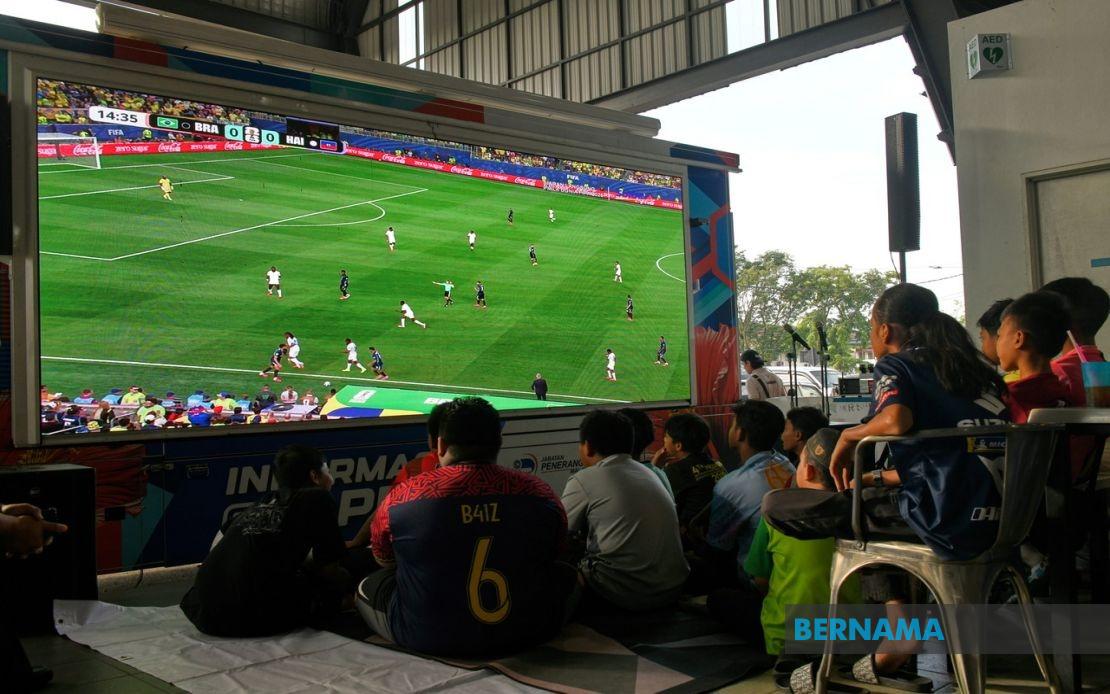
Malaysia's move to offer free-to-air broadcasting of the 2026 FIFA World Cup through Radio Televisyen Malaysia and Unifi TV is yielding measurable benefits across the hospitality and food service sectors, Communications Minister Datuk Fahmi Fadzil said on June 20. The initiative addresses a persistent financial pressure that has constrained small business operators, particularly in the competitive food and beverage industry where access to premium sporting content has traditionally required costly subscription arrangements.
During a visit to the Seberang Jaya Public Market food court in Butterworth, Fahmi spoke about the direct feedback he had received from traders and industry representatives. The Malaysian Muslim Restaurant Owners Association has explicitly endorsed the free broadcast provision, highlighting the substantial operational savings it generates for restaurant proprietors. For many in this sector, particularly smaller independent operators, such savings translate directly into improved margins and reduced financial strain in an economically challenging period.
The minister underscored the significance of the development by noting that some traders have never accessed World Cup coverage without cost during their entire operating history. One businessman revealed to Fahmi that this represented the first occasion in over twenty years that he could screen World Cup matches without incurring broadcast fees. This historical context reveals how broadcasting exclusivity has previously functioned as a financial barrier, effectively pricing out smaller venues and limiting where ordinary Malaysians could gather to watch international football.
The availability of matches across three platforms—RTM's terrestrial service, the RTMKlik digital portal, and Unifi TV—reflects a deliberate strategy to ensure broad accessibility regardless of viewers' technological infrastructure or subscription status. This multi-platform approach acknowledges the diverse digital adoption patterns across Malaysia's urban and semi-urban markets. For traders in public markets and neighbourhood establishments, the combination of free-to-air options removes a significant operational obstacle that had previously influenced business planning and competitive positioning.
Fahmi emphasised that the financial relief extends beyond individual traders to benefit the broader consuming public. When restaurants and food premises can eliminate broadcast licensing costs, they gain flexibility in pricing, promotional strategy, and overall financial management. This creates a virtuous cycle: reduced operational burdens enable venues to attract more customers during major matches, particularly in the case of high-profile World Cup fixtures, which traditionally generate substantial foot traffic and revenue spikes for the food service industry.
The minister's on-site engagement with traders proved instrumental in gathering ground-level intelligence about current business conditions and sectoral challenges. By observing how broadcast access functioned in a real commercial environment and conversing directly with proprietors, Fahmi obtained qualitative insights that survey data alone cannot capture. He specifically identified rising input costs driven by regional conflicts, particularly in West Asia, as a persistent concern affecting traders' capacity to maintain margins while managing inflationary pressures on goods and materials.
Fahmi flagged the need for greater direct engagement by government officials at all levels with traders and ordinary citizens. His observation that more ministers, Members of Parliament, and state assemblymen should undertake ground-level visits reflects a recognition that policy effectiveness depends on understanding real-world implementation challenges. The absence of frontline feedback can create disconnects between policy intent and practical outcomes, a gap that spontaneous engagement helps to bridge.
The initiatives Fahmi mentioned—conversations with Prime Minister Datuk Seri Anwar Ibrahim and Penang Chief Minister Chow Kon Yeow—suggest that the feedback gathered during such visits feeds into higher-level policy discussions. This creates potential pathways for translating trader concerns into government responses, whether through targeted assistance programmes or regulatory adjustments. The political economy of such engagement matters: traders and business associations gain platforms to voice concerns, while government receives direct evidence of implementation challenges.
For Malaysia's broader sports media landscape, the free World Cup broadcasts represent a significant departure from the previous subscription-dominated model that characterised access to premium international sporting events. This approach aligns with policy objectives around inclusive access to cultural and sporting content, treating such events as having quasi-public value that justifies state-funded broadcast provision. The decision also reflects competitive positioning, as free-to-air broadcasting can generate larger audiences and deeper national engagement with international football than restricted-access models.
The timing of this initiative carries particular weight given ongoing economic pressures across Southeast Asia. The region has experienced persistent inflation, supply chain disruptions, and currency volatility that have disproportionately affected small and medium-sized enterprises in hospitality and food services. For Malaysia specifically, the food and beverage sector represents a substantial portion of employment and economic activity, particularly in secondary cities and market centres like those in Penang. Policy interventions that reduce operating costs in this sector thus carry broader economic significance.
The positive reception from the Malaysian Muslim Restaurant Owners Association also highlights how industry bodies can effectively advocate for their membership by identifying and publicising government initiatives that provide measurable value. This endorsement likely amplifies awareness of the free broadcast option among traders who might otherwise have remained unaware. The association's involvement underscores that cost relief gained traction precisely because it addressed a widely felt industry pain point.
Looking forward, the success of this World Cup broadcasting initiative may establish a precedent for other major international sporting events. Should this model prove effective in balancing inclusive public access with reasonable costs to government, policymakers might consider extending similar free-to-air broadcasting arrangements to events like continental football championships or the Olympic Games. This would embed accessible sports broadcasting more permanently within Malaysia's media infrastructure.
Ultimately, the initiative demonstrates how targeted policy interventions in media distribution can generate tangible economic benefits for small business operators while simultaneously enhancing public access to major international events. For traders, the elimination of broadcast costs removes an operational barrier that had persisted through multiple World Cup cycles. For the broader public, free access democratises engagement with world-class sporting competition, ensuring that access is not gatekept by subscription capacity but rather facilitated through public infrastructure.