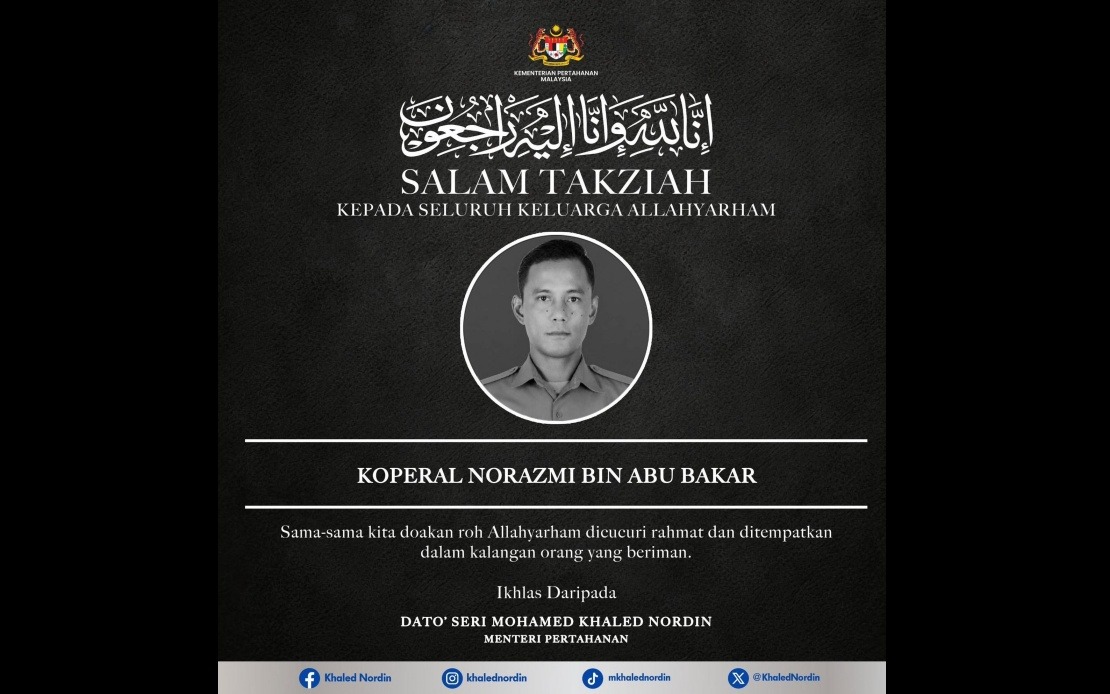
Malaysia's government and Defence Ministry have expressed deep sorrow following the deaths of two military personnel in a tragic training accident at Hobart Camp firing range in Gurun, Kedah. The incident, which claimed the lives of Corporal Norazmi Abu Bakar of the 6th Battalion, Royal Malay Regiment, and Private Siti Khadijah Sungip of the 1st Squadron, Royal Army Engineers Regiment, occurred during a grenade-throwing exercise on June 16.
Defence Minister Datuk Seri Mohamed Khaled Nordin issued a formal statement conveying the nation's sympathies to the bereaved families. The minister emphasised that both the Defence Ministry and the broader government stand in solidarity with those grieving the loss of these dedicated servicemembers, pledging that the families will receive the strength and fortitude required to endure this profound tragedy.
The explosion, which took place at 10.57 am, left both service members with serious injuries. Despite immediate efforts to provide medical assistance, neither victim survived the journey to Sultan Abdul Halim Hospital in Sungai Petani. The rapid transport and emergency response protocols that were activated highlight the military's commitment to safeguarding personnel, yet underscore the inherent risks associated with live-fire training exercises and ordnance handling.
In his social media address, Minister Mohamed Khaled Nordin invoked religious sentiments appropriate to Malaysia's Muslim-majority population, seeking divine mercy for the deceased and their families. The statement reflects both official grief and the cultural values that guide expressions of condolence within Malaysian society. Such formal acknowledgements serve not only to honour the fallen but also to reinforce the public's understanding of the sacrifices made by armed forces personnel.
The incident has prompted the Malaysian Army hierarchy to take decisive action regarding investigation and accountability. Army Chief General Tan Sri Azhan Md Othman has mandated a comprehensive inquiry to establish the precise circumstances and causes that led to the blast. This directive signals that military leadership is treating the matter with utmost seriousness and recognises the need for transparency and thorough fact-finding.
Grenade-throwing exercises represent a critical component of infantry training, essential for developing proficiency in one of the military's fundamental combat techniques. However, such drills inherently involve elevated risk, as servicemembers must handle live ordnance under controlled conditions. Training deaths, though relatively infrequent, occur periodically across defence forces worldwide and typically prompt comprehensive reviews of safety protocols and procedures.
The loss of Private Siti Khadijah is particularly significant as female representation in the Malaysian Armed Forces continues to expand. Her participation in advanced engineering and combat training demonstrates the evolving role of women in Malaysia's defence establishment. Her death underscores that military hazards affect all personnel regardless of gender, and that sacrifice transcends demographic boundaries.
For the broader Malaysian Armed Forces, incidents of this nature typically trigger systematic reviews of training methodologies, equipment inspection procedures, and command-level safety oversight. The investigation ordered by the Army Chief will likely examine whether all safety protocols were correctly implemented, whether equipment was properly maintained and inspected, and whether command decisions regarding the exercise parameters were sound.
The families of Corporal Norazmi and Private Siti Khadijah now face the profound challenge of processing sudden loss whilst potentially receiving support from military welfare schemes and government provisions for bereaved military families. Malaysia maintains various assistance mechanisms for families of fallen servicemembers, though the effectiveness and adequacy of such provisions remain ongoing areas of public interest and policy discussion.
From a regional perspective, Malaysia is not alone in confronting the tragic reality of military training accidents. Southeast Asian nations with substantial armed forces regularly contend with similar incidents, reflecting the tension between maintaining operational readiness through rigorous training and managing the inherent risks of military preparation. Shared learning and comparative analysis of safety improvements across the region could enhance overall personnel protection.
The coming investigation will likely yield important findings regarding whether systemic improvements are required across Malaysia's military training infrastructure. Defence policymakers will scrutinise the incident's circumstances to determine whether procedural modifications, enhanced supervision, or equipment upgrades could prevent similar tragedies. Such investigations, though painful, often catalyse meaningful safety enhancements that benefit the entire armed forces community.
This tragedy serves as a sobering reminder of the commitments made by military personnel and their families. While training accidents represent an unfortunate occupational hazard, they reinforce the need for continuous vigilance, adherence to safety standards, and comprehensive post-incident analysis. The Malaysian government's expressed commitment to investigating this incident thoroughly demonstrates recognition that honouring the fallen includes ensuring that their loss contributes to systemic improvements protecting future service members.


