The Prime Minister's Department (Religious Affairs) has unveiled an ambitious new programme designed to make the scholarly contributions of renowned Islamic figures accessible to Malaysians across all walks of life. Formally launched at an event in Putrajaya, the Maal Hijrah Lecture Series represents a deliberate effort by the government to ensure that sophisticated Islamic thought and jurisprudence reach far beyond the traditional confines of university lecture halls and specialised study groups.
According to Minister in the Prime Minister's Department (Religious Affairs) Dr Zulkifli Hasan, the initiative emerged from recognition that keeping intellectual contributions of Maal Hijrah figures restricted to narrow circles would represent a lost opportunity for national development. By repositioning these ideas as public intellectual discourse rather than esoteric knowledge, the government aims to enrich public understanding of Islamic principles across diverse communities. The minister emphasised that allowing such thinking to remain sequestered would undermine efforts to foster deeper engagement with Islamic values at the societal level.
The collaboration framework being established extends beyond government agencies to encompass major academic institutions. Both Universiti Sains Islam Malaysia (USIM) and International Islamic University Malaysia (IIUM) have already committed to participating in the initiative, signalling strong institutional support for the venture. These universities bring substantial infrastructure, scholarly networks, and distribution channels that will prove essential for reaching audiences beyond their own campuses. The involvement of IIUM and USIM also lends academic credibility to the series and ensures quality control over the lecture content.
Dr Zulkifli articulated an ambitious vision for the programme's scope, indicating that expansion to include additional universities and educational institutions across the country forms part of the long-term strategy. By building a network of partner institutions, the government seeks to create multiple channels through which these ideas can permeate Malaysian society. Such a decentralised approach recognises that knowledge dissemination functions most effectively when grounded in local institutional contexts rather than centralised broadcasting.
An intriguing dimension of the initiative involves its explicit openness to non-Muslim audiences. The minister expressed hope that insights from Maal Hijrah figures would resonate with Malaysians of all faith backgrounds, suggesting that the intellectual content being shared possesses universal relevance. This approach reflects a sophisticated understanding of interfaith dialogue and social cohesion in a multi-religious country like Malaysia, where shared intellectual engagement across religious lines can strengthen national unity.
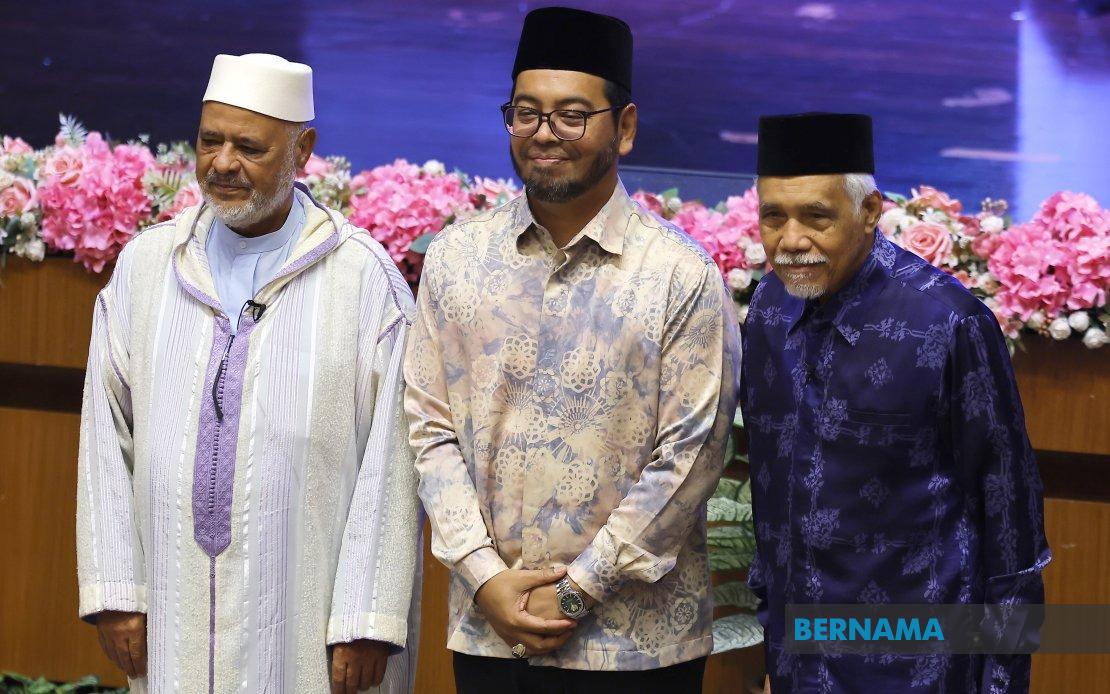
The inaugural lecture series for 1448H/2026 featured two distinguished recipients of recognition awards, underscoring the calibre of scholars whose work will be highlighted through this programme. Emeritus Professor Osman Bakar, rector of IIUM, received the designation of national Maal Hijrah figure, while Professor Sheikh Dr Ahmad Al-Raysuni from Morocco was honoured as the international Maal Hijrah figure. Both recipients were formally recognised at the national-level Maal Hijrah celebration held at Masjid Putra, where Sultan Nazrin Shah of Perak presented the awards along with accompanying cash prizes, trophies, and certificates of appreciation.
The selection of Osman Bakar and Ahmad Al-Raysuni reflects deliberate choices regarding which intellectual traditions and geographical perspectives the government wishes to foreground. Osman Bakar's long association with IIUM and his contributions to Islamic scientific thought bring deep local expertise and institutional knowledge, while Al-Raysuni's background in Islamic jurisprudence and his Moroccan origins introduce North African Islamic scholarship into the Malaysian intellectual conversation. This balance between domestic and international voices creates productive tension and cross-pollination of ideas.
For Malaysian readers, this initiative carries several implications worth considering. The programme suggests official recognition that contemporary Malaysian society requires more sophisticated engagement with Islamic thought as societies become increasingly complex. The emphasis on disseminating ideas beyond academic circles tacitly acknowledges that current knowledge transfer mechanisms have proven insufficient. By creating dedicated platforms for established scholars to share their work, the government effectively invests in public intellectual life and the informed citizenry that underpins democratic societies.
The timing of this announcement also merits attention within the broader regional context. Throughout Southeast Asia, governments grapple with questions about how Islamic thought can contribute positively to national development, social cohesion, and global engagement. Malaysia's approach, emphasising breadth of distribution and openness to interfaith audiences, offers a model worth studying. The involvement of universities in particular demonstrates confidence in educational institutions as engines of intellectual development and public enlightenment.
Looking forward, the success of the Maal Hijrah Lecture Series will depend substantially on implementation details not yet fully outlined. The logistics of expanding from initial partnership institutions to a broader network require careful planning. Equally important will be mechanisms for ensuring that lectures genuinely reach intended audiences and stimulate meaningful engagement rather than remaining performative gestures. The quality of facilitation, the accessibility of content, and opportunities for public dialogue will determine whether this initiative achieves its ambitious goal of mainstreaming Islamic scholarship throughout Malaysian society.