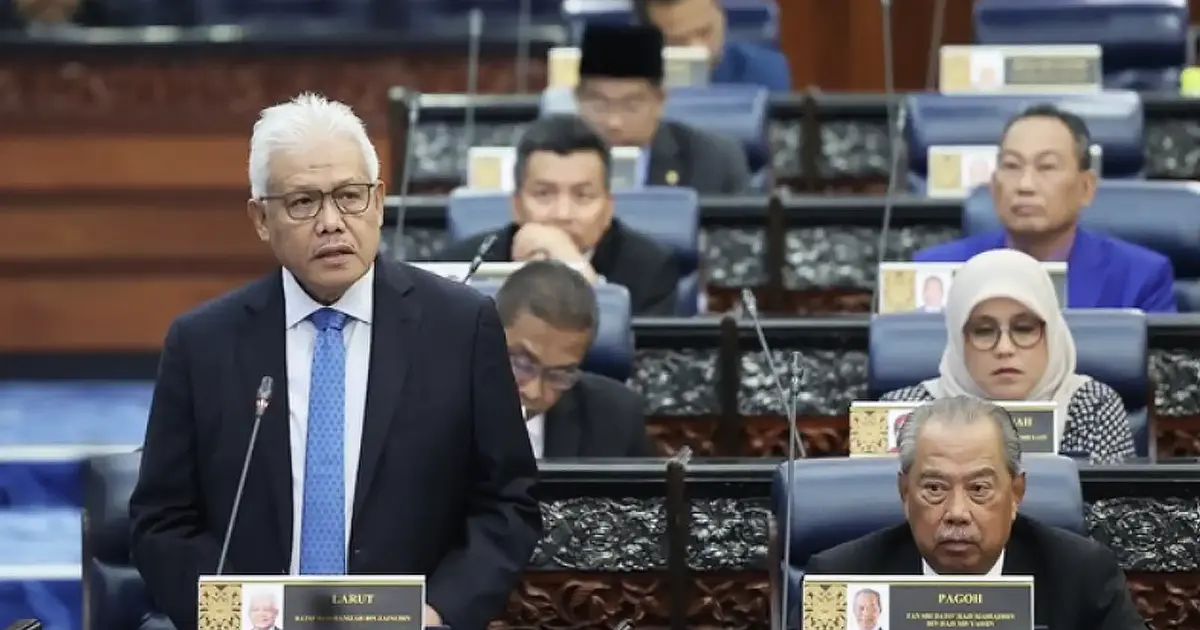
Datuk Seri Hamzah Zainudin has returned to the front-row seating reserved for the opposition leader in Parliament, a symbolic repositioning that reflects shifting dynamics within Malaysia's political opposition. The Perikatan Nasional chairman's restoration to this prominent location marks a notable change in the parliamentary landscape, with Bersatu president Tan Sri Muhyiddin Yassin correspondingly moved back eight positions from his former place adjacent to the opposition leader's seat.
The seating arrangements in the Dewan Rakyat carry considerable symbolic weight in Malaysian parliamentary culture, with proximity to the opposition leader's position traditionally signifying seniority and influence within the opposition bloc. Hamzah's return to this location represents a reaffirmation of his leadership role within the coalition that comprises Perikatan Nasional and its allied parties, underscoring his standing among opposition members as they continue to hold the government accountable on key legislative matters.
Muhyiddin's demotion in seating hierarchy, while appearing administratively minor, carries implications for how parliamentary observers and international bodies assess the balance of power within Malaysia's opposition movement. The Bersatu leader, who has been instrumental in shaping opposition strategy since the 2022 general election, finds himself repositioned in what essentially amounts to a secondary tier of opposition representation. This adjustment suggests that the structural leadership within the opposition camp may be consolidating around Hamzah's Perikatan Nasional framework more firmly than previously indicated.
The significance of this parliamentary rearrangement extends beyond mere optics. The Dewan Rakyat's seating plan directly influences which opposition leaders gain the most visibility during parliamentary proceedings, determines question-and-answer order advantages, and affects the symbolic authority wielded when opposition members address the chamber. Hamzah's prominent positioning will afford him greater opportunity to directly challenge government policies and legislation, a tactical advantage during a period when opposition coalitions are competing to present themselves as credible alternative governments.
For Malaysian observers of parliamentary politics, these shifts often presage deeper organisational changes within political coalitions. The repositioning may indicate that Perikatan Nasional is consolidating its structure following the 2023 state elections and ongoing negotiations that have characterised opposition dynamics since the formation of current political alliances. Hamzah, as chairman of Perikatan Nasional, commands support from multiple parties across different peninsular and East Malaysian constituencies, providing him with a broader base than any single party could offer.
Muhyiddin's eight-position drop represents a quantifiable shift in parliamentary influence allocation. While he retains a front-row seat—indicating continued respect for his position as Bersatu president—the reduction in proximity to the opposition leader's chair signals a reordering of priorities within opposition leadership. Bersatu, as the largest component of Perikatan Nasional, remains crucial to opposition strategy, but the seating change appears to reflect a decision that Hamzah's Perikatan Nasional framework should be the primary public face of opposition governance.
The timing of this seating adjustment may also reflect recent developments in Malaysian politics, including discussions about opposition coalition stability and the ongoing positioning of various factions ahead of the next general election. Political coalitions in Malaysia have historically been fluid, with parties negotiating their positions continuously. The parliamentary rearrangement provides visible confirmation that these negotiations have produced a new hierarchy among opposition leadership.
For regional observers, this shift illustrates how Malaysian parliamentary traditions encode political information. Unlike parliaments that are primarily structured by party grouping, Malaysia's Dewan Rakyat assigns seats based on government and opposition distinction and seniority rankings within each bloc. These assignments therefore become statements about current political standing. The movement of senior opposition figures consequently attracts scrutiny from analysts monitoring coalition stability and political trends.
The implications for government-opposition dynamics are also noteworthy. A consolidated, clearly-led opposition—with Hamzah firmly positioned as the primary spokesperson—potentially strengthens the opposition's institutional effectiveness in parliamentary debates and legislative scrutiny. Governments function more effectively when facing opposition that speaks with unified voice through clear leadership structures. The seating change may therefore benefit Parliament's functioning regardless of political outcomes.
Muhyiddin's position, while demoted in parliamentary seating, does not diminish his actual authority as Bersatu president or his influence within opposition councils. The repositioning is primarily a symbolic and tactical adjustment to parliamentary advantage. However, in Malaysian politics, where narratives about coalition strength significantly impact voter perception and opposition credibility, such visible changes carry consequences for how the opposition is perceived by both supporters and uncommitted voters.
The broader context of this arrangement reflects the maturation of the current opposition structure following the 2022 general election. Whereas immediate post-election alignments are often fluid and contested, opposition arrangements are stabilising into clearer hierarchies. Hamzah's restoration to the opposition leader's seat suggests that Perikatan Nasional has successfully positioned itself as the coordinating mechanism for opposition activity and that internal negotiations about leadership roles have largely been resolved in favour of this arrangement.
Moving forward, observers will track whether this seating arrangement remains stable or whether it signals further shifts in opposition leadership dynamics. In Malaysian parliamentary politics, such apparently technical arrangements often prove to be the visible manifestation of deeper political movements. The repositioning of Hamzah and Muhyiddin therefore merits attention as an indicator of opposition trajectory as Malaysia approaches the next electoral cycle and continues navigating complex post-election coalition management.