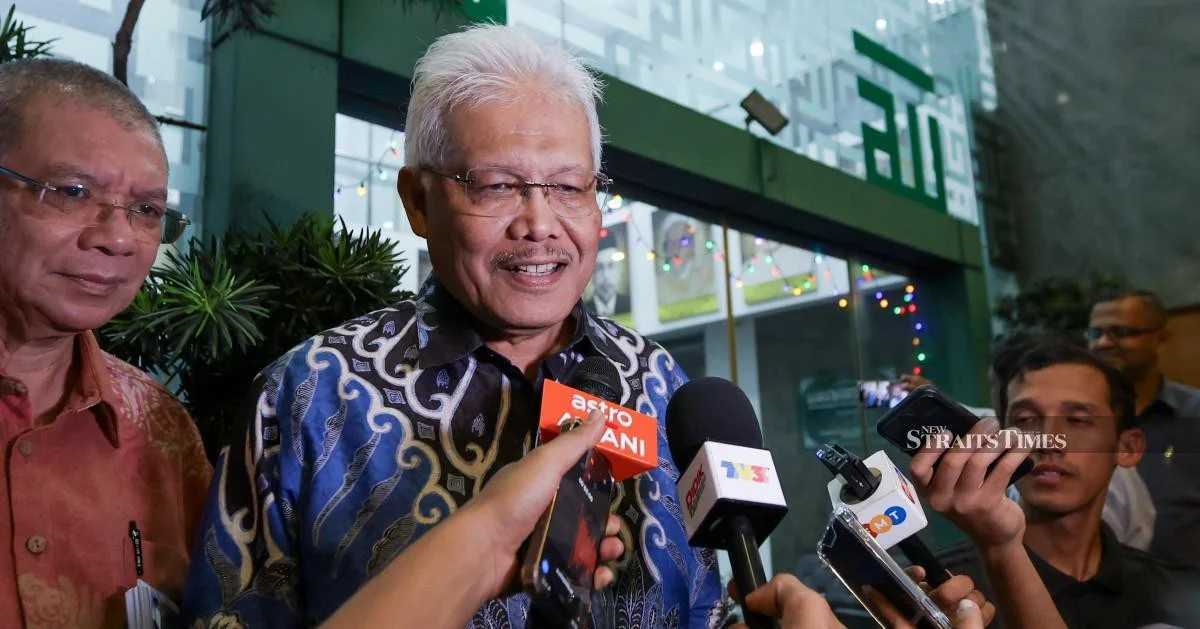
Datuk Seri Hamzah Zainudin is set to reclaim the opposition leader's seat in the Dewan Rakyat from Monday, according to the parliament seating arrangement that has been finalised and distributed. The repositioning marks a significant shift in the opposition's parliamentary hierarchy, with Bersatu president Tan Sri Muhyiddin Yassin being moved several seats along the bench to accommodate Hamzah's return to the front-row position traditionally held by the opposition leader.
The seating chart carries considerable symbolic weight in Malaysia's parliamentary system, where physical placement in the Dewan Rakyat reflects political standing and the organisational structure of parliamentary business. The front-row seat designated for the opposition leader is not merely a ceremonial position but a functional role that brings with it procedural responsibilities during parliamentary sittings, including the privilege of directing questions and interventions from the opposition benches.
Hamzah's return to this prominent position follows a period during which his status within the opposition coalition underwent transition. The change underscores the fluid nature of Malaysian opposition politics, where alignments and leadership roles can shift as parties recalibrate their positioning and strategic objectives. His reinstatement to the opposition leader's seat reflects either a formal decision by the opposition coalition to reassign leadership or a change in parliamentary protocols that has necessitated the new arrangement.
The displacement of Muhyiddin, who has served as Bersatu president, represents a notable recalibration within Bersatu's own standing relative to other opposition parties. Bersatu has been a significant player in Malaysia's opposition landscape since its formation, and the seat reassignment may indicate adjustments in the way the opposition coalition has chosen to structure its parliamentary representation or reflect changes in seat allocation among coalition partners.
Parliamentary seating arrangements in Malaysia typically follow protocols established by the Speaker's office and are subject to negotiations among party leaders. The decision to relocate Muhyiddin and reinstall Hamzah in the opposition leader's seat suggests that consultations have taken place among relevant stakeholders and that agreement has been reached on the new configuration. Such changes are not uncommon as opposition coalitions evolve and recalibrate their internal dynamics.
For Malaysian observers and political analysts, the seating change provides a window into the current state of opposition unity and hierarchy. The opposition benches in parliament have historically been a contested space, with different parties vying for prominence and influence. The restoration of Hamzah to the front row signals a particular vision of what the opposition should look like in terms of its public face and parliamentary leadership during the coming sittings.
The timing of this shift, set to take effect from Monday, suggests that the decision has been finalised in advance of the new parliamentary schedule. This allows parliament to convene with clarity on how the opposition will be configured and represented. Political parties typically view the opening parliamentary session as an opportunity to demonstrate unity or resolve any outstanding questions about their positioning.
In Southeast Asia's broader political context, such procedural matters may seem obscure to external observers, yet they carry significance for understanding how parliamentary democracy functions in Malaysia. The opposition's ability to organise itself effectively and present a unified front through its seating arrangement can influence its effectiveness in parliamentary scrutiny and public perception of its cohesion.
Hamzah's political trajectory has been marked by several transitions, and his resumption of the opposition leader's seat represents another chapter in that journey. The position carries expectations that he will serve as the primary interlocutor for the opposition during parliamentary proceedings and that he will carry responsibility for coordinating opposition responses to government business.
Muhyiddin's repositioning, while moving him away from the front-row prominence, does not necessarily diminish Bersatu's role within the opposition framework. Parties within opposition coalitions typically maintain influence through their participation in coalition bodies and through the seniority and experience of their members, regardless of specific seating positions in the chamber.
The seating reconfiguration also reflects practical considerations about which opposition party or leader holds the formal designation of opposition leader within parliament's institutional structure. This role, distinct from party leadership positions, carries specific parliamentary functions that the Speaker and party leaders must coordinate to ensure smooth functioning of parliamentary business.
As Malaysia's parliament convenes with the new seating arrangement, the configuration will shape the visual representation of opposition politics that Malaysian media and the public will observe during televised proceedings. Parliamentary chambers are inherently theatrical spaces where physical positioning carries messaging value, and the placement of key opposition figures sends signals about party priorities and coalition dynamics.
The transition represents a moment of procedural clarity in opposition politics at a time when the balance between government and opposition continues to evolve in Malaysia's increasingly complex political landscape. How effectively Hamzah executes the opposition leader's role in his reinstated position may itself influence the trajectory of opposition coalition dynamics in the months ahead.


