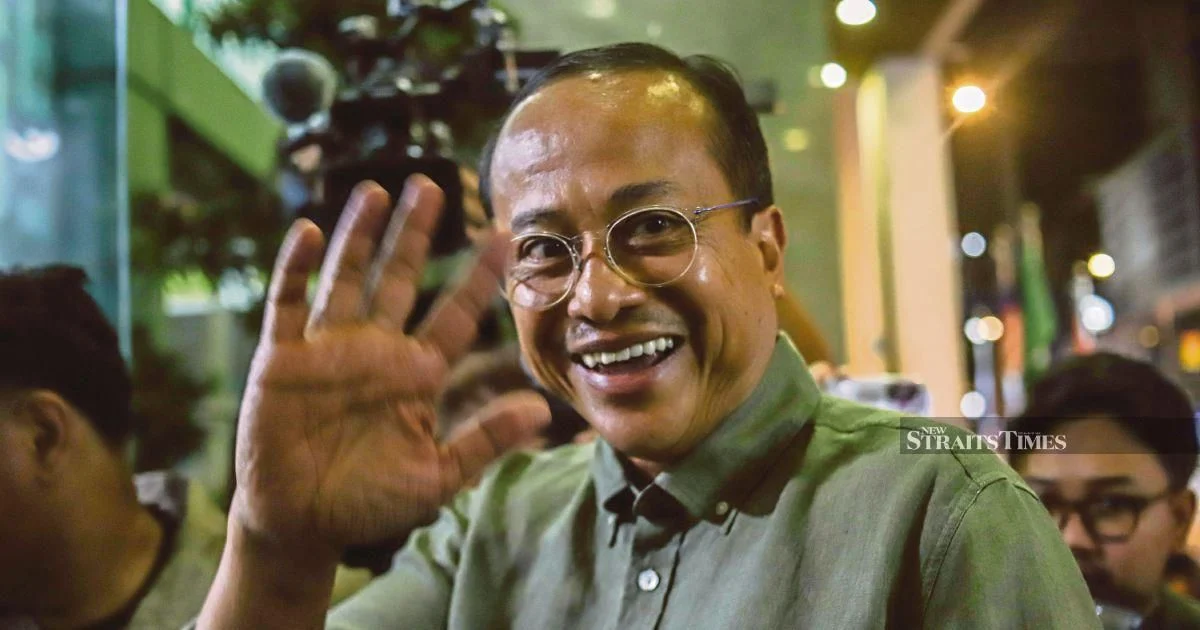
Datuk Seri Hamzah Zainudin's expected reappointment as Opposition Leader in the Dewan Rakyat is caught in procedural uncertainty, with Perikatan Nasional having yet to formally notify Parliament of the decision. The Larut MP's position, while widely anticipated following recent political developments within the coalition, lacks the official documentation required to give it full parliamentary standing. This administrative gap underscores the often-overlooked bureaucratic requirements that accompany high-profile political appointments in Malaysia's Westminster-style legislature.
The Opposition Leader position carries significant constitutional and procedural weight within Parliament. The role comes with formal parliamentary privileges, a dedicated seat in the Dewan Rakyat, and the authority to lead parliamentary opposition business. More substantively, the Opposition Leader serves as the de facto prime ministerial alternative, coordinating the opposition's legislative strategy and articulating alternative policy positions. For the appointment to be legally and procedurally valid, Perikatan Nasional as the coalition commanding the opposition must submit official notice to the Dewan Rakyat Speaker, formally communicating the appointment and establishing it in parliamentary records.
Hamzah, who holds the Larut parliamentary seat and has been a prominent figure within Perikatan Nasional, was expected to resume the Opposition Leader mantle as the coalition consolidated its position following recent political realignments. His previous tenure in this role established him as a familiar figure for parliamentary procedures and opposition coordination. However, the absence of formal notice means that until Perikatan Nasional makes the required submission, his position operates in a state of de facto acceptance rather than official recognition—a distinction that matters considerably in parliamentary practice where procedural propriety carries legal implications.
This situation highlights the sometimes-murky intersection between political consensus and administrative procedure in Malaysian governance. While party coalitions may reach internal agreement on leadership appointments, the formal mechanisms for communicating these decisions to Parliament operate under separate regulatory frameworks. The Speaker's office must receive and process official notification before parliamentary records can be updated and the appointee can exercise all formal powers associated with the role. Without this step, questions could theoretically arise regarding the legitimacy of decisions made under the Opposition Leader's authority.
For Perikatan Nasional, the delay in submitting formal notice may reflect either administrative oversight or deliberate timing related to broader coalition strategy. The coalition, which comprises multiple parties including PAS, UMNO, and Bersatu, must ensure internal alignment before making official parliamentary communications. Any appearance of discord or procedural irregularity could undermine the coalition's credibility during a period when parliamentary stability remains fragile and political alignments continue to shift across the legislature.
The implications for Malaysian parliamentary function are worth examining closely. Opposition oversight, particularly through a formally recognised Opposition Leader, plays a critical role in Malaysia's democratic system. The position enables formal scrutiny of government policies, coordinates opposition votes on key legislation, and provides a structured counterweight to executive power. When this position lacks proper procedural confirmation, the opposition's organisational capacity and formal standing are technically compromised, even if the practical reality of opposition activity continues.
For Southeast Asian observers monitoring Malaysian political stability, this scenario reflects the broader fragmentation characterising the region's political landscape. Coalition governments and opposition coalitions alike frequently operate in states of procedural uncertainty, where formal structures struggle to accommodate the fluid, alliance-based nature of contemporary politics. Malaysia's experience demonstrates how traditional Westminster conventions, designed for stable two-party competition, strain under systems where multiple coalitions shift and recalibrate regularly.
The technical requirements surrounding Opposition Leader appointment also underscore the importance of institutional knowledge and administrative competence in Malaysian governance. Parliament's operations, while less visible than executive decision-making, determine how legislation moves through the chamber, how debate is structured, and how formal oversight functions. Delays or irregularities in basic procedural matters can cascade, affecting everything from parliamentary scheduling to the formal record of debates and votes.
Historically, Malaysia has seen Opposition Leaders drawn from whichever coalition commands the most opposition seats—a straightforward principle that becomes complicated when no single coalition dominates clearly. The current configuration, with Perikatan Nasional positioned as the largest opposition bloc, makes Hamzah's appointment logical. Yet the absence of formal notification creates an opening where rival opposition elements might contest the legitimacy of opposition coordination under his leadership.
Moving forward, Perikatan Nasional must resolve this administrative gap by submitting official notice to establish Hamzah's position conclusively. Until then, parliamentary practice proceeds in a gray zone where customary acceptance substitutes for procedural compliance. For Malaysian governance, addressing such gaps promptly protects the integrity of parliamentary institutions and prevents the kind of procedural challenges that can metastasise into broader questions about the legitimacy of parliamentary decisions. The broader lesson relevant to Southeast Asia's democracies is that even during periods of political volatility, maintaining procedural rigour remains essential for institutional credibility and constitutional stability.