A significant educational partnership between the Johor State Government and Harvard University is set to reshape how 100 students in the state engage with learning, leadership and critical thinking. The Program for Scientifically-Inspired Leadership, known as PSIL, represents a strategic attempt to expose Johor's youth to globally-competitive academic methodologies while maintaining the centrality of Malay language and Islamic values in the education system.
The initiative centres on Sekolah Rintis Bangsa Johor, a pioneering institution in the state, and will directly involve students from SMK Tasek Utara and SMK Seri Kota Puteri 2 beginning in January 2027. Aznan Tamin, chairman of the Johor State Education and Information Committee, outlined the programme's architecture during a recent announcement, emphasising that it builds on PSIL's foundation established by Harvard in 2019. The curriculum design prioritises active learning methodologies, the development of critical thinking skills, enhancement of communication abilities and structured leadership training—competencies increasingly recognised as essential for success in the knowledge economy.
What distinguishes this partnership is its dual focus on student and educator development. While 100 secondary school pupils will participate directly in PSIL activities, the programme simultaneously extends professional development opportunities to 40 teachers from SRBJ through specialised pedagogy workshops. These workshops aim to equip educators with modern teaching techniques that foster interactive, creative and engaging classroom environments. This parallel investment in teacher capacity represents a recognition that sustainable educational transformation depends not merely on exposing students to new ideas, but on ensuring educators possess the skills and confidence to facilitate advanced learning approaches.
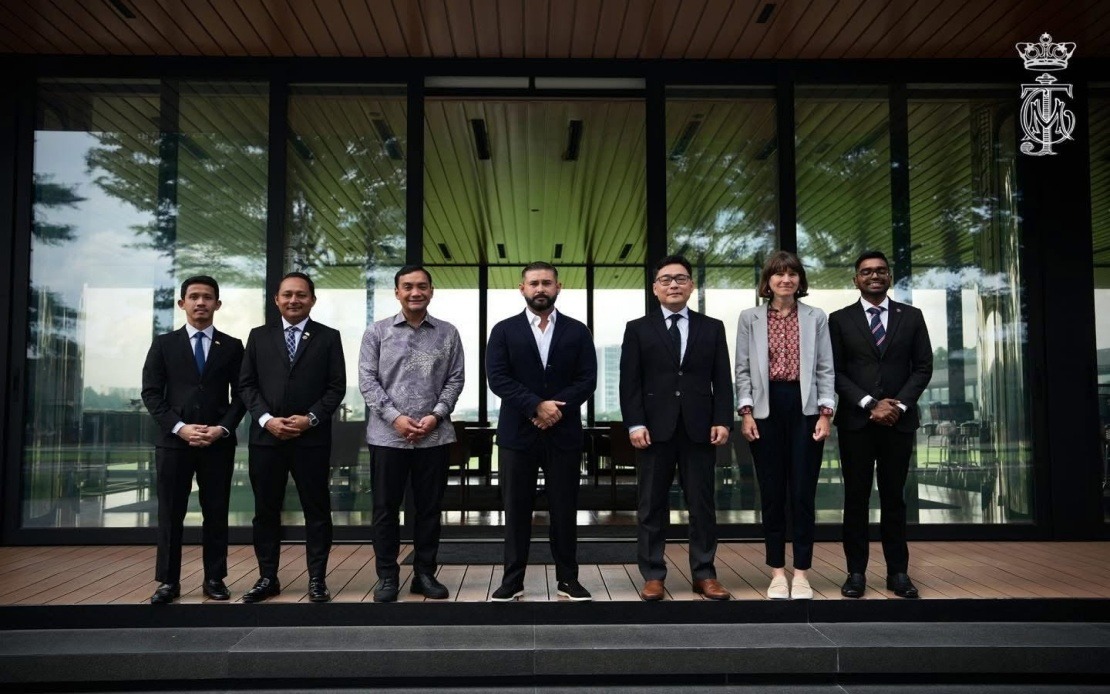
The Regent of Johor, Tunku Mahkota Ismail, recently hosted a delegation from Harvard College led by Dr Dominic Mao, assistant director of Undergraduate Studies and a lecturer in Molecular and Cellular Biology, alongside Dr Andrea Wright, assistant dean of Harvard College. This high-level engagement signals the seriousness with which Johor's leadership views the initiative and underscores the university's commitment to the partnership. Such interactions between Southeast Asian educational administrators and leading international institutions remain relatively uncommon, making this collaboration noteworthy within the regional education landscape.
The timing and scope of this programme reflect broader educational trends across Malaysia and the region. As economies increasingly demand graduates equipped with scientific literacy, technological proficiency and sophisticated communication skills, state-level governments are seeking to forge partnerships with world-leading universities rather than relying solely on domestic institutional capacity. Johor's strategic positioning as Malaysia's economic powerhouse makes it a natural focal point for such initiatives, as it seeks to cultivate a skilled workforce capable of supporting advanced manufacturing, digital industries and knowledge-based sectors.
SRBJ itself embodies the philosophical underpinning of this partnership. The school intentionally balances the mastery of English language with the preservation of Malay as a medium of instruction, reflecting Malaysia's constitutional commitment to Bahasa Malaysia while acknowledging the practical necessity of English fluency in global contexts. The institution simultaneously prioritises STEM education—science, technology, engineering and mathematics—recognising that these disciplines form the foundation for innovation-driven economic development. This integration of language policy, values education and technical excellence positions SRBJ as a testbed for how Malaysian schools can pursue international academic standards without cultural displacement.
The Harvard partnership also introduces internationally-benchmarked competency assessment frameworks. Rather than relying solely on traditional examination formats, PSIL incorporates assessment methods aligned with global educational standards while remaining congruent with Malaysian Ministry of Education policies. This alignment is crucial; it ensures that skills developed under the programme are credible both domestically and internationally, enhancing the marketability of participating students as they progress to higher education and employment.
For Malaysian policymakers observing this development, the Johor-Harvard initiative offers valuable lessons about scaling international partnerships. The programme's structure—beginning with a pilot cohort of 100 students rather than attempting system-wide implementation—allows for careful evaluation, refinement and eventual expansion. This measured approach reduces the risk of implementation failure while generating evidence about what works in the Malaysian educational context. The investment in teacher training simultaneously builds domestic capacity rather than creating dependence on external expertise.
The broader implications extend beyond Johor's borders. Success with PSIL could catalyse similar partnerships across other Malaysian states, potentially creating a network of internationally-connected schools that collectively strengthen the nation's human capital development. For Southeast Asia more broadly, Johor's willingness to engage with Harvard signals that leading universities are increasingly interested in regional collaborations, potentially opening similar opportunities for other high-performing schools and states across the region.
Looking ahead, the January 2027 implementation date provides a window for careful preparation. Both SRBJ and Harvard can refine curriculum materials, develop culturally-appropriate pedagogical approaches and establish robust monitoring systems to track student and teacher outcomes. The commitment from Johor's leadership, demonstrated through the Regent's personal engagement with the Harvard delegation, suggests this initiative has political and institutional backing necessary for success. As the programme unfolds, observers will watch carefully to see whether this partnership yields the promised gains in student leadership capabilities, critical thinking and global competitiveness.