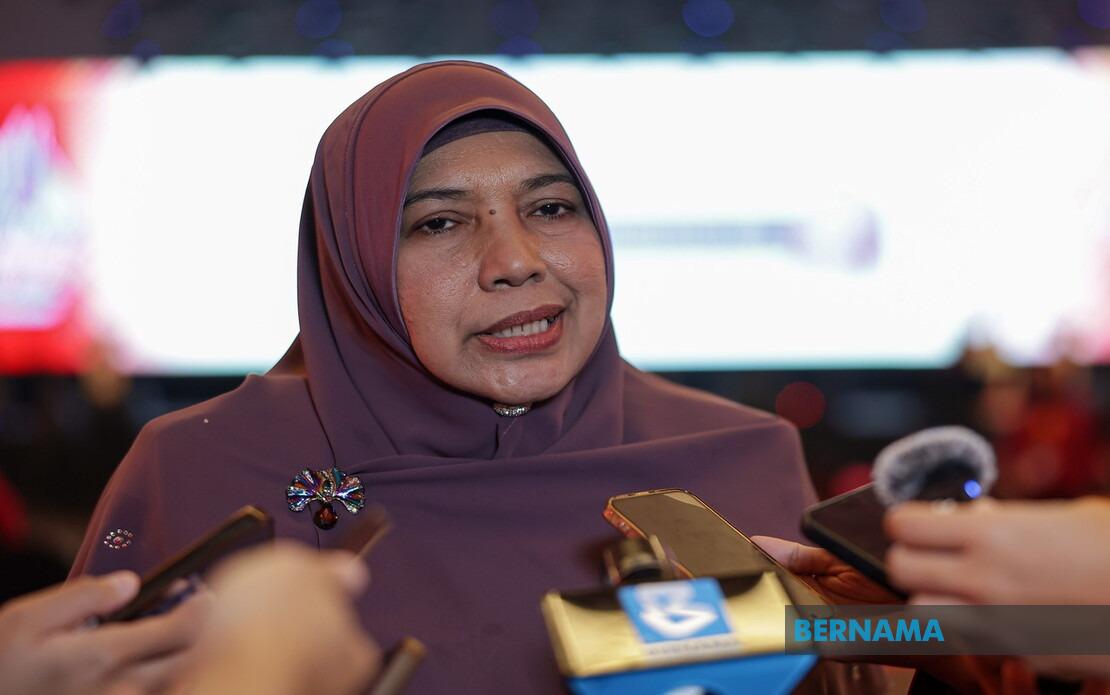
The Malaysian National News Agency has opened a commemorative photo exhibition in Butterworth that captures the evolution of the National Journalists' Day (HAWANA) and honours the lived experiences of media practitioners supported by Tabung Kasih@HAWANA, an assistance fund created specifically for journalists and media veterans facing personal crises. The gallery, unveiled ahead of tomorrow's HAWANA 2026 Summit, represents a conscious effort to document the institutional memory of a celebration that has become increasingly central to Malaysia's media landscape, while simultaneously shining a spotlight on a humanitarian initiative often overshadowed by the more visible ceremonial aspects of the annual gathering.
Datin Paduka Nur-ul Afida Kamaludin, the chief executive officer of Bernama and chair of the HAWANA 2026 Working Committee, explained that the exhibition occupies two conceptual spaces. The first traces the chronological development of HAWANA from its inaugural gathering in 2018 through to last year's edition, capturing pivotal moments and the evolving nature of how the media industry has organised itself around this annual occasion. The second segment shifts focus entirely to the human impact dimension, presenting visual narratives of individuals who have benefited from Tabung Kasih@HAWANA, transforming abstract statistics about financial assistance into concrete stories of journalists whose careers have been interrupted by illness, injury, or unforeseen circumstances.
In the context of Malaysian media ecology, this exhibition carries particular significance. Bernama's dual role as both the secretariat managing Tabung Kasih@HAWANA and the implementing agency coordinating HAWANA celebrations means the national news agency occupies a unique institutional position—simultaneously serving as convenor, benefactor, and chronicler of the broader journalism community. Nur-ul Afida noted that the gallery provides Bernama an opportunity to transition from behind-the-scenes facilitator to visible stakeholder in the public narrative about press freedom and professional solidarity. By presenting this exhibition, the agency is essentially making an institutional argument about what it values: not merely news dissemination, but the welfare and historical recognition of the journalists who generate that content.
The curatorial approach reflects deliberate choices about accessibility and comprehension. Mohamad Bakri Darus, editor of Bernama's Photo Desk, emphasised that each photograph selected for display underwent rigorous evaluation by Bernama's editorial team, with bilingual Malay and English captions accompanying every image. This linguistic consideration acknowledges that HAWANA's audience extends beyond Malaysia's anglophone minority or Malay-dominant journalism establishment; it encompasses a genuinely multilingual professional community. The bilingual presentation also signals that the exhibition's intended message—about media solidarity and industry support mechanisms—transcends linguistic boundaries and registers as a universal concern within the journalism profession.
The geographic scope of HAWANA's venues over the past eight years reveals how the celebration has evolved from a predominantly Klang Valley-centred event into a genuinely national initiative. Starting in Kuala Lumpur in 2018, the annual summit has subsequently travelled to Melaka in 2022, Ipoh in Perak during 2023, and most recently to Kuching in Sarawak in 2024, with Kuala Lumpur hosting again in 2025. This deliberate decentralisation reflects a strategic decision to geographically distribute the celebration and ensure that journalists operating outside major media hubs have access to the professional networking, recognition, and support mechanisms that HAWANA provides. For Malaysian readers and particularly for media professionals in underserved regions, this geographic rotation underscores that press freedom and professional solidarity are not metropolitan preoccupations but genuinely national concerns.
The substantive programming featured within the exhibition—including Strategic Partner Meetings, Media Forums, the HAWANA-DBP Pantun Festival, carnival exhibitions, and sports competitions—illustrates how HAWANA has functioned as a multifaceted professional event rather than a simple awards ceremony. The inclusion of cultural elements like the pantun festival (in partnership with Dewan Bahasa dan Pustaka) demonstrates that HAWANA deliberately positions journalism within a broader national cultural conversation, rather than treating media as a purely commercial or utilitarian enterprise. This approach resonates with Malaysian audiences because it frames journalism as intrinsically connected to cultural preservation and the continuation of literary traditions, elevating the profession beyond purely technical or economic considerations.
Prime Minister Datuk Seri Anwar Ibrahim's scheduled presence at tomorrow's HAWANA 2026 Summit, serving as the official guest of honour, provides governmental endorsement for the celebration and for the broader discourse about press freedom that HAWANA represents. The attendance of the nation's chief executive sends a symbolic message about the government's commitment to recognising and supporting the journalism profession, particularly at a moment when media institutions globally face unprecedented pressures from technological disruption, audience fragmentation, and shifting business models. For Malaysian readers and journalists specifically, the Prime Minister's participation suggests that professional recognition from the highest levels of government remains available to media practitioners, even as institutions grapple with profound structural transformations.
The Tabung Kasih@HAWANA assistance fund represents a distinctive institutional response to a problem that global journalism has largely failed to address systematically: the absence of robust safety nets for media professionals experiencing sudden economic vulnerability. Unlike other professional associations that occasionally create ad-hoc fundraising initiatives in response to individual crises, Tabung Kasih@HAWANA operates as a permanent, structured assistance mechanism embedded within the annual celebration infrastructure. This institutional permanence suggests that the Malaysian media industry has acknowledged that supporting colleagues through personal hardship is not an optional charitable gesture but an intrinsic component of professional identity and collective responsibility.
The exhibition's emphasis on recalling memories and experiences of journalists who participated in previous HAWANA celebrations serves a generational function within the profession. Younger journalists entering the industry can access visual documentation of how the profession has organised itself, what collective values it has articulated, and how institutional support mechanisms operate in practice. Simultaneously, veteran journalists and media leaders can revisit moments of professional accomplishment and solidarity, reinforcing a sense of institutional continuity even as the journalism industry itself undergoes rapid transformation. This memory-work, conducted through photography and archival exhibition, functions as a form of professional identity construction at a moment when journalism's institutional stability appears increasingly fragile.
For Malaysian and Southeast Asian readers, the HAWANA 2026 exhibition and accompanying summit represent more than ceremonial recognition of journalistic professionals. They embody a deliberate institutional choice to invest in the welfare, recognition, and professional development of media practitioners at a regional moment when press freedom faces mounting pressures from multiple directions. By documenting nine years of HAWANA history and profiling beneficiaries of Tabung Kasih@HAWANA, the exhibition makes a public case that journalism matters enough to warrant systematic institutional support, and that journalists themselves warrant recognition as valued contributors to national life rather than merely as service providers or information vendors.


