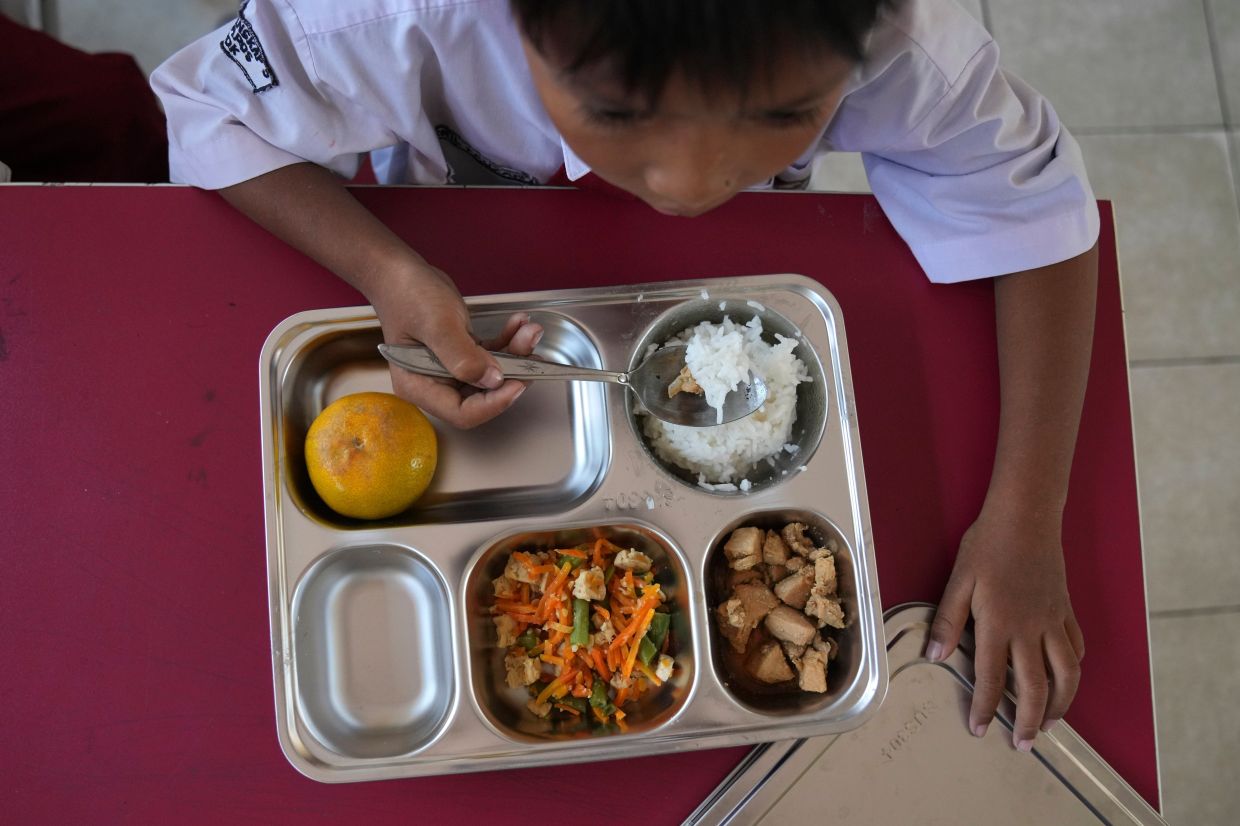
Indonesia's leading anti-corruption watchdog is escalating pressure on the government to halt President Prabowo Subianto's flagship free meals initiative, demanding not only a temporary suspension but also the complete dissolution of the National Nutrition Agency overseeing the programme. The call comes as investigators deepen their examination of alleged corruption within the scheme that has become central to Prabowo's presidency, raising fundamental questions about how the sprawling initiative has been managed since its inception less than two years ago.
Wana Alamsyah, head of the law and investigation division at Indonesia Corruption Watch, argues that the current investigation into detained former agency chief Dadan Hindayana represents only the tip of a much larger problem. While authorities have arrested Dadan and four others including two of his former deputies following his dismissal, Wana contends that the probe must expand substantially to encompass all participants who may have exploited the programme's poor governance structures. The investigation should examine not merely high-level officials but also the vendors supplying meals, procurement committee members, and other middlemen who benefited from what he characterizes as rushed and inadequately planned implementation.
The free meals programme has already become a controversial cornerstone of Prabowo's administration, intended to reach 82.9 million recipients through a budget allocation of approximately 268 trillion rupiah (US$15 billion) this fiscal year. The sheer scale of the operation—already delivering meals to more than 60 million people through a network of kitchen facilities nationwide—has created substantial vulnerability to mismanagement and corrupt practices. For Malaysian observers, the situation illustrates the challenges large-scale social programmes face when they prioritize rapid rollout over institutional safeguards, a lesson relevant to any government contemplating similarly ambitious welfare initiatives.
Wana's assessment suggests that the problems plaguing the programme stem from fundamental design flaws rather than isolated wrongdoing. He argues that authorities failed to address mounting criticism on social media regarding procurement irregularities when such concerns first emerged in 2025, instead waiting for a formal complaint to trigger official action. This pattern raises uncomfortable questions about whether government officials overlooked warning signs or deliberately deferred action until fiscal pressures forced a reckoning with the initiative's sustainability.
Indonesia Corruption Watch has documented troubling patterns across the kitchen network supporting the meals programme. In reviewing 102 foundations running kitchens across 38 provinces, the organisation identified numerous connections between kitchen operators and politically-connected individuals, including politicians, government officials, military personnel, law-enforcement figures, and business networks. This web of relationships suggests the programme may have functioned partly as a vehicle for distributing patronage and political favours rather than purely delivering nutritional assistance.
Independent research reinforces these concerns. The Jakarta-based Centre of Economic and Law Studies found that 79 per cent of survey respondents perceived potential conflicts of interest in how vendors were directly appointed without competitive processes. Earlier studies warned the programme risked uneven geographic distribution, inconsistent food quality, and budgetary inefficiencies. Complaints have included documented food poisoning incidents, delivery of ultra-processed meals of questionable nutritional value, and the puzzling decision to implement universal coverage across all Indonesian schools rather than targeting the rural and impoverished areas where malnutrition remains most severe.
Wana's analysis suggests the government's current pivot toward reform may reflect fiscal desperation rather than principled commitment to cleaning up the programme. He hypothesises that deteriorating budget conditions—compounded by fuel subsidy costs driven up by geopolitical tensions—have forced officials to recalculate spending priorities. By visibly holding high-level officials accountable and restructuring the initiative, the government may be attempting to legitimise the substantial reductions and refocusing necessary to bring the programme within sustainable fiscal bounds, essentially using Dadan's detention as cover for planned contraction.
The incoming head of the meals agency, Nanik S. Deyang, has signalled a shift toward efficiency and quality over ambitious numerical targets. She announced a moratorium on new kitchen facilities while shifting toward existing infrastructure such as school canteens, and indicated the agency may serve fewer than 82.9 million recipients while prioritising nutritional quality. This represents a partial acknowledgement of the programme's implementation failures, though it falls short of the wholesale suspension Wana demands.
President Prabowo has publicly pledged intolerance for corruption within the initiative, declaring to thousands of officials and programme partners that he refuses to permit the theft of public money. Yet the persistence of governance vulnerabilities despite such declarations suggests that executive rhetoric alone cannot substitute for institutional safeguards. The widening scope of public protests—with police deploying more than 6,000 officers to manage demonstrations in Jakarta and other major cities—underscores deepening public scepticism regarding both the programme's integrity and its fiscal justification.
The controversy has also unsettled international investors concerned about Indonesia's budgetary trajectory. Beyond corruption considerations, economists and research institutions question whether the programme can deliver the promised improvements in employment, health outcomes, and economic productivity. These doubts reflect broader uncertainty about whether massive expenditure on universal meal provision represents optimal resource allocation compared to targeted nutrition interventions, conditional cash transfers, or investments in agricultural productivity and rural development.
For Southeast Asian observers, the Indonesian situation offers instructive parallels and warnings. Malaysia and other regional governments considering large-scale universal social programmes should note how quickly institutional vulnerabilities can undermine good intentions when programmes prioritise speed of deployment and universal coverage over careful targeting and robust oversight mechanisms. The experience suggests that effective welfare provision requires not merely adequate funding but equally robust governance architecture, competitive procurement processes, and genuine accountability mechanisms capable of functioning independently of political pressures.
Wana's insistence on widening the investigation beyond currently detained officials reflects sophisticated understanding that systemic corruption rarely localises to individual wrongdoers. Rather, it typically represents the inevitable consequence of poorly designed systems offering opportunities for exploitation. Until those structural vulnerabilities are directly addressed—through meaningful institutional reform, not merely personnel changes—further scandals appear likely despite individual prosecutions.


